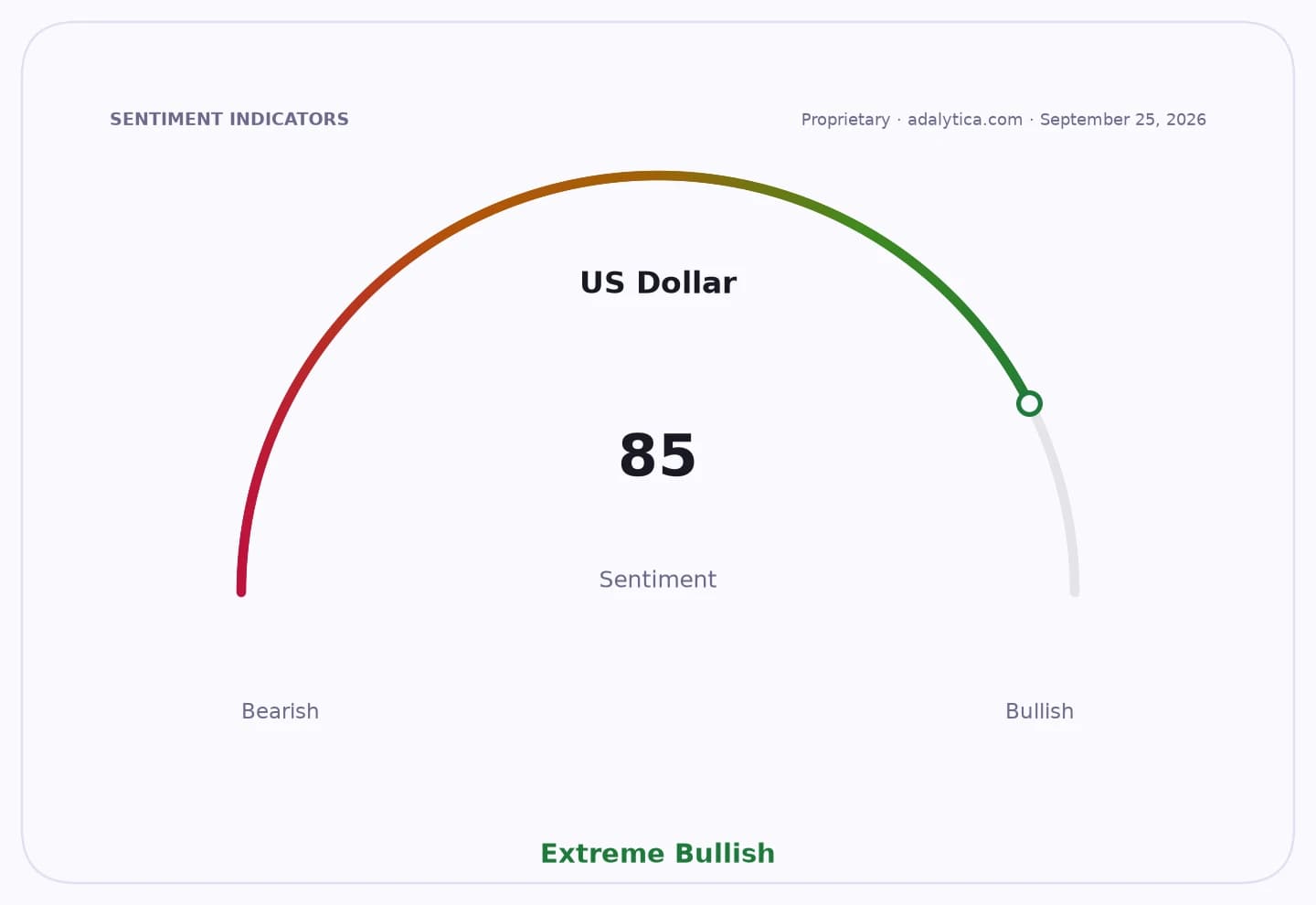
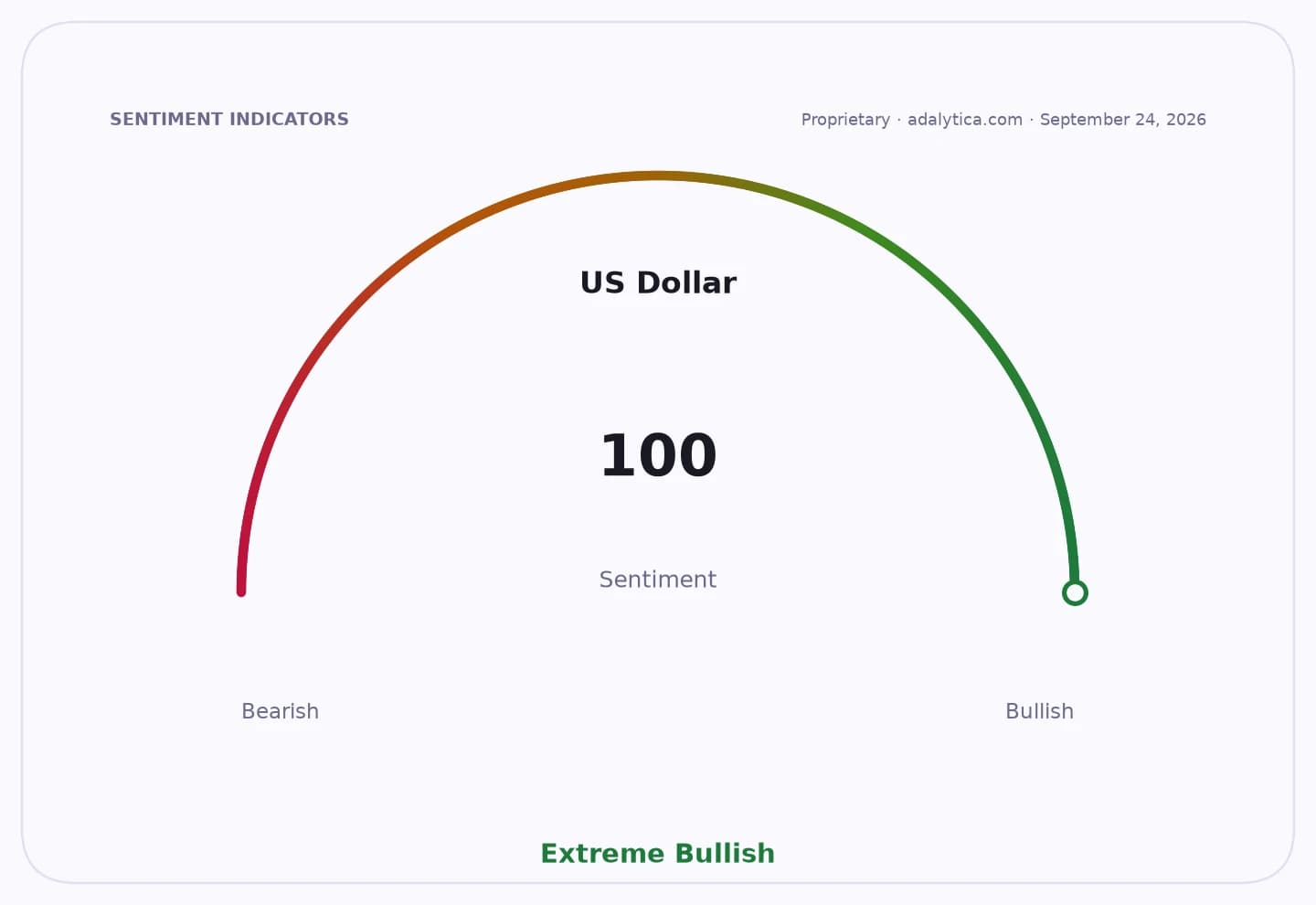
Gold and silver slipped sharply in India after the U.S. Federal Reserve’s latest rate increase pushed the dollar higher and made non-yielding bullion less attractive, but the bigger investing story is that precious metals remain in the middle of a powerful long-term cycle driven by inflation worries, geopolitical tension and central-bank policy.
Gold and silver fall in India after Fed rate hike

For investors, the key point is not the one-day drop. It is that gold and silver are still trading in a market where macro forces are pulling in opposite directions. Higher U.S. rates usually weigh on bullion because they strengthen the dollar and raise the opportunity cost of holding metals that pay no interest. That is exactly what happened here: MCX gold for October delivery fell by nearly Rs 2,000 in early trade to around Rs 1,50,483 per 10 grams, while December silver sank as much as Rs 4,500 to Rs 2,30,221 per kilogram before recovering some ground.
Sentiment IndicatorsⓘProprietary · adalytica.com · September 18, 2026
This is a snapshot — live sentiment, awareness and momentum for 130+ markets update continuously in the dashboard.Open AlphaPulse
The move matters economically because precious metals often serve as a mirror for global liquidity. When the Fed tightens, it tends to drain some of the easy money that supports commodity prices. The U.S. 10-year Treasury yield sits near 5%, the two-year yield near 4.7% and the federal funds rate is running around 3.6%, a combination that keeps pressure on gold’s short-term pricing power. At the same time, a stronger dollar is a headwind for buyers in India and other import-dependent markets, where local prices can swing sharply even when overseas spot moves are smaller.
Still, the pullback comes after a very strong run for gold-linked assets and a volatile year that has repeatedly rewarded patient holders. COMEX gold remains far above levels seen earlier in the year, even after retreating to about $4,391 an ounce, and silver at roughly $66.76 an ounce is still historically elevated. Gold miners such as GDX, the VanEck Gold Miners ETF, continue to reflect that underlying strength, even if the fund has given back some of its momentum recently. That tells investors something important: the long-term thesis for bullion has not disappeared simply because a rate hike sparked a correction.
Adalytica’s Gold Fear & Greed Index is reading neutral, while its awareness gauge shows extreme fear. That combination usually suggests a market that is no longer euphoric, but not washed out either. In plain English, investors are cautious, not panicked. That is often the kind of backdrop that keeps a structural bull market alive, especially when central banks are still sending mixed signals on how far they can go without slowing growth too much.
In India, the impact is visible both in futures and at the counter. The drop in MCX prices came alongside weaker physical quotes for 24-carat, 22-carat and 18-carat gold, though city-level prices can remain firm as local premiums, taxes and inventory costs shift. Delhi even saw a separate rebound in bullion prices as traders reacted to improved market sentiment after oil prices eased, underscoring how quickly local pricing can diverge from global cues.
For investors, the lesson is simple: gold and silver are not “safe” in the sense of being stable every day, but they can still be valuable portfolio diversifiers over years, not weeks. Rate hikes can trigger bruising selloffs, yet the same metals often regain traction when inflation, policy uncertainty or geopolitical risk reassert themselves. If you are building wealth for the long run, the better question is not whether bullion can fall — it obviously can — but whether you want some exposure to an asset class that often behaves differently from stocks and bonds.
The current selloff is a reminder to keep expectations realistic and position sizes sensible. Precious metals can help balance a portfolio, but they should complement, not replace, a diversified mix of equities, bonds and cash. For long-term investors, this kind of volatility is less a warning than an invitation to stay disciplined and think in years, not days.
| Entity | Gains | Losses |
|---|---|---|
| U.S. dollar | ▲Higher-yield support | ▼Gold and silver buyers |
| Fed and rate setters | ▲Stronger policy transmission | ▼Bullion bulls |
| Indian consumers | ▲Better entry points on dips | ▼Near-term gold sellers |
| Gold miners and bullion holders | ▲Long-term diversification appeal | ▼Short-term momentum traders |