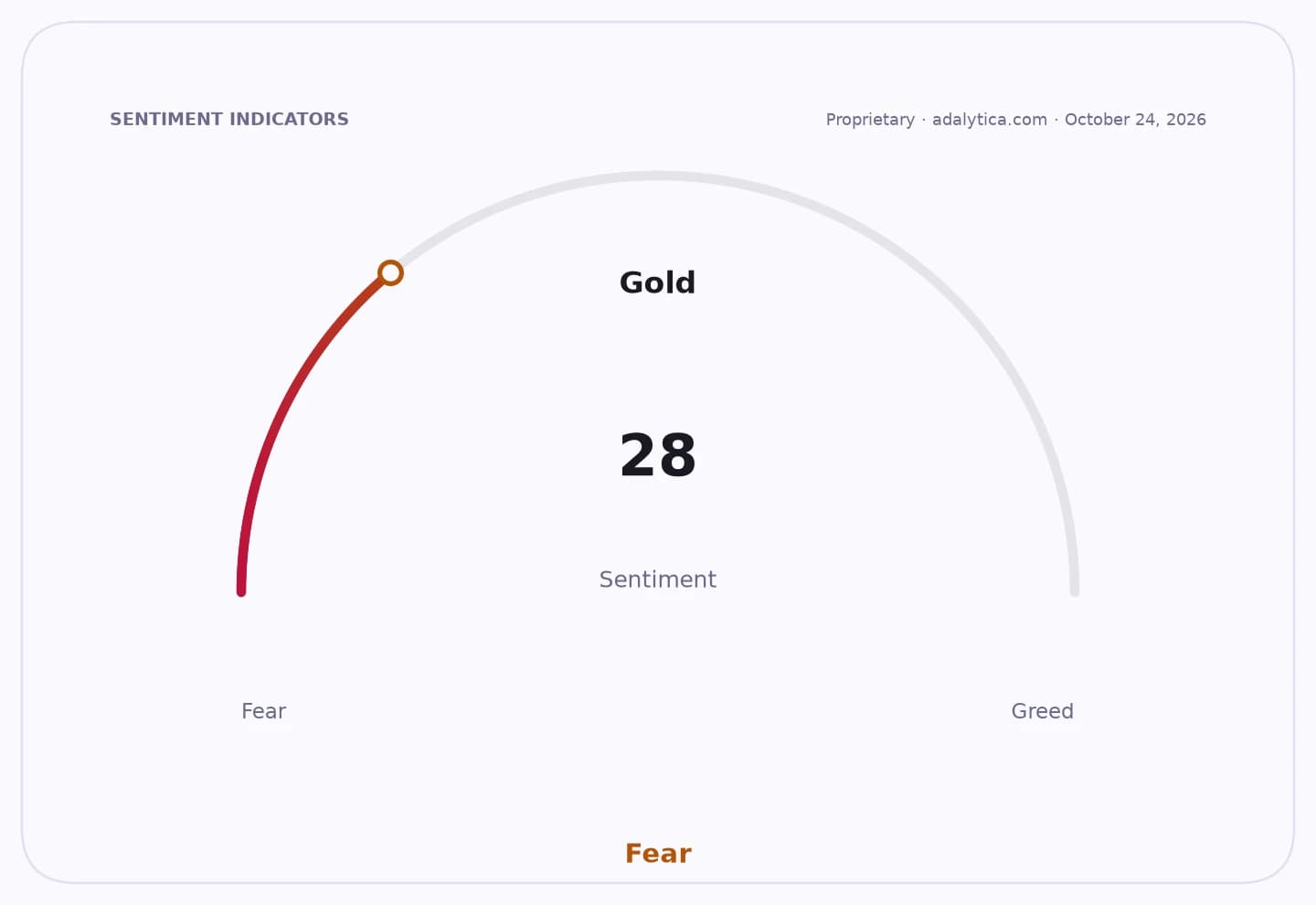
Gold continued to ease in domestic Vietnamese trading on October 22 even as the global benchmark held above $4,100 an ounce, underscoring a market that is still rich in anxiety but increasingly vulnerable to profit-taking and shifting rate expectations.
Gold Falls in Vietnam as Domestic Premium Stays Wide

The most important development is not just that SJC bars and gold rings fell again, but that the pullback is happening in both directions at once: buyers are getting cheaper entry points, while sellers are also accepting lower bids. That usually means momentum is cooling rather than simply widening. For investors, that matters because gold’s explosive run has pushed the metal into a zone where even modest changes in U.S. rates, the dollar and energy markets can trigger outsized swings.
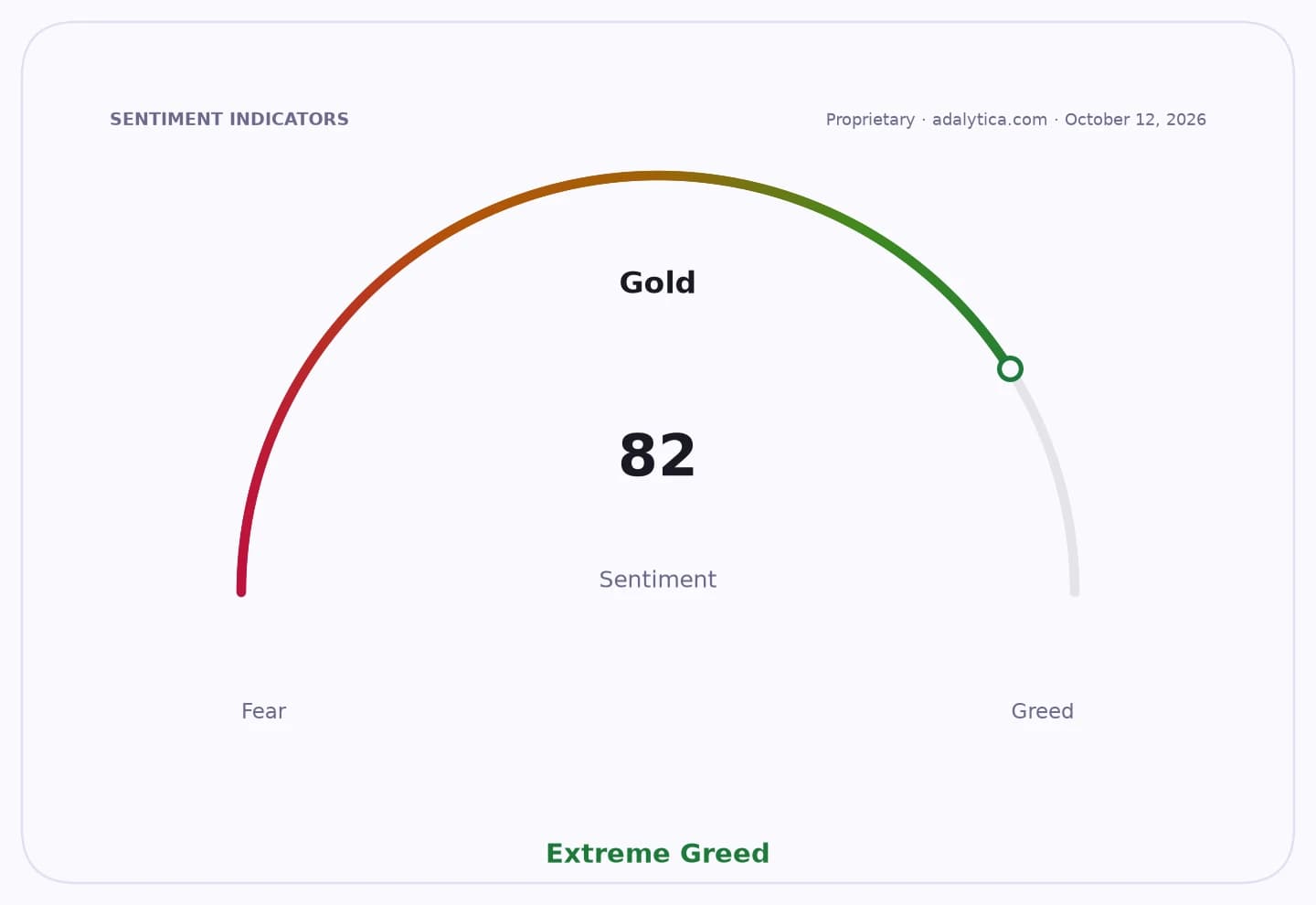
Sentiment Indicators

In Vietnam, major brands including SJC, DOJI, PNJ and Bảo Tín Mạnh Hải were quoted at 139.3 million dong to 142.3 million dong per tael for bars, down 300,000 dong on both sides from the previous session. Phú Quý bars traded slightly lower on the buy side at 138.7 million dong, with the sell price also at 142.3 million dong. Gold rings followed the same pattern, with the highest sell quote at 142 million dong per tael. The global spot price around $4,141.1 an ounce still converts to roughly 130 million dong a tael before taxes and fees, leaving a wide domestic premium that keeps local buyers sensitive to any shift in sentiment.
That premium is part of the story. When domestic prices detach so sharply from the international benchmark, retail demand can weaken quickly if buyers decide the rally has already run too far. At the same time, the world price remains anchored by two competing forces: geopolitical risk and the prospect of tighter Fed policy. Kitco noted fresh concern over energy supply through the Strait of Hormuz, which supports safe-haven demand, but higher crude prices can also reinforce inflation expectations and keep the Federal Reserve from easing quickly. That tension is exactly why gold can stay elevated without extending in a straight line.
Gold
The broader investment takeaway is that gold is still acting like a strategic hedge, but not a clean momentum trade. The market is waiting on incoming U.S. data — including oil inventories, jobless claims, and October PMI readings — to decide whether slowing growth will pull Treasury yields and the dollar lower enough to launch the next leg higher. If the data soften, gold miners, bullion-backed funds and physical holders could get another tailwind. If inflation or energy risks dominate, gold may hold its ground but with more volatility and less upside conviction.
For now, the message is clear: the easy part of the rally may be over, but the case for owning gold has not disappeared. The best opportunities may still sit with the highest-quality miners and gold ETFs that can benefit if the next macro shock pushes real yields lower again.
| Entity | Gains | Losses |
|---|---|---|
| Gold buyers in Vietnam | ▲Lower entry prices | ▼Recent momentum |
| SJC, DOJI, PNJ, Bảo Tín Mạnh Hải sellers | ▲Inventory turnover | ▼Higher selling prices |
| Gold miners and bullion ETFs | ▲Safe-haven flows | ▼Less urgent panic bidding |
| Dollar and higher-rate bets | ▲Support from tighter Fed expectations | ▼Gold upside |