U.S. equities can still climb as corporate profits expand, but Goldman Sachs is warning investors not to pile into the same handful of winners that have driven much of this year’s advance.
Goldman warns on crowded U.S. stock market leaders

That is the core message from strategists led by Ben Snider, who say earnings growth should keep the broader market supported even as leadership stays unusually concentrated. The call matters because it points to a market that can continue rising without becoming healthier underneath: gains may persist, but they are increasingly vulnerable if investors keep paying up for the same crowded names.
Sentiment IndicatorsⓘProprietary · adalytica.com · October 22, 2026
This is a snapshot — live sentiment, awareness and momentum for 130+ markets update continuously in the dashboard.Open AlphaPulse
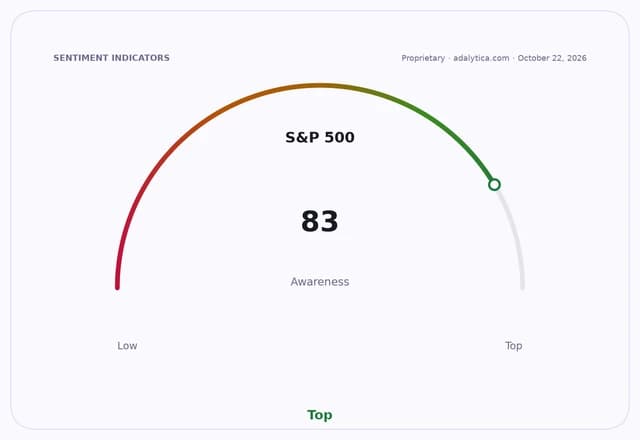
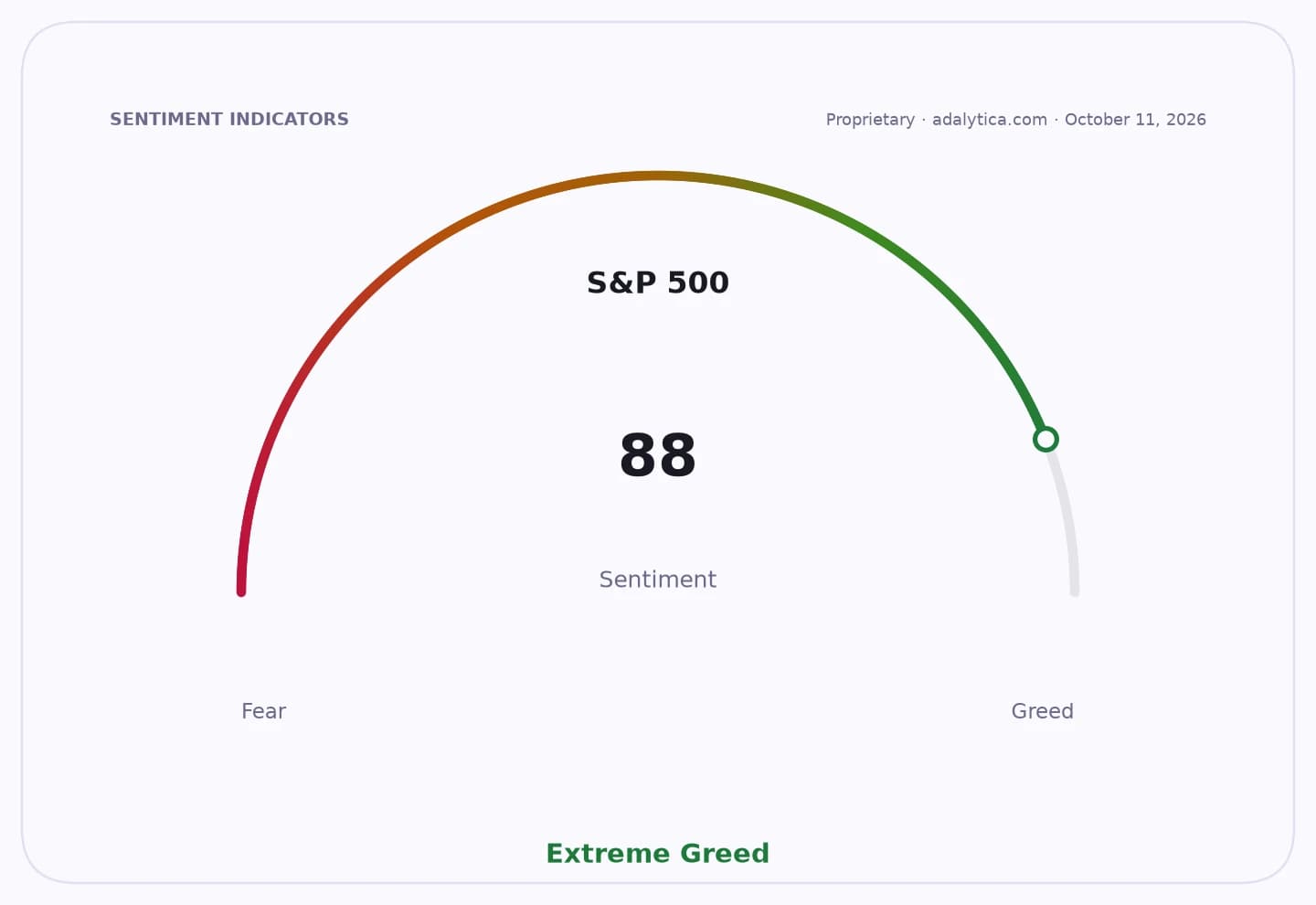
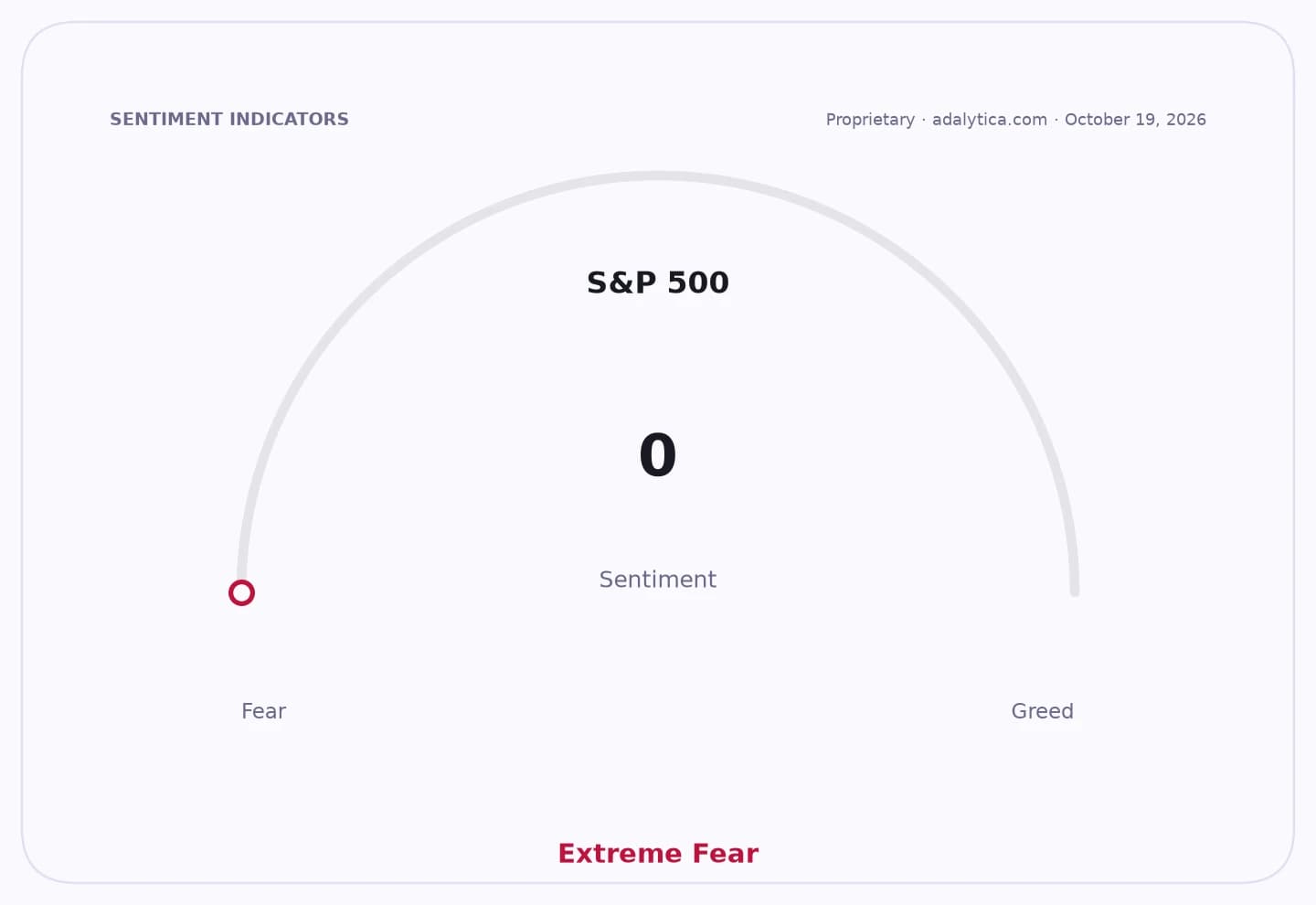
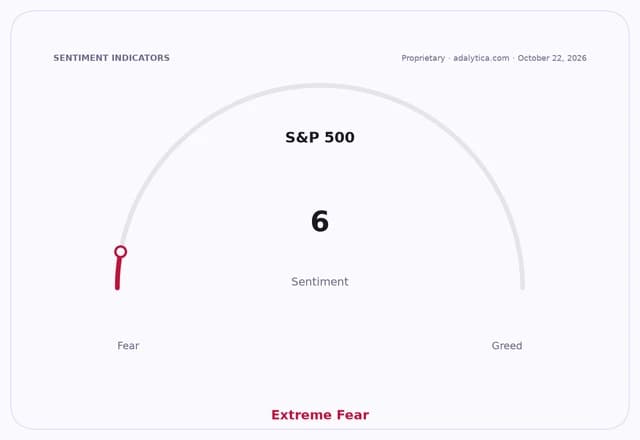
The warning comes at a time when the market backdrop is mixed. The S&P 500 has been flashing extreme fear on Adalytica’s trade-signal snapshot even as awareness remains high, a combination that often appears when positioning is stretched and sentiment is fragile. U.S. Treasury bonds have shown greed, while the dollar has weakened over the past month, suggesting investors are still balancing growth optimism against policy and valuation concerns rather than committing to a clean risk-on trade.
Within that environment, Goldman’s stance is a reminder that the equity rally is increasingly narrow. Goldman Sachs shares have run sharply higher this year, with the stock recently trading well above its 50-day and 200-day moving averages before slipping back; the technical backdrop has cooled from overbought levels, with the relative strength index falling from extreme readings earlier in the year. That pattern mirrors the broader market problem the bank is highlighting: leadership can look strong until it suddenly becomes vulnerable to profit-taking.
The economic case for staying constructive on stocks still rests on earnings. If corporate profits keep rising, index-level valuations can be sustained even after a powerful run. But concentration raises the risk that market breadth deteriorates before the index does, leaving the market exposed to a reversal if the dominant megacaps miss expectations, if rates move higher, or if investors rotate into lagging sectors. In other words, the index may keep advancing while the average stock lags badly behind.
For investors, that distinction matters. The bull case is that a resilient economy and solid earnings can support further upside, especially if easing financial conditions and continued capital spending sustain profit growth. The bear case is that the market’s gains have become too dependent on a small group of leaders, making performance vulnerable to a squeeze in positioning or any disappointment in the biggest names.
Goldman’s message therefore is not that the rally is over, but that the next leg may look different. Rather than chasing the largest recent winners, investors may need to look further down the market-cap spectrum for returns, even if that means accepting more volatility and a slower-moving trade. The key test now is whether earnings breadth improves enough to broaden participation before concentration turns from a feature of the rally into its main risk.
| Entity | Gains | Losses |
|---|---|---|
| Broad U.S. equities | ▲More upside if earnings grow | ▼Vulnerable if breadth stays narrow |
| Market leaders | ▲Continued capital inflows | ▼Higher risk of crowding unwind |
| Lagging stocks | ▲Potential rotation opportunity | ▼Miss near-term momentum chase |
| Investors chasing winners | ▲Short-term momentum gains | ▼Pay-up risk and crowded-entry losses |