AI search is changing the way people research before they buy, and that is forcing advertisers to rethink how they build paid search campaigns around Google, Microsoft and Meta.
Google, Microsoft, Meta Face AI Search Ad Shift
The biggest economic shift is not that search ads are disappearing. It is that buyers are arriving better informed, asking longer, more specific questions and converting with less of the old funnel behavior that keyword-heavy campaign structures were designed to capture. For marketers, that means the real edge is moving away from rigid keyword silos and toward campaign systems that can collect enough conversion data, flex creative across surfaces and keep bidding aligned with business value.
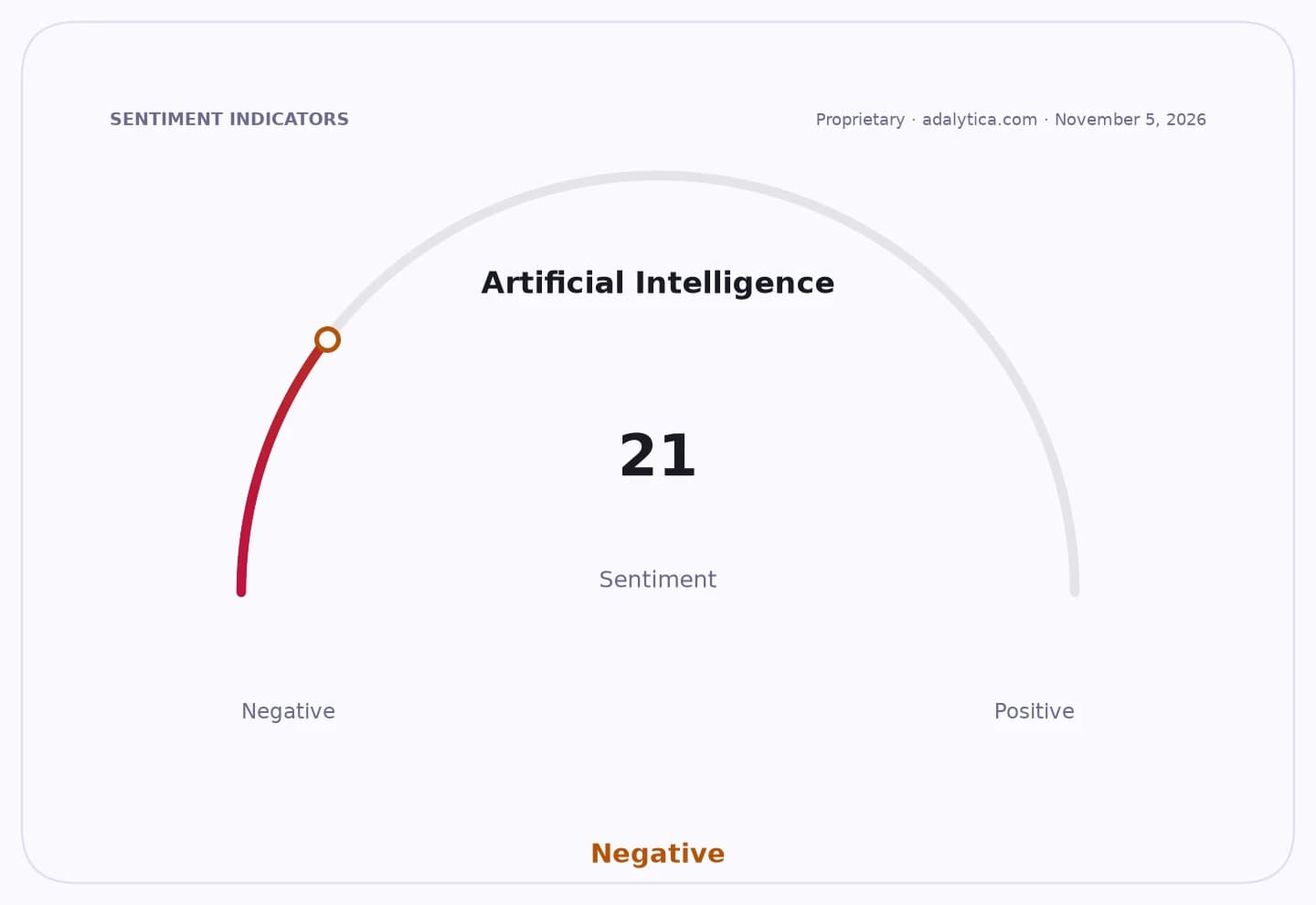
Sentiment Indicators
That matters because paid search is still one of the most efficient ways to harvest demand, but the shape of that demand is changing. In an AI-driven search environment, a shopper may compare features, pricing and trust signals before ever clicking an ad. If campaign structures are too fragmented, the platform gets less learning and weaker signal. If they are too broad, advertisers can lose control over budgets, compliance and messaging. The new job is to find the middle ground: enough segmentation to protect real business priorities, enough consolidation to let the ad platform optimize.
For Alphabet’s Google, that favors advertisers who can adapt to broader intent matching and more dynamic ad experiences. Microsoft, which says AI-assisted assets deliver a 5% average click-through rate improvement over manual counterparts in its internal data, is pushing the same logic: feed the system more signal, not more clutter. Meta, meanwhile, benefits when advertisers use flexible assets and value-based bidding that can follow users across feeds, video and other AI-assisted discovery points.
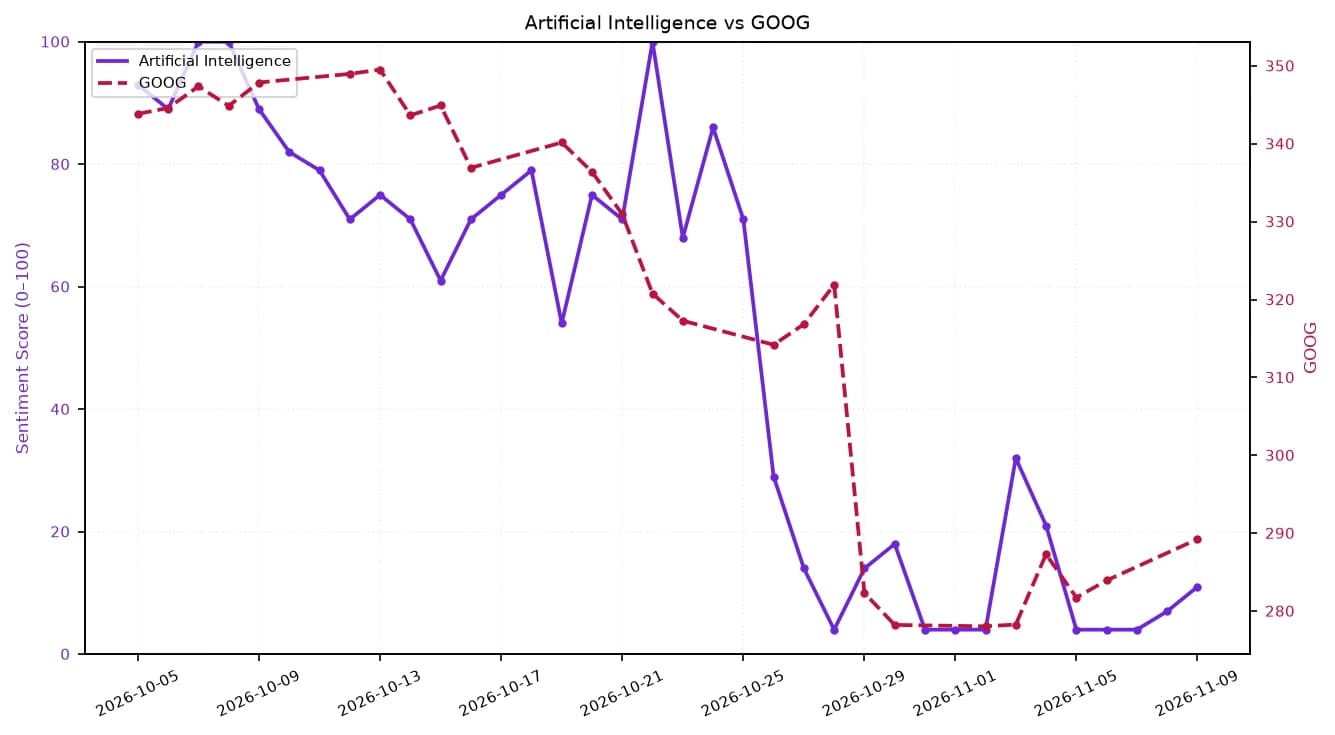
Artificial Intelligence vs GOOGLadalytica.com
Explore this data interactively — full history, time series and cross-market comparisons.
Investors should care because this is a durable shift in ad-tech economics, not a one-off product tweak. Campaigns that produce better conversion density and value signals tend to improve return on ad spend, which supports higher advertiser budgets over time. That is especially important for platforms like Google, Microsoft and Meta, whose ad businesses depend on proving that AI tools can improve efficiency rather than just reshuffle clicks.
There is still risk. Over-consolidation can blur reporting and make it harder to control spend on high-value products, while over-segmentation can starve campaigns of the data they need to learn. And as AI search and AI-generated recommendations expand, advertisers will have to work harder on trust, landing pages, disclaimers and proof points to keep clicks converting.
For long-term investors, the takeaway is straightforward: AI is not killing paid search, but it is rewriting the rules of campaign architecture. The winners will be the platforms that help advertisers turn messy, multi-surface buyer journeys into usable conversion signal. That makes Google, Microsoft and Meta worth watching closely as ad budgets gradually shift toward AI-ready structures and away from legacy keyword plumbing.
| Entity | Gains | Losses |
|---|---|---|
| ▲More AI-ready ad demand | ▼Legacy keyword-only structures | |
| Microsoft | ▲Better use of conversion signal | ▼Fragmented, low-volume campaigns |
| Meta | ▲Flexible creative optimization | ▼Static, one-size-fits-all ads |
| Advertisers | ▲Stronger ROAS potential | ▼Less control from over-consolidation |