European judges have sharpened one of the biggest legal risks hanging over generative AI: the possibility that Google’s Gemini chatbot and other large language models can violate publishing rights when they ingest or reproduce press content without authorization.
Alphabet, AI copyright risk, and licensing costs
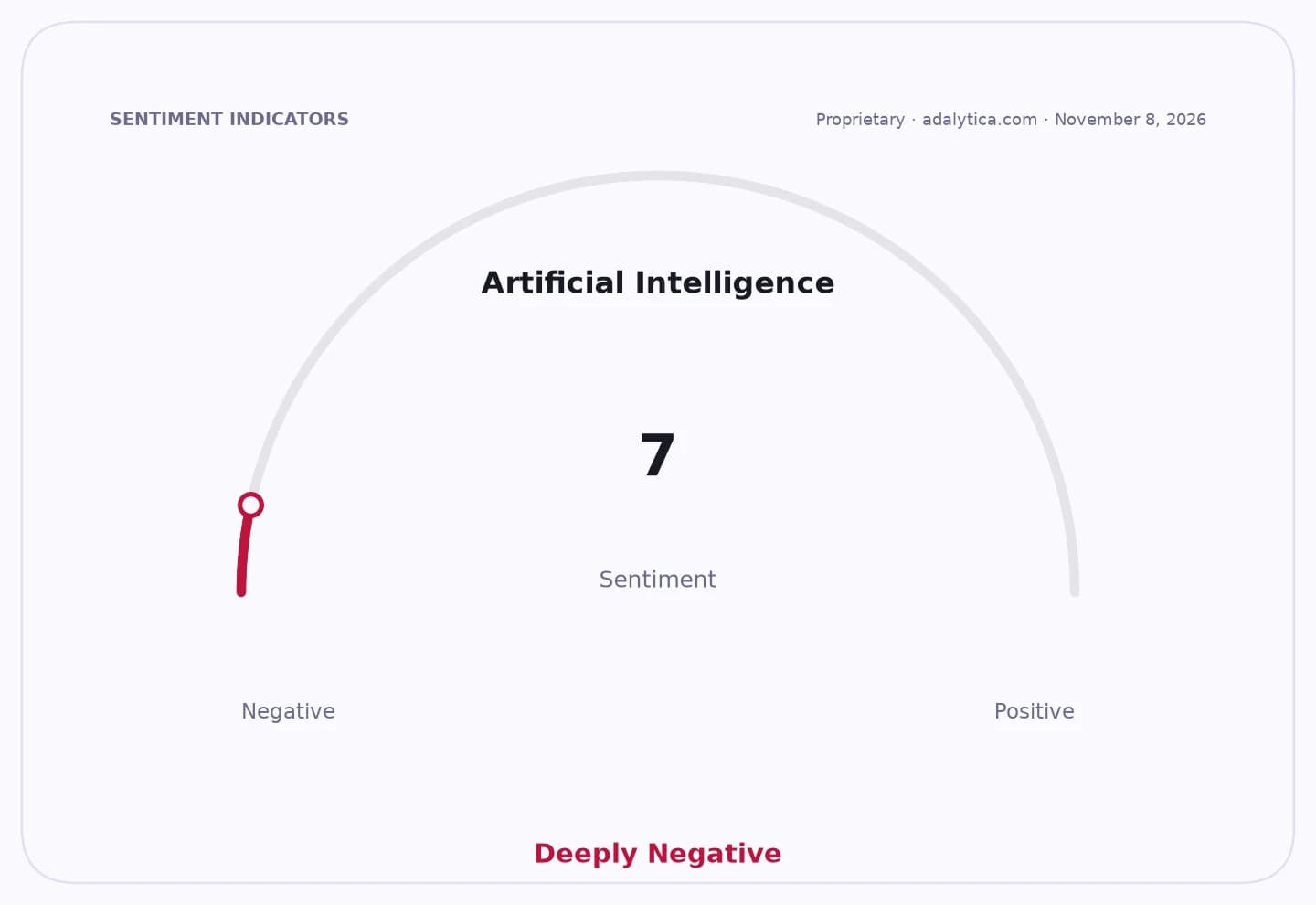
Artificial Intelligence
That matters because the AI boom is no longer just a race for models and compute. It is becoming a fight over content rights, licensing economics and who gets paid when machines summarize the web. If courts increasingly treat news and journalistic work as protected material rather than free training fuel, the cost structure of AI changes. The winners will be platforms that secure licenses early and the publishers that gain leverage; the losers are companies that built product velocity on legally gray data access.
Sentiment Indicators
The European Court of Justice opinion adds momentum to a growing global pushback against unlicensed scraping and text extraction. For Google, Microsoft and OpenAI, the message is clear: legal exposure is now part of the AI product stack. Google already flags litigation, government inquiries and other legal liability in its filings, and Microsoft has similarly warned that AI systems can create legal and competitive harm tied to intellectual property and data privacy.
Investors should care because this is a margin story as much as a legal one. Every new layer of copyright compliance raises operating costs, slows deployment and could force AI developers into revenue-sharing agreements with publishers. That does not kill the AI thesis; it reallocates the profits. Instead of all the value accruing to model owners, more of it may flow to rights holders, infrastructure partners and ad-tech intermediaries that can package licensed content for AI use.
Artificial Intelligence vs GOOGLadalytica.com
Explore this data interactively — full history, time series and cross-market comparisons.
The market has already started to price in the difference between exposed platforms and enablers. Google parent Alphabet has been under pressure, with its shares slipping below key technical levels and its 50-day moving average after a sharp selloff, while Microsoft has held up better but remains sensitive to any hit to its AI margin story. Ad-tech player PubMatic, meanwhile, is a reminder that the monetization layer around digital content can gain relevance when publishers get more assertive about who can use their material.
Our thesis is that this is an inflection point for the AI stack. The next phase of AI leadership will not belong solely to the biggest model builders; it will favor companies that can turn copyright compliance into a distribution advantage. That makes licensing, content partnerships and rights-cleared data pipelines a far more investable theme than the market may currently appreciate.
For investors, the actionable takeaway is to watch for a widening gap between AI firms that own clean content access and those that must negotiate under pressure. In a world of tighter publishing rights, the best long-term opportunities may sit in the toll roads of AI rather than the models themselves.
| Entity | Gains | Losses |
|---|---|---|
| Publishers | ▲stronger licensing leverage | ▼unrestricted content scraping |
| Google/Alphabet | ▲clearer compliance path if it licenses content | ▼legal risk and higher costs |
| Microsoft/OpenAI | ▲incentive to build rights-cleared systems | ▼margin pressure from litigation and royalties |
| Ad-tech/content intermediaries | ▲more valuable licensing role | ▼weaker bargaining power for AI platforms |