A Brazilian judge has temporarily barred Meta from using content from news organizations to train its artificial intelligence systems without permission, a ruling that could make it harder and more expensive for the social media giant to build AI products on the back of publishers’ work.
Meta barred in Brazil from using news content for AI

That matters because the fight over AI training data is quickly becoming one of the industry’s biggest business and legal risks. If courts and regulators keep deciding that publishers can demand payment or opt out, the economics of generative AI get tougher: companies will face higher content costs, more licensing negotiations and a greater chance of delays as they roll out new models and features. For investors, that is a reminder that AI scale alone is not enough — the winners will be the firms that can secure durable data access without blowing up margins.
Sentiment Indicators
Artificial Intelligence
The order came from a São Paulo judge and applies to media outlets tied to three Brazilian press associations. He also imposed a daily fine of about $180,000 if Meta violates the ruling. The judge said the potential harm would be “irreversible” once the AI had already been trained on the material, and he suspended the portion of Meta’s new terms of use that would have required media companies to hand over content for free in order to remain connected to its platforms.
The case lands squarely in the center of a global reset around AI data rights. Across the industry, lawsuits and policy pushes are challenging the old assumption that publicly available content can simply be scraped and repurposed at scale. Meta disclosed in its latest filings that AI training increasingly faces government scrutiny and potential copyright liability, while Alphabet has also warned that data protection authorities are taking a harder line on how AI systems use data. In other words, what used to be a technical input is now a legal and strategic one.
For Meta, the near-term financial impact is manageable, but the longer-term implication is important. The company has been spending aggressively to build out AI across Facebook, Instagram and WhatsApp, and anything that raises the cost of training or limits access to high-quality content makes that investment less efficient. That does not break the thesis on Meta, but it does add another layer of friction for a business that already faces heavy capital spending and ongoing regulatory pressure.
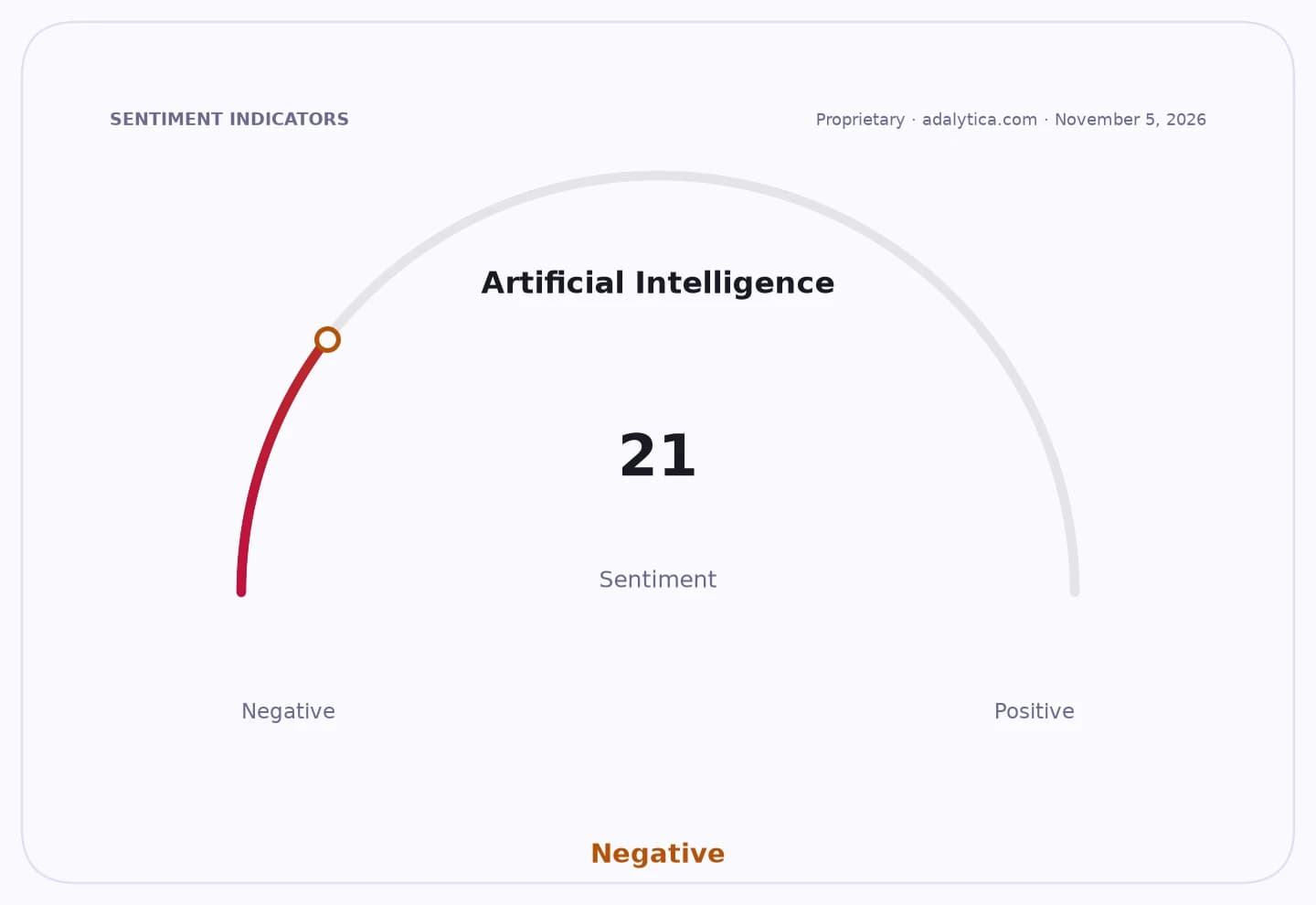
The stock market has already started to reflect how quickly sentiment can swing around AI names. Meta shares have been volatile, and the broader AI trade has cooled sharply in recent days, according to Adalytica’s AI sentiment gauge, which sits in “Extreme Fear.” Investors should read that not as a trading signal, but as evidence that the market is becoming more selective about which AI leaders can defend their economics over a full cycle.
The broader takeaway is simple: AI is still a powerful long-term theme, but the companies best positioned to win will be those that can navigate copyright, licensing and data sovereignty without compromising growth. For long-term investors, Meta remains a major AI contender, but this ruling is a good reminder to watch the legal foundation under the story as closely as the technology itself.
| Entity | Gains | Losses |
|---|---|---|
| Brazilian publishers | ▲Licensing leverage | ▼Free content extraction |
| Meta | ▲Legal clarity if overturned | ▼Lower-cost training access |
| AI rivals with licenses | ▲Competitive differentiation | ▼Data access uncertainty |
| Long-term investors | ▲Better pricing discipline | ▼Margin pressure from disputes |