Google is turning access to its search engine into leverage in the classroom, telling US schools they must opt in to its artificial intelligence tools if they want students to keep using search through Google software. That is a bigger deal than a policy tweak: it puts one of the internet’s most essential services in the middle of the fight over how, when and whether children should use AI.
Google ties school search access to AI opt-in
Artificial Intelligence
For investors, the move shows how aggressively Google is trying to lock education customers into its AI ecosystem, even as the backlash from educators, parents and child-development experts grows louder. The company has by far the dominant position in US education technology, with 150 million students and teachers worldwide using Google Classroom and many schools relying on Chromebooks. That scale gives Alphabet enormous distribution, but it also raises the stakes when schools push back.
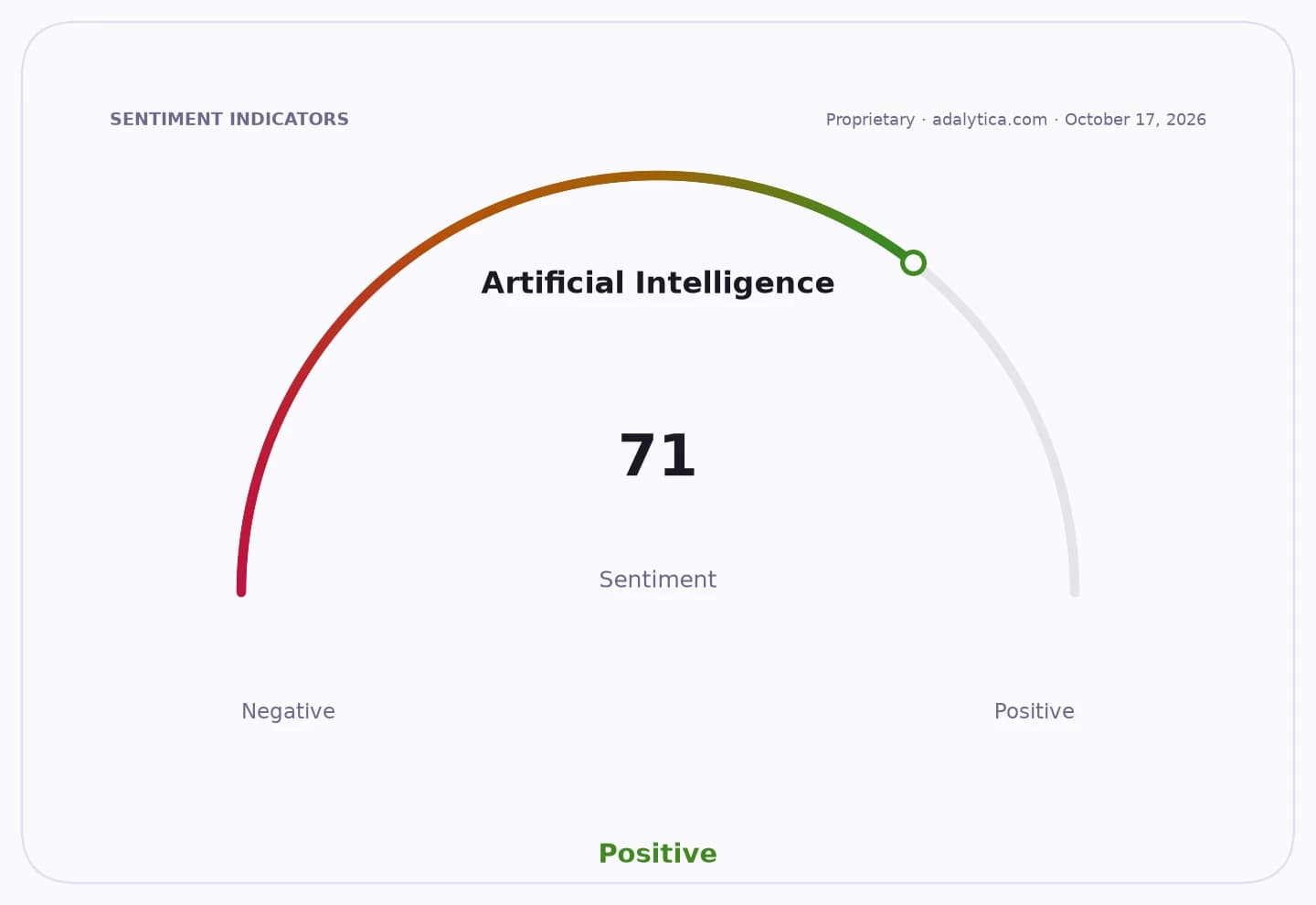
Sentiment Indicators
The policy shift came after criticism over Google’s decision in August to switch on its Gemini chatbot for many K-12 students by default. Now, schools will be able to turn Google tools on or off individually, including Gemini, Gemini Notebook and search, but search itself is tied to AI and cannot remain on if a district rejects AI altogether. In practical terms, schools that want the familiar utility of Google search must accept at least some AI integration.
That matters economically because Google is not just selling software; it is shaping the digital habits of the next generation. If schools keep Google inside the classroom, they also keep students inside Google’s broader product funnel, from search to AI to productivity tools. That kind of early brand lock-in can be powerful over years, especially in education, where switching costs are high and district-level decisions can affect thousands of users at once.
But the strategy also carries risk. Public scrutiny over children’s use of AI is intensifying, and major districts such as New York City and Los Angeles have already placed temporary bans on generative AI in elementary and middle schools while they review safety and policy. Former FTC chair Lina Khan accused Google of using its “search monopoly” to coerce schools into adopting AI, and advocacy groups say the company is trying to build lifetime loyalty rather than improve learning. If that view takes hold, the backlash could push schools toward more privacy-focused alternatives over time.
Google says its search tools are being updated to be “better for learning,” including step-by-step guided help that avoids quick answers to schoolwork. That framing matters: the company is trying to present AI not as a shortcut, but as an educational aid. Whether schools buy that argument will determine how much of Google’s education advantage it can preserve.
For long-term investors, the key takeaway is simple. Alphabet is defending a huge distribution channel and trying to convert classroom usage into AI adoption, but it is doing so in one of the most politically sensitive corners of technology. The business opportunity is real; so is the reputational risk. This is worth watching closely, especially if you own Alphabet for its secular AI and search franchise.
| Entity | Gains | Losses |
|---|---|---|
| Google / Alphabet | ▲deeper classroom lock-in | ▼more regulatory and public pushback |
| Schools that accept AI | ▲continued search access | ▼less control over classroom tech |
| Schools that reject AI | ▲greater autonomy | ▼lose Google search access |
| Rivals / privacy-focused tools | ▲chance to win disaffected schools | ▼lose if Google remains default |