Alphabet is folding its robotics moonshot Intrinsic back into Google, a move that tightens control over one of its most speculative bets and underscores how central physical AI has become to the company’s long-term growth strategy.
Alphabet Moves Intrinsic Into Google
The decision matters because robotics is moving from a side project to a strategic extension of Alphabet’s AI platform. By bringing Intrinsic inside Google after five years as a separate Other Bets unit, Alphabet is reducing the distance between research, cloud infrastructure and commercial product development at a time when investors are pressing big technology groups to show that AI spending can turn into durable revenue streams.
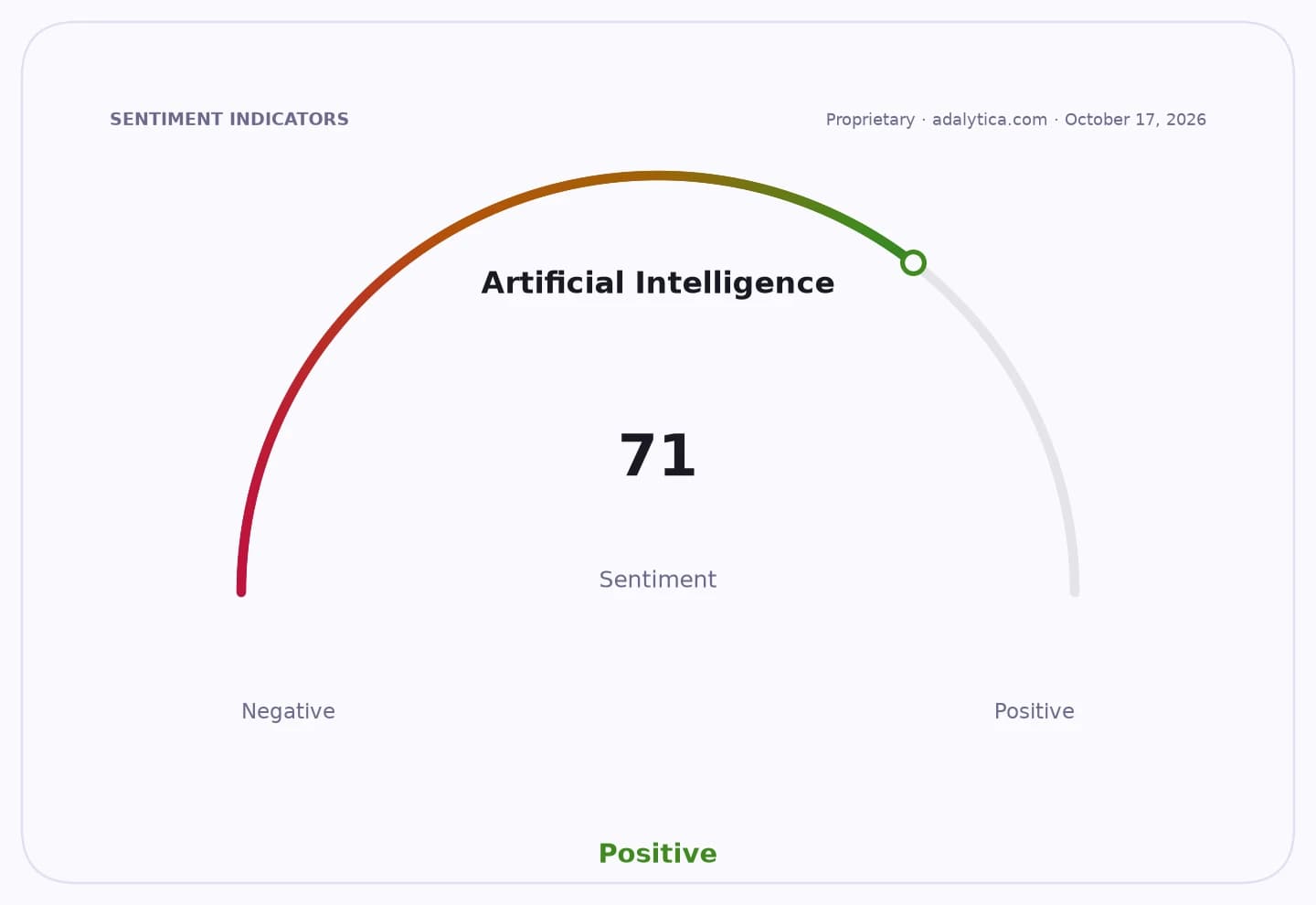
Sentiment IndicatorsⓘProprietary · adalytica.com · October 17, 2026
This is a snapshot — live sentiment, awareness and momentum for 130+ markets update continuously in the dashboard.Open AlphaPulse
Intrinsic, which Alphabet had “graduated” into an independent company within Other Bets in 2021, has pitched itself as the “Android of robotics” — a software layer meant to make robots easier to program, teach and operate. Under the new structure, it will remain a distinct group within Google and work closely with Google DeepMind, using Gemini models and Google Cloud resources. That alignment is the point: the company is no longer treating robotics as a laboratory exercise, but as a platform play built around its core AI stack.
The integration also reflects a broader shift in Alphabet’s capital allocation. Other Bets has long been a bucket for projects such as Waymo and Verily that are promising but years from scale. Pulling Intrinsic into Google suggests management wants tighter operational control over assets that could complement the main business rather than leave them isolated in a portfolio that markets often discount heavily. For investors, that can cut two ways: it may improve execution and speed commercialization, but it also raises the bar for near-term spending discipline and measurable returns.
Alphabet’s move comes as rivals are racing to define the next generation of AI applications beyond chatbots and search. Robotics is increasingly seen as one of the clearest commercial frontiers for foundation models, especially as companies look for software that can control machines in warehouses, factories and eventually consumer settings. DeepMind’s work on robotics models, including the unit it absorbed after Google shut Everyday Robotics, shows Alphabet already has the technical pieces in place. Intrinsic’s reorganization suggests the company now wants them under one roof.
The stock has been trading above its 50-day and 200-day moving averages in recent weeks, though momentum has been choppy, reflecting the market’s broader debate over how much of Alphabet’s AI investment will translate into earnings. That debate is not helped by the fact that robotics commercialization remains uncertain, regulatory scrutiny is rising as autonomous machines proliferate, and the route from software platform to scaled deployment is still long.
Still, the strategic logic is clear. If AI is moving from screens into the physical world, Alphabet is choosing to own more of that stack directly. That could strengthen its position against competitors in cloud, enterprise AI and robotics software. But it also means investors will increasingly judge Alphabet not just on model quality or ad resilience, but on whether its physical-AI bet can become a real business rather than another moonshot.
| Entity | Gains | Losses |
|---|---|---|
| Alphabet/Google | ▲Tighter AI-robotics integration | ▼More execution risk |
| DeepMind/Gemini | ▲Bigger real-world use case | ▼Higher commercialization pressure |
| Intrinsic | ▲Access to core resources | ▼Independence |
| Other Bets portfolio | ▲Cleaner strategic focus | ▼Less optionality |