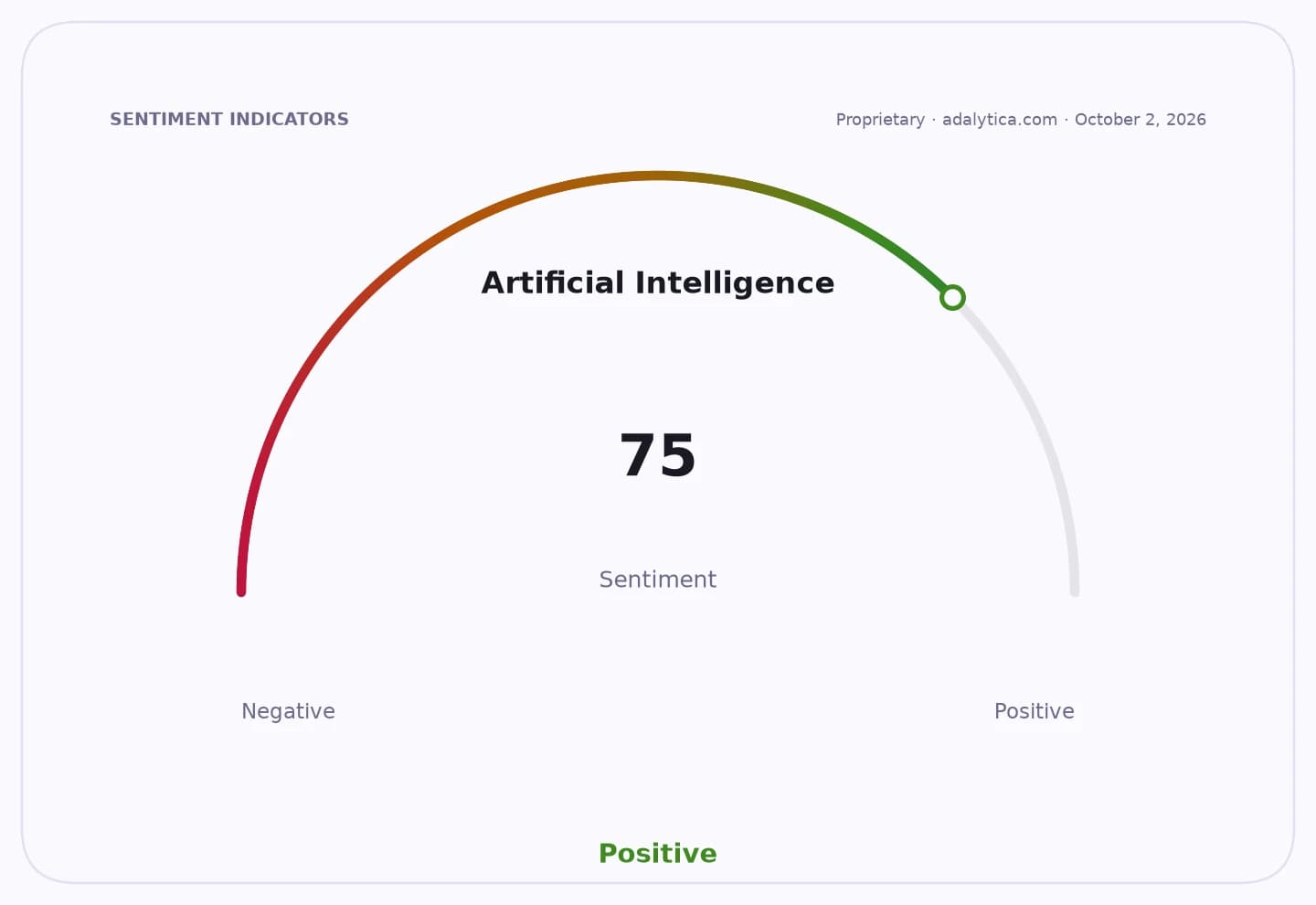
Google’s Antigravity platform puts the company deeper into the race to turn AI from a coding helper into an autonomous developer, a shift that could reshape software production, cloud demand and the economics of enterprise technology.
Google launches Antigravity for autonomous coding
The launch, tied to Google’s Gemini 3 model family, is aimed at developers who want agents that can write code, run terminal commands, browse the web, deploy services and manage whole projects with less human supervision. That matters because software teams are moving beyond autocomplete-style tools and toward systems that can execute multi-step tasks, potentially cutting build times and lowering the cost of routine development work.
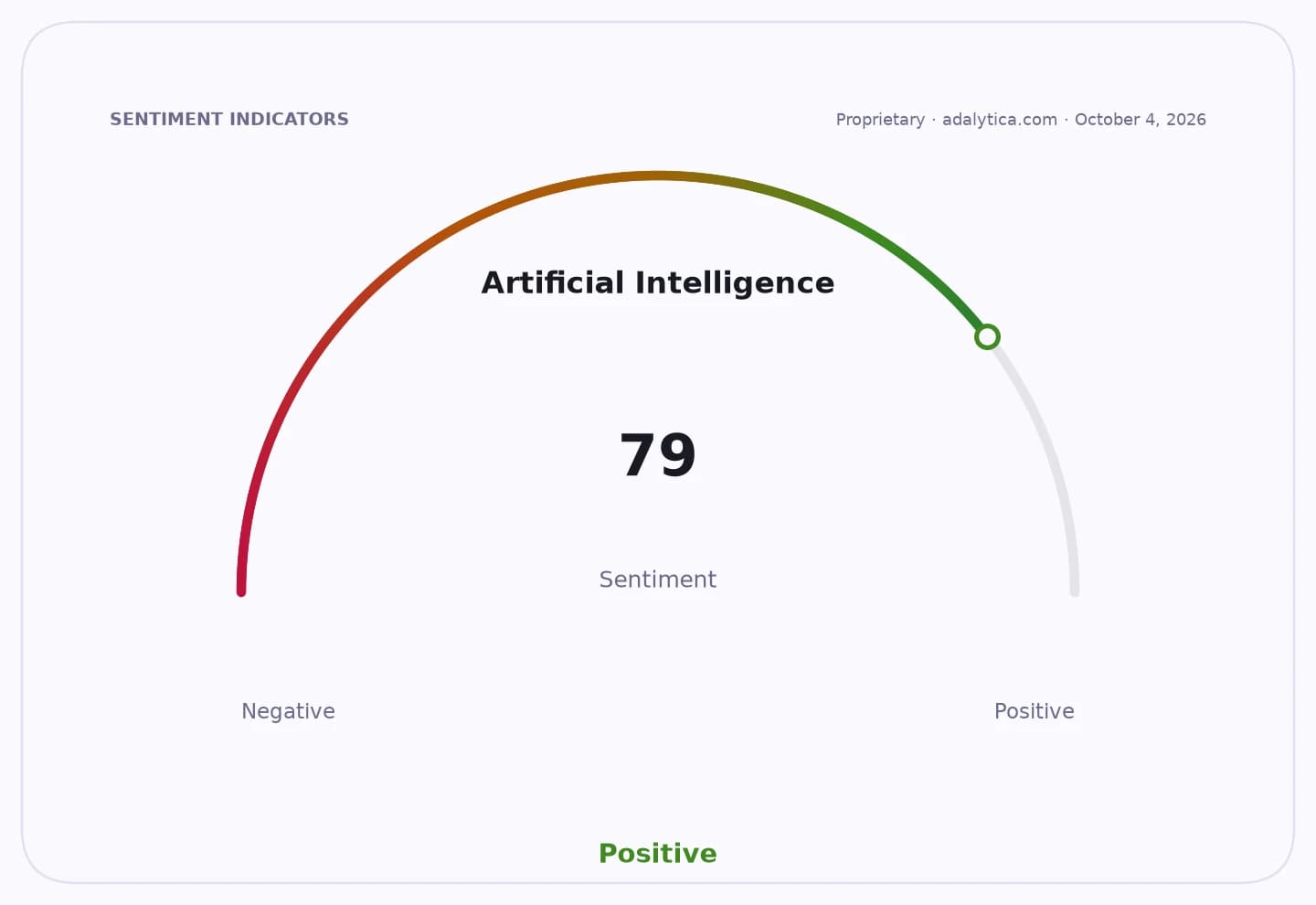
Sentiment IndicatorsⓘProprietary · adalytica.com · October 4, 2026
This is a snapshot — live sentiment, awareness and momentum for 130+ markets update continuously in the dashboard.Open AlphaPulse
Antigravity is built around projects, agent conversations and “artifacts” that show plans, screenshots and browser recordings before changes are finalized. Google is also packaging the product for different workflows through a standalone app, a VS Code-based IDE, command-line tools, a Python SDK and extensions for JetBrains, Visual Studio Code and Zed. The pitch is clear: embed autonomous agents directly into existing developer environments instead of asking teams to switch platforms.
The broader economic stake is productivity. If agents can reliably handle coding, testing, browser navigation and deployment, companies may be able to do more with smaller teams or redirect engineers toward higher-value work such as architecture, security and product design. For cloud vendors, the payoff is greater usage of compute, storage and developer services as AI-driven workflows become more deeply embedded in the software lifecycle.
Google is also using Antigravity to pull developers closer to its ecosystem. The platform comes with integrations for Android, Firebase, Flutter, Dart, Chrome DevTools, BigQuery, Dataflow and Google Maps Platform, with MCP connections to external systems and Google Cloud deployment tools. That gives Alphabet a way to make its cloud, models and developer tools more sticky as enterprises test agentic workflows.
Investors have been treating AI as a race for distribution as much as model quality, and the stock response reflects how much is riding on that battle. Alphabet shares were recently around $343.50, above the 50-day moving average of $344.23 and the 200-day moving average of $338.54, after a volatile run that has kept the stock close to recent highs. Microsoft, another major AI platform player, was trading around $517.53, while Nvidia was near $233.95, underscoring how the entire AI supply chain remains bid.
The challenge is execution and trust. Agentic coding tools promise speed, but they also raise the risk of erroneous changes, security gaps and over-automation in sensitive codebases. Google’s use of artifacts, project-level permissions and progressive skill activation is designed to address that concern, but enterprise adoption will depend on whether the tool can prove it is reliable enough for production work.
The next test is whether developers and companies adopt Antigravity at scale and whether rivals answer with comparable agent-driven development platforms. If they do, the competition in AI coding could shift from helping engineers write code faster to deciding which company controls the next layer of software creation.
| Entity | Gains | Losses |
|---|---|---|
| Google/Alphabet | ▲More developer lock-in | ▼Higher execution risk |
| Enterprise developers | ▲Faster workflows | ▼More automation risk |
| Microsoft and rivals | ▲Industry validation | ▼Competitive pressure |
| Nvidia and cloud suppliers | ▲More AI compute demand | ▼Margin scrutiny if adoption slows |