Greece has unveiled a broad 17-measure tax package that cuts levies on freelancers and companies, raises wages and pensions, and expands housing support, in one of the country’s largest fiscal interventions since the debt crisis.
Greece unveils 17-measure tax package for 2026

The plan, presented at this year’s Thessaloniki International Fair, is budgeted at about 2.2 billion euros in 2026 and 3.5 billion euros once fully phased in, according to the government, and is designed to shore up disposable income while nudging investment and home ownership. Economically, it is a demand-support package at a time when households remain squeezed by living costs and when the state is trying to keep growth broad-based without reigniting the kind of tax distortions that have long hampered business formation.
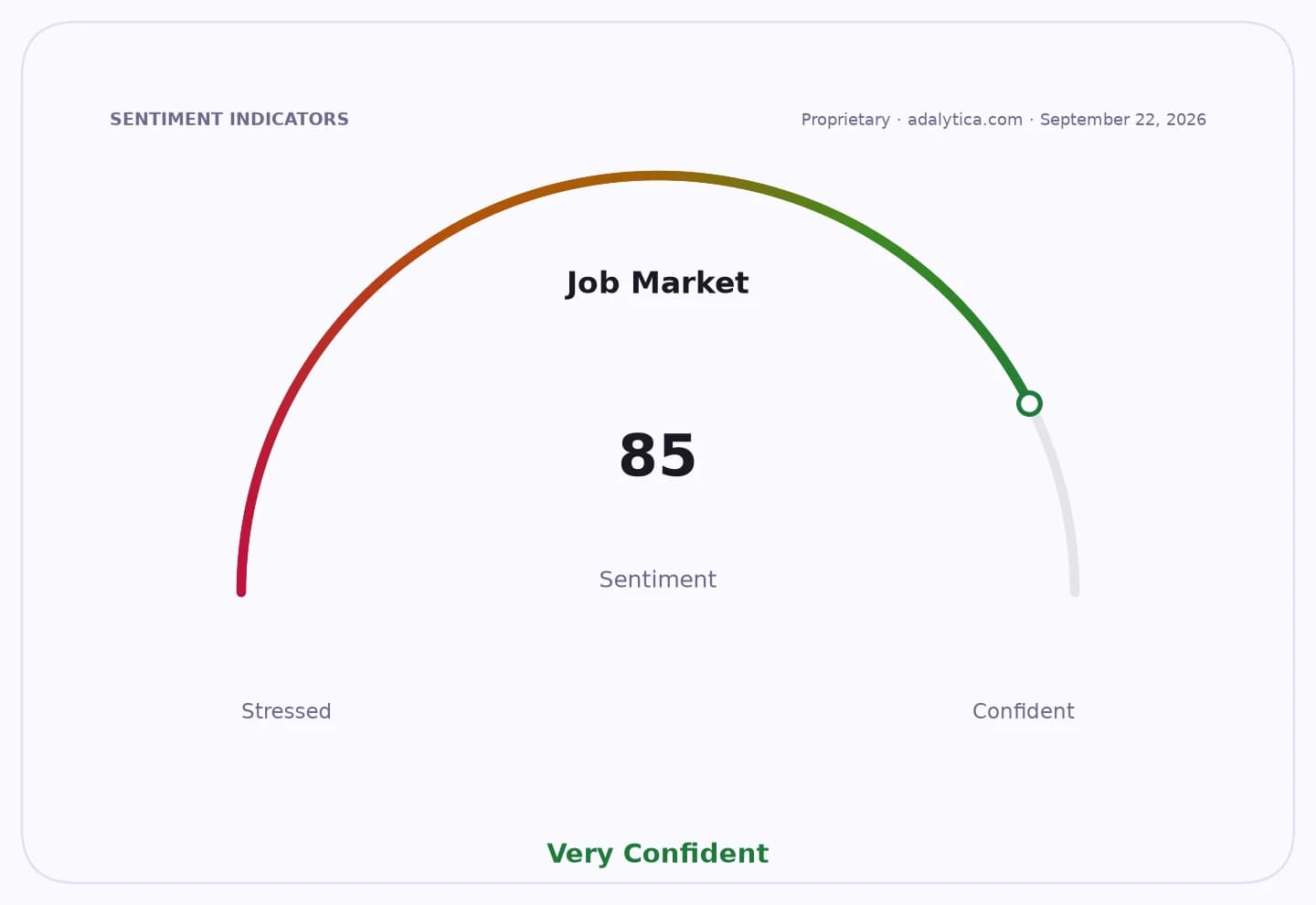
Sentiment IndicatorsⓘProprietary · adalytica.com · September 7, 2026
This is a snapshot — live sentiment, awareness and momentum for 130+ markets update continuously in the dashboard.Open AlphaPulse
The biggest immediate winners are self-employed workers, low- and middle-income families, pensioners and public-sector employees. For compliant freelancers, the notional income regime is effectively dismantled from the 2026 tax year, with the minimum base falling to the minimum wage level plus seniority increments. A cafe owner example in the government briefing showed the tax bill dropping about 53%, to 2,249 euros from 4,783 euros. The advance tax payment for sole proprietors is also cut to 50% from 55% from 2027, a move that improves cash flow for businesses that typically face tight working-capital constraints.
For companies, the package goes further by setting out the gradual abolition of the business levy, starting in 2027 outside Attica and Thessaloniki and reaching a full repeal nationwide in 2029. It also lowers corporate advance tax payments to 50% in steps from 2028, matching the rate for sole traders, and speeds depreciation for new machinery to six years from 10 starting in 2027. That matters because it changes the after-tax return on investment, especially for firms weighing equipment upgrades, industrial capacity expansion and technology spending.
The government is also trying to push credit into small business and housing. Two new financing tools through the Hellenic Development Bank are expected to mobilize 5 billion euros for small and medium-sized enterprises, using 1.5 billion euros in Recovery Fund loans and bank leverage. On housing, the new “Spiti mou III” scheme will allocate 2 billion euros for first-home purchases, widen eligibility to buyers up to 55 from 50, lift eligible property values to 300,000 euros from 250,000 and increase the maximum loan to 230,000 euros from 190,000. The state is also extending tax breaks for long-term rentals and raising the tax on home purchases by non-EU buyers to 15% from 3% in 2027, an explicit attempt to cool external demand that has been pushing up prices.
For labor income, the package promises a staged increase in the minimum wage to 1,000 euros by January 2028 from 920 euros now, and to 1,300 euros including seniority pay. Private-sector insurance contributions will fall by 0.5 percentage point from April 2027, with the entire reduction passed through to workers’ net pay. Public employees will receive a 500-euro Christmas bonus from December 2027, while the base wage in the public sector will rise twice, by April 2027 and January 2028.
Pensioners are another clear target. The annual November support payment rises to 400 euros net from 300 euros and is extended to all retirees over 65, adding 270,000 beneficiaries for a total of 2.2 million. That broadens the social reach of the measure and reinforces consumption among older households, which tend to spend a large share of transfers on essentials.
The package’s political logic is as important as its fiscal one. It tries to spread relief across groups that shape Greek domestic demand — private workers, public workers, pensioners, farmers, families and small businesses — while also addressing one of the economy’s most persistent weaknesses: low investment and a narrow tax base. The government’s bet is that lower tax friction, stronger wages and easier credit can support growth without undermining compliance.
For investors, the immediate question is not just the size of the relief, but the sequencing. Much of the package phases in over 2027 and 2028, limiting near-term fiscal slippage but also delaying earnings support for listed companies and consumer-facing sectors. In the near term, banks stand to gain from higher credit demand and lower mortgage-related barriers, while construction, materials and home-improvement names could benefit from the housing measures. Small-cap domestic businesses may also see sentiment improve if the levy rollback and depreciation incentives translate into higher free cash flow.
The risk is that the measures arrive into an economy still sensitive to inflation and high living costs, with households likely to spend rather than save much of the relief. That would support consumption in the short run, but it could also keep pressure on imports and housing prices. The next catalysts will be the final budget arithmetic, the exact implementation timetable and whether lenders and businesses respond quickly enough to turn the tax package into investment and productivity gains rather than just a one-off income boost.
| Entity | Gains | Losses |
|---|---|---|
| Freelancers and sole proprietors | ▲Lower tax bills, lower advance tax | ▼Higher compliance pressure on tax filing |
| Companies and SMEs | ▲Lower levy, faster depreciation, easier credit | ▼Slower phase-in of benefits |
| Pensioners and public workers | ▲Higher transfers and pay | ▼Budget room for other spending |
| Homebuyers and renters | ▲More housing finance, more rental supply | ▼Non-EU buyers, property speculators |