Greek Finance Minister Kyriakos Pierrakakis used a CNN interview to frame rising European bond yields as a test of national credibility, arguing that markets are now pricing not just debt levels but the quality of fiscal and political institutions behind them.
Greece Bond Yields and Euro Zone Fiscal Credibility

The message matters because Europe is moving into a period of structurally higher borrowing costs just as governments face pressure to support households, fund energy security and step up defense spending. Pierrakakis said the era of cheap capital has ended, with the average yield on 10-year European government debt at 4.4%, versus 1.1% a decade ago, while average fiscal deficits have more than doubled to 1.7% from that period.
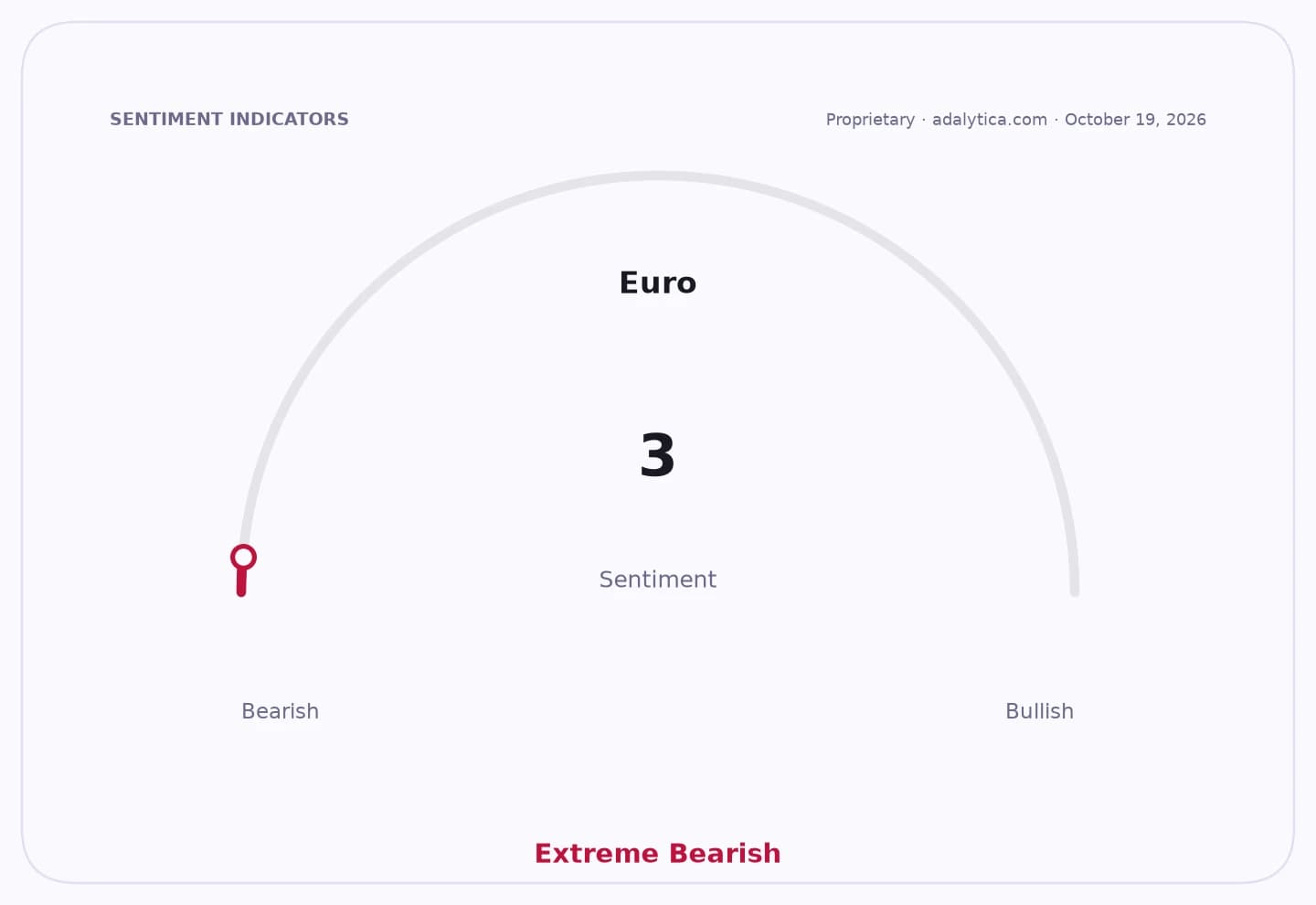
Sentiment IndicatorsⓘProprietary · adalytica.com · October 19, 2026
This is a snapshot — live sentiment, awareness and momentum for 130+ markets update continuously in the dashboard.Open AlphaPulse

For investors, the implication is that sovereign spreads are becoming a sharper discriminator across the euro zone. Countries with stronger fiscal records and more stable political systems can still borrow on relatively better terms, while weaker credits face a tougher combination of higher rates and wider market scrutiny. That is especially relevant for France and Italy, where yields have climbed against German bunds and revived debate about whether Europe’s higher-rate regime will force deeper consolidation.
Pierrakakis tried to draw a line between today’s market strain and the last euro zone debt crisis, saying the current situation is “completely different” and that Greece itself is in a stronger position after putting its public finances in order. He pointed to a 1.4 billion euro support package this year for households and businesses, saying Athens could afford it because of the fiscal discipline already in place.

His comments also underline a broader shift in policy thinking in Europe. Governments are asking for more fiscal room at the same time the IMF is pressing them to restrain expansion, but Pierrakakis argued that the two goals can be reconciled through reallocation rather than outright spending growth. That includes using existing escape clauses for defense and energy-related investment more strategically.
The macro backdrop makes that debate more urgent. Treasury yields have eased from recent highs, but the wider trend remains one of elevated government borrowing costs across developed markets, keeping pressure on debt-service burdens and narrowing room for maneuver. Pierrakakis said the “geopolitical innocence” of the past is ending, with fragmentation and energy diversification now shaping Europe’s fiscal choices.
For investors, the key takeaway is that bond yields are no longer just a reflection of inflation and central bank policy. They are increasingly a referendum on credibility, reform capacity and the willingness of European governments to make trade-offs between growth, security and fiscal restraint.
| Entity | Gains | Losses |
|---|---|---|
| Greece | ▲Lower funding premium from fiscal credibility | ▼Less tolerance for policy slippage |
| Stronger euro zone credits | ▲Relative spread advantage | ▼— |
| Weaker euro zone sovereigns | ▲— | ▼Higher borrowing costs |
| Bond investors | ▲Clearer credit differentiation | ▼More fiscal volatility risk |