Greek inflation accelerated sharply to 5% in September, underscoring how an energy-driven price shock is filtering through households, businesses and markets just as Athens has limited room to cushion the blow.
Greece Inflation Rises to 5% in September
The September reading, up from 3.8% in August, points to a renewed loss of pricing stability in an economy that has outpaced the euro area on growth but remains more exposed to imported energy costs and domestic supply bottlenecks. The spike matters because it raises the odds that consumer purchasing power weakens further, keeping pressure on retail spending and complicating the policy mix for the government and the European Central Bank.
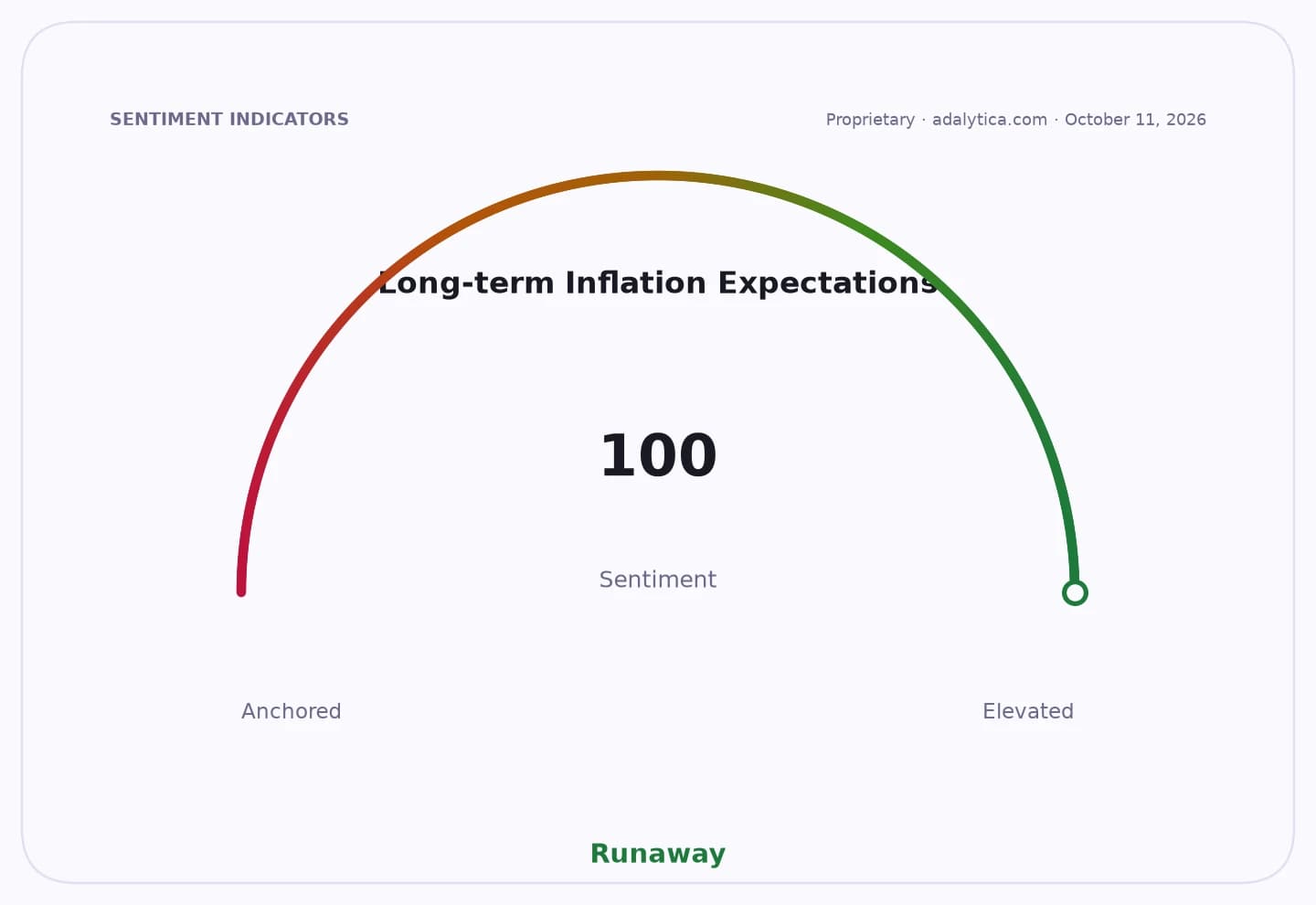
Sentiment IndicatorsⓘProprietary · adalytica.com · October 11, 2026
This is a snapshot — live sentiment, awareness and momentum for 130+ markets update continuously in the dashboard.Open AlphaPulse
The biggest push came from housing and transport, where prices rose 14.7% and 11.3%, respectively, according to ELSTAT. Fuel costs did much of the damage: natural gas was up 55.2% from a year earlier, heating oil 53.2%, diesel 38.8% and gasoline 22.5%. Those increases are broadening the inflation problem beyond headline energy into everyday household budgets, especially for lower-income families with less ability to absorb higher utility and commuting costs.
The rise also cuts against any suggestion that price pressure is confined to a narrow set of goods. Prices increased across most categories, including food, clothing, household goods, health, recreation, education, restaurants and cafes, insurance and personal care. The only declines were in mobile communications and audio-visual products. That breadth matters for investors because it suggests the shock is not just a temporary utility spike but a broader squeeze on nominal demand and margin structures in parts of the consumer economy.
For policymakers, the reading tightens the trade-off between supporting growth and containing inflation. Greece has benefited from tourism, shipping and investment inflows, but higher inflation can erode real wages and stall the recovery in household consumption, which is still crucial to domestic demand. It also limits the scope for fiscal relief after the European Commission rejected Athens’ request for extra budget flexibility to address inflation pressures, leaving fewer tools to offset the rise in living costs.
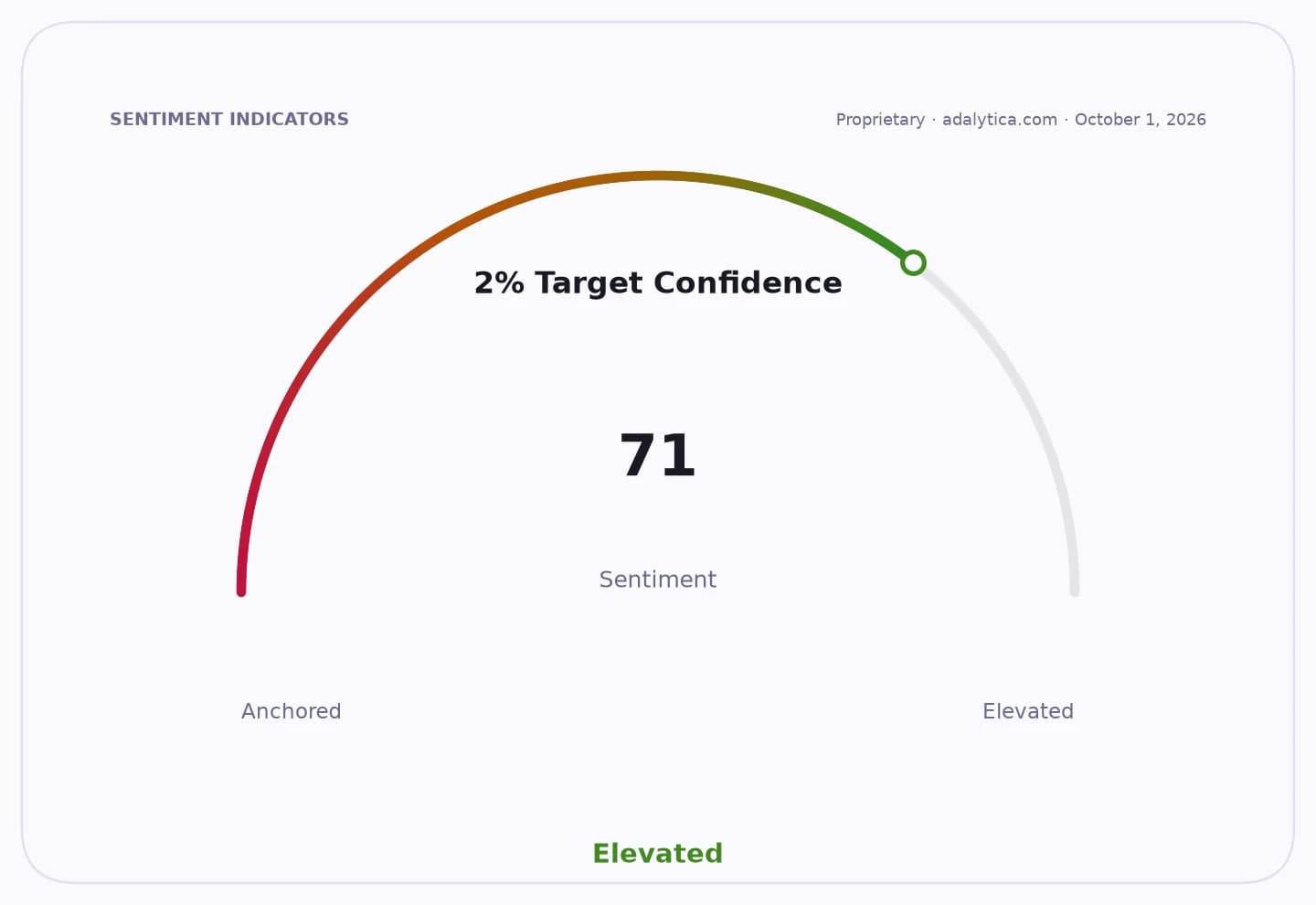
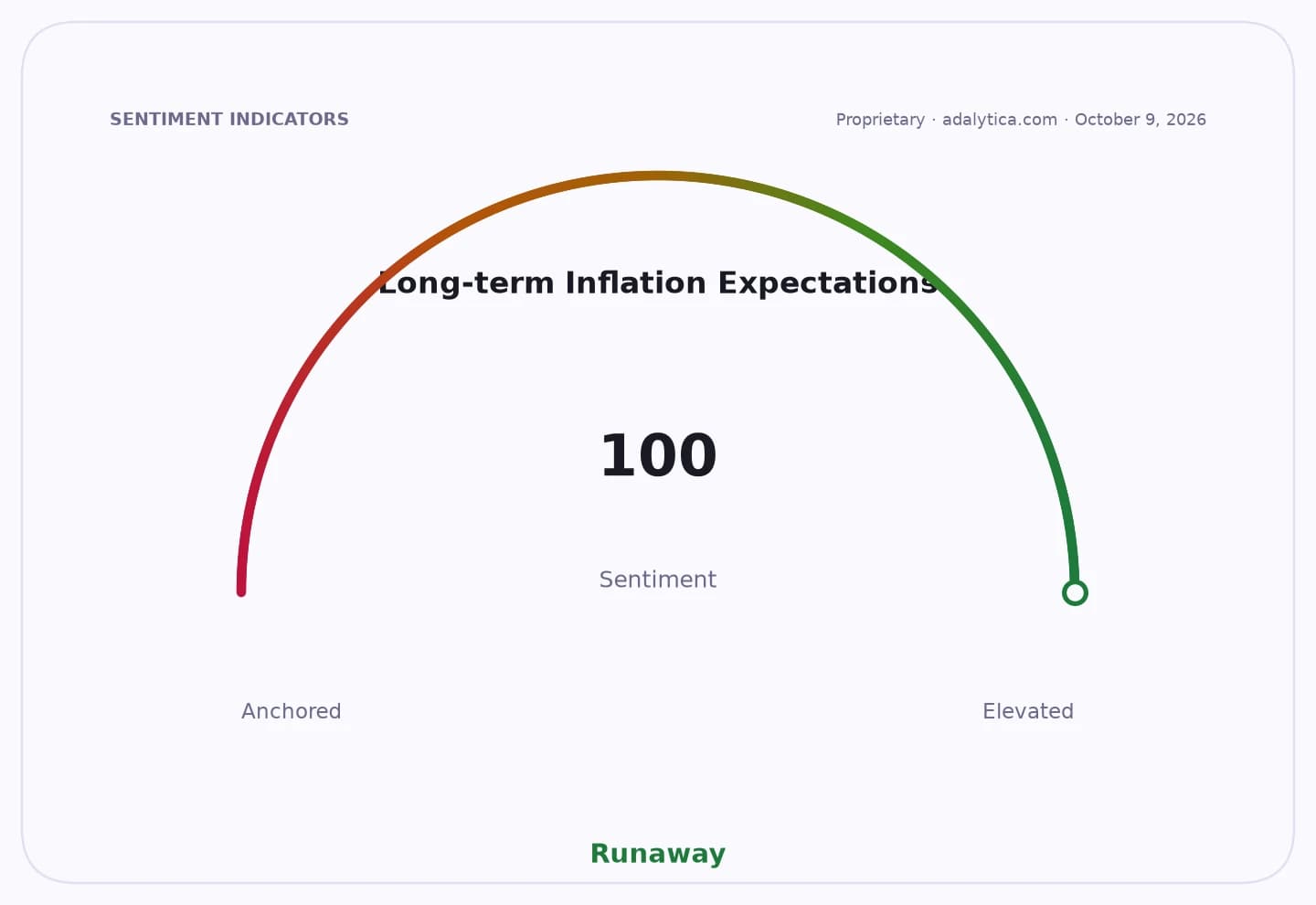
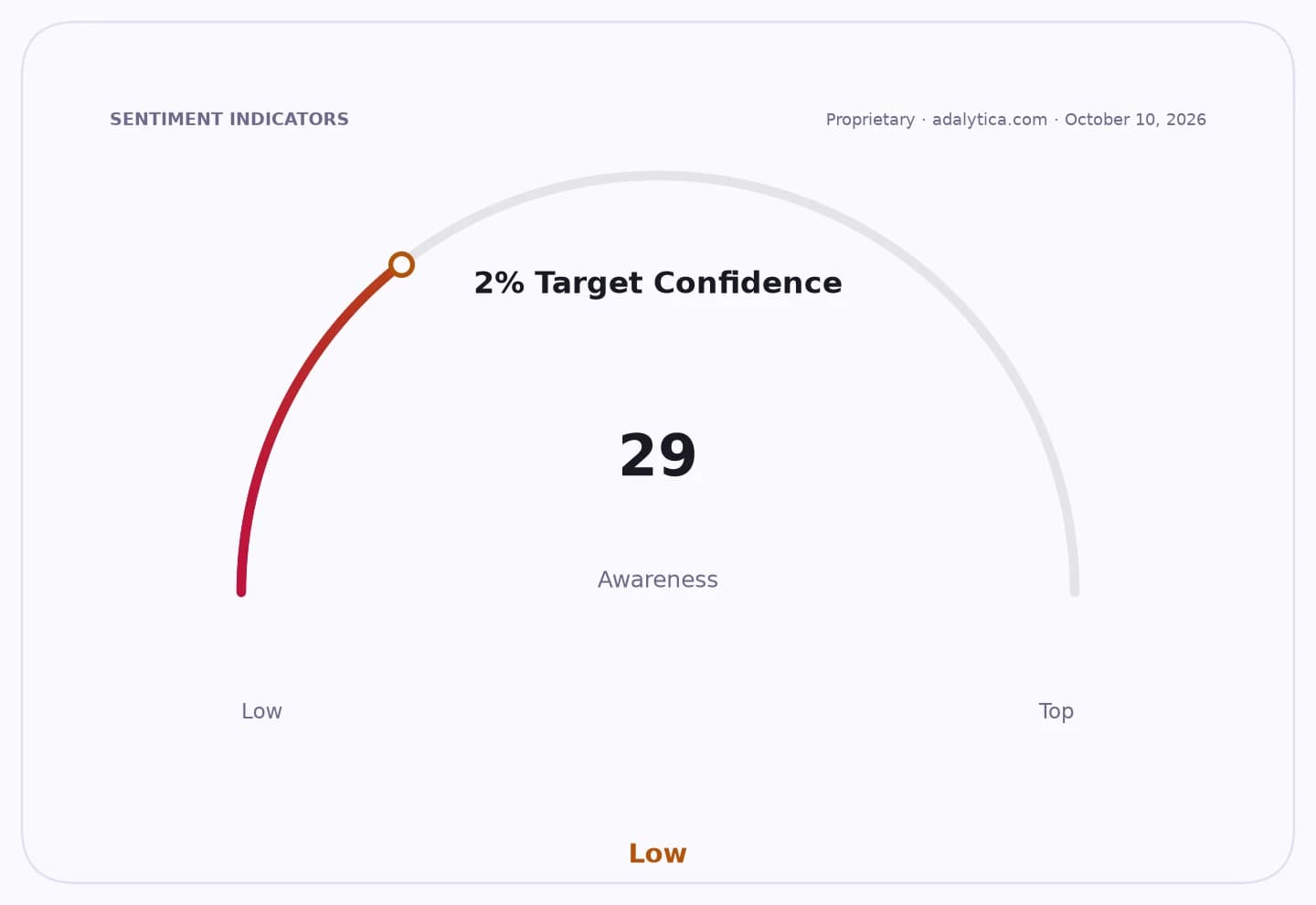
Markets have already been sensitive to the inflation backdrop. Greek assets remain exposed to the possibility that stubborn price pressure keeps bond yields elevated and delays any meaningful easing in financial conditions. Adalytica’s gauges on confidence in the Fed’s 2% inflation target, long-term inflation expectations and wage inflation all read at extreme levels, reflecting how quickly inflation psychology can shift when price gains re-accelerate. While those indicators are global rather than Greece-specific, the message for investors is familiar: persistent inflation can reprice rate expectations, compress multiples and weigh on rate-sensitive sectors.
The immediate question is whether September marks the start of another prolonged inflationary run or just a burst from energy and transport. If fuel and housing costs remain elevated into the autumn, households are likely to face a further squeeze and the government may come under pressure to consider targeted relief. If not, the broader risk is that inflation stays high enough to prevent a clean recovery in real incomes and consumer confidence, even as Greece’s macro story remains stronger than in previous crises.
| Entity | Gains | Losses |
|---|---|---|
| Energy producers | ▲Higher nominal revenue | ▼Households facing bigger bills |
| Greek retailers/restaurants | ▲Some pass-through pricing power | ▼Consumer demand if real incomes weaken |
| Greek government | ▲Evidence of resilience needed | ▼Political pressure for relief |
| Consumers/borrowers | ▲None | ▼Purchasing power and real wages |