Greece is reshaping its labour market around higher pay, fuller-time jobs and tighter enforcement, as a long recovery from the debt crisis gives the government room to push wages up while widening oversight of working hours and undeclared work.
Greece raises wages and expands labour enforcement
The clearest economic shift is the combination of record employment and faster wage gains. Labour minister Niki Kerameus said the employment rate has climbed to 72.2%, the highest on record, while female employment has reached 63.6%. Unemployment has fallen to below 8% from around 18%, and the government says that translates into roughly 563,000 more workers than in 2019.
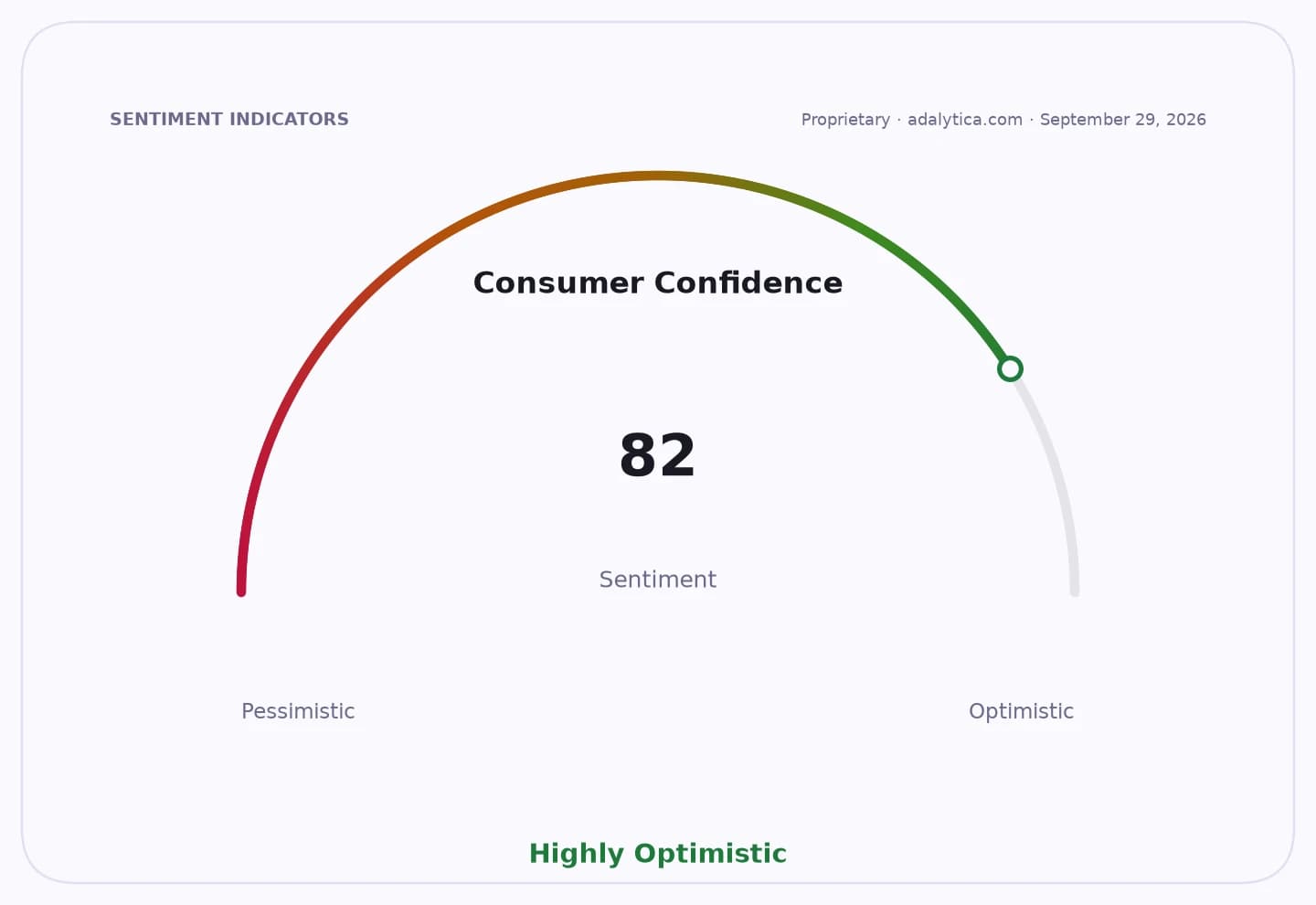
Sentiment IndicatorsⓘProprietary · adalytica.com · September 29, 2026
This is a snapshot — live sentiment, awareness and momentum for 130+ markets update continuously in the dashboard.Open AlphaPulse
That matters because Greece’s growth model has depended heavily on jobs and consumption rather than large productivity-led wage increases. A tighter labour market gives households more income support and helps sustain domestic demand, but it also raises the pressure on firms already facing higher payroll costs. For investors, it points to a labour market that is no longer defined only by slack and underemployment, but increasingly by labour scarcity, compliance costs and competition for workers.
The policy response is to make those jobs better paid and more visible. The share of workers on full-time contracts has risen to 80% from 70% in 2019, according to the ministry, suggesting a shift away from part-time or intermittent employment. The statutory minimum wage has been lifted to 920 euros from 650 euros in 2019, and the government now wants it above 950 euros by April 2027 and at 1,000 euros in 2028. The average monthly wage has already reached 1,530 euros, above the earlier 1,500-euro target, with a new goal of 1,800 euros by 2030.
Those gains support household spending and can help narrow the income gap with richer euro-area peers, but they also test the capacity of smaller employers, tourism businesses and service firms to absorb higher labour costs without cutting margins or employment. The bull case for Athens is that stronger pay will help keep workers in the country and support consumption. The bear case is that sustained wage acceleration, if not matched by productivity, could squeeze competitiveness in low-margin sectors.
The government is pairing wage gains with stricter monitoring. Its digital work card will be extended to another 500,000 workers, with the first phase starting on Oct. 12 for private health providers, telecoms and services including hair salons, beauty centres and laundries. A second phase follows on Nov. 15 and will cover consulting, advertising, repairs, logistics, wastewater management and gambling.
Officials say the system has already uncovered millions of additional overtime hours and boosted insurance receipts. Economically, that is important because better enforcement raises formal payroll contributions, reduces tax leakage and expands the base for future social spending. It also signals that the state is trying to convert a labour-market recovery into more durable fiscal capacity, not just headline job growth.
The benefits are feeding into wider social measures. Kerameus said stronger insurance revenues and lower evasion create room for the abolition of cuts to survivor pensions, a permanent 400-euro annual payment to about 2.2 million pensioners each November, and a gradual phase-out of the so-called personal difference on pensions, halving it from January 2026 before full removal in 2027.
For investors, the story is less about any single wage figure than about the direction of travel. Greece is moving from crisis-era labour slack toward a more formal, better-paid and more tightly regulated market. That is supportive for consumer demand, bank credit quality and fiscal stability, but it also means wage bills, compliance systems and staffing strategies will come under closer scrutiny. The next test will be whether higher pay and stricter oversight can keep lifting participation and productivity without eroding the competitiveness that has underpinned Greece’s recent recovery.
| Entity | Gains | Losses |
|---|---|---|
| Workers | ▲Higher pay, more full-time jobs | ▼Faster employer cost pressure |
| Government | ▲Higher contributions, stronger compliance | ▼Political risk if costs bite |
| Employers | ▲Clearer labour rules, less shadow competition | ▼Higher wages and enforcement burden |
| Pensioners | ▲New benefits and payment support | ▼Delayed full pension reform |