Greece is betting 10,000 euros per household that cash, not slogans, can slow the drain from its border regions.
Greece Launches 10,000-Euro Relocation Aid Program
The government on Wednesday opens applications for a relocation program that pays families to permanently move to eligible frontier areas, with an advance of 5,000 euros available up front. The measure matters because Greece’s most pressing regional economic problem is not just weak growth, but a shrinking population base that erodes labor supply, school enrollments, local demand and the tax base in towns close to the country’s borders.
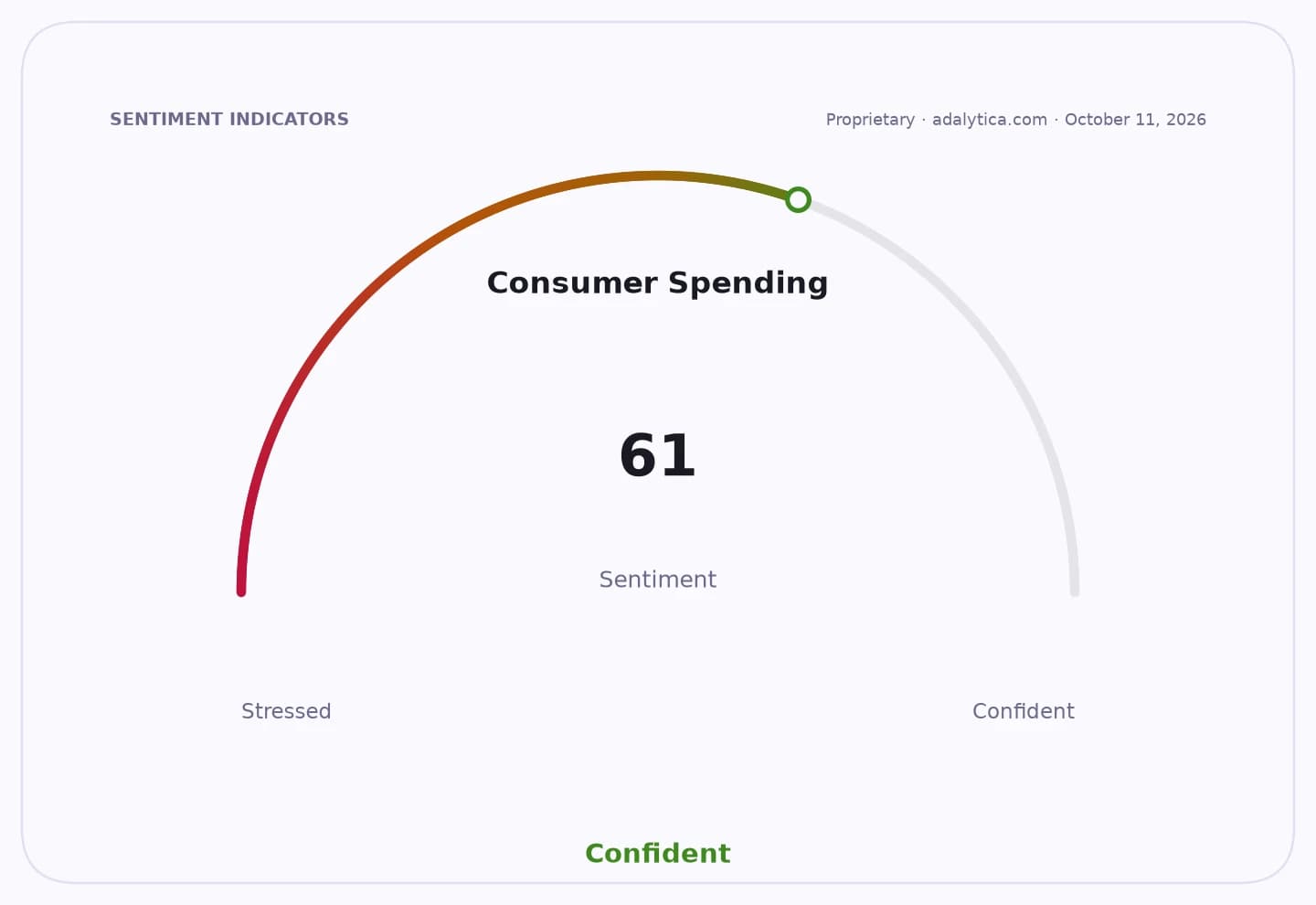
Sentiment IndicatorsⓘProprietary · adalytica.com · October 14, 2026
This is a snapshot — live sentiment, awareness and momentum for 130+ markets update continuously in the dashboard.Open AlphaPulse
The platform, run through gov.gr, initially targets the Evros region and is being expanded to 10 more regional units: Kilkis, Florina, Kastoria, Drama, Pella, Grevena, Kozani, Serres, Ioannina and Thesprotia. The aid is paid in two equal installments of 5,000 euros, with the second tranche released after a year of proven permanent residence. For the first time, households can receive the first 5,000 euros before pre-approval, a change designed to remove one of the biggest practical barriers to moving.
That detail is economically important. Relocation is expensive long before a family signs a lease or buys a home: moving costs, deposits, transport, temporary housing and setting up a household all hit at once. By offering cash early, Athens is trying to turn an abstract demographic policy into a usable incentive. The program also broadens eligibility to Greeks returning from elsewhere in the EU and to young graduates from local universities who choose to stay, which gives it a sharper chance of retaining skills rather than just attracting transient residents.
The ceiling is small — 1,000 households, or at most 10 million euros in direct support — but the policy’s real value is as a template. Greece is testing whether modest fiscal spending can support strategic settlement in underpopulated areas without waiting for private investment to arrive first. If it works, the payback is not only social cohesion but also a steadier local economy in regions where shops, services and housing markets weaken as people leave.
For investors, the immediate market impact is limited, but the broader message is clear: demographic policy is becoming an economic tool. That matters for Greek banks, local property owners, utilities, retailers and municipal economies that depend on population stability. It also fits a wider European trend, where governments are increasingly using targeted incentives to redistribute people, spending and labor toward places the market has abandoned.
The deeper investment takeaway is that the next wave of public spending in Europe may not be about stimulus in the old sense. It will be about preserving the productive map of the country. That creates opportunities in infrastructure, housing, regional services and local consumption, while underscoring the structural drag on assets tied to depopulating interiors. For now, Athens is making a small but telling wager: a 10,000-euro check may be enough to buy time for places the market has already priced as fading.
| Entity | Gains | Losses |
|---|---|---|
| Border towns in Greece | ▲Population support | ▼Decline slows only if uptake rises |
| Relocating households | ▲Cash aid and lower living costs | ▼Mobility and relocation costs |
| Local businesses and landlords | ▲More residents and demand | ▼Limited if program is too small |
| Central government budget | ▲Targeted, capped spending | ▼Fiscal outlay and execution risk |