Greek households increased monthly spending to 1,820 euros in 2025, but most of the gain was absorbed by higher prices rather than stronger purchasing power, underscoring how stubborn living costs continue to shape consumer demand and domestic growth.
Greek households raise spending as inflation bites
The average monthly outlay rose 5.5% from 1,725 euros in 2024, according to the Hellenic Statistical Authority’s household budget survey. Once 2.6% inflation is stripped out, real consumption growth was just 2.9%, a reminder that nominal gains are still only slowly translating into more discretionary spending.
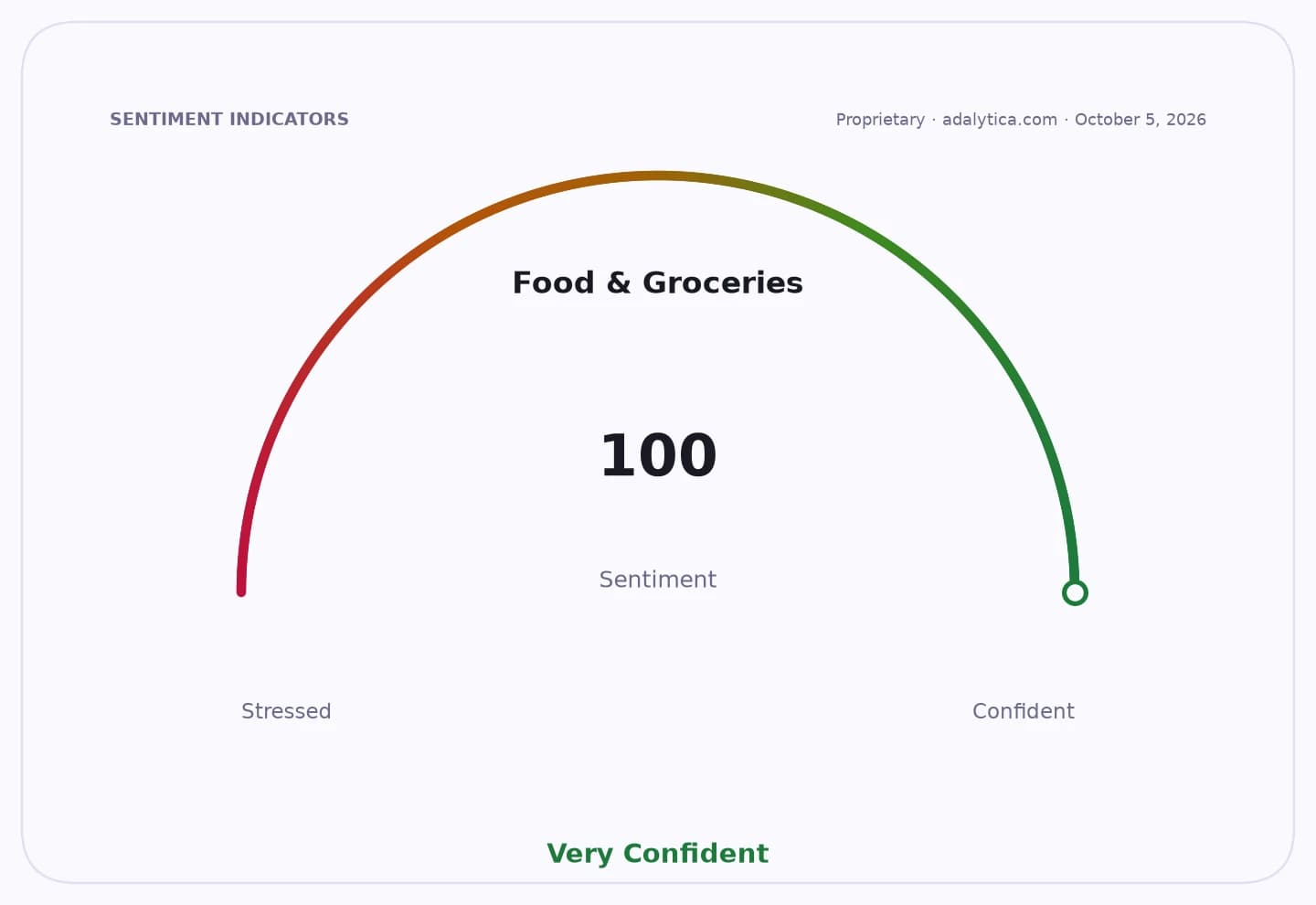
Sentiment IndicatorsⓘProprietary · adalytica.com · October 4, 2026
This is a snapshot — live sentiment, awareness and momentum for 130+ markets update continuously in the dashboard.Open AlphaPulse
That matters for the broader economy because household consumption remains the core engine of Greek growth. The data show consumers are still spending heavily on essentials: food accounted for 20.4% of the budget, housing 14.7% and transport 13.6%, with recreation, travel and dining at 11.8%. Those categories leave less room for higher-margin discretionary purchases and point to a consumer base that is improving, but not yet fully elastic.
The structure of spending also helps explain where growth is and is not being generated. Clothing and footwear spending rose 2.5%, slower than overall consumption, and its share slipped to 4.9% from 5% even as the average annual spend per person climbed to 443 euros. Greeks spent about 4.6 billion euros on apparel and shoes in 2025, but the category remains a secondary beneficiary of the recovery compared with supermarkets, landlords, fuel sellers and transport providers.
For investors, that mix is more important than the headline number. Companies and sectors exposed to staples should see steadier volume resilience, while discretionary retailers, apparel chains and leisure operators may face a more uneven demand backdrop unless wage growth keeps ahead of inflation. The data also suggest pricing power remains relevant: consumers are still allocating a large share of income to unavoidable categories, making them more sensitive to further increases in food, housing and mobility costs.
The reading fits a broader post-inflation adjustment story for Greece: households are spending more in euros, but only modestly more in real terms. Unless inflation cools further or income growth accelerates, the recovery in domestic demand is likely to remain gradual, with essentials continuing to crowd out discretionary consumption.
| Entity | Gains | Losses |
|---|---|---|
| Food retailers | ▲Steady demand | ▼Discretionary chains |
| Landlords and utilities | ▲Larger budget share | ▼Apparel sellers |
| Transport providers | ▲Strong essential spending | ▼Nonessential leisure |
| Greek households | ▲Higher nominal spending | ▼Real purchasing power |