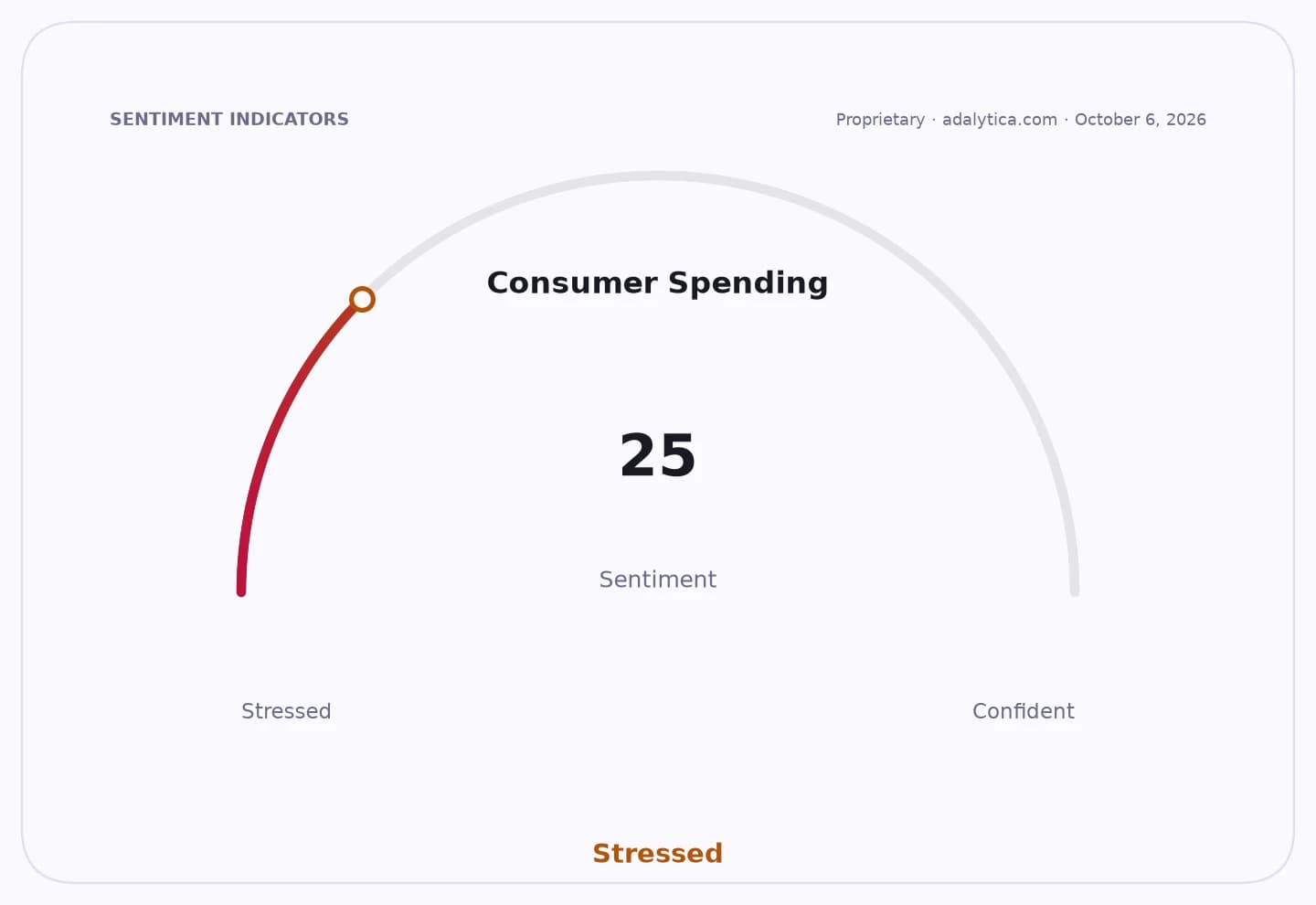
Albanian households spent an average 95,227 lek a month in 2025, but the bigger story is that food and non-alcoholic drinks still absorbed 39.8% of the family budget, underscoring how little room many consumers have for discretionary spending even as outlays rise.
Albania households spend 39.8% on food
The latest INSTAT household budget survey shows total monthly consumption climbed 2.3% from a year earlier to about 72.3 billion lek, suggesting nominal spending is still expanding in an economy where price pressure and uneven income growth continue to shape how families allocate cash. With an average household size of 3.1 people, that leaves basic necessities dominating spending decisions, even as some categories begin to show more momentum.
Sentiment IndicatorsⓘProprietary · adalytica.com · October 8, 2026
This is a snapshot — live sentiment, awareness and momentum for 130+ markets update continuously in the dashboard.Open AlphaPulse
Food remained by far the largest line item at 37,859 lek a month. Within that basket, vegetables accounted for the biggest share, followed by meat and dairy, which points to a budget that is still heavily exposed to staple prices. For policymakers, that matters because food takes the largest slice of household income and is the item most likely to translate inflation directly into day-to-day strain. For retailers and consumer-facing businesses, it means demand remains defensive and price-sensitive rather than broad-based.
The spending mix also suggests a modest shift toward discretionary categories. Leisure and culture posted the fastest growth, up 10% from 2024, while alcohol and tobacco rose 5.1% and transport 5%. Even so, those gains were from a low base, and leisure accounted for just 2.8% of the budget. That leaves the consumer story in Albania less about a spending boom than about gradual normalization from a very constrained base.
Housing, utilities and rent took 9.7% of household budgets, while restaurants and hotels accounted for 7.5%. Those shares changed little from 2024, reinforcing the picture of a consumer still anchored to essentials rather than willing or able to trade up aggressively. The near-flat share of restaurants and hotels also matters for the service sector, which will need stronger wage gains or easier financing conditions to see a more durable uplift.
The regional split is equally telling. Tirana households spent 110,904 lek a month on average, far above the national mean and roughly 35,000 lek more than families in Kukës, the lowest-spending county. That gap points to a two-speed consumer economy, with the capital benefiting from higher incomes and greater formal activity while northern and inland regions remain more constrained. For businesses, it argues for a concentration of spending power in and around Tirana, even as nationwide demand remains modest.
The bull case is that rising household expenditure, even if modest, signals a consumer base that is still absorbing higher prices and gradually expanding discretionary categories. The bear case is that nearly four in every 10 lek continue to go to food, meaning the household balance sheet remains vulnerable to any fresh shock in food, energy or transport costs.
For investors and businesses exposed to Albania’s domestic demand, the message is straightforward: the consumer is spending more, but not enough to suggest a broad-based shift away from necessity-driven consumption. The next test will be whether wage growth and price stability can ease the food burden enough to free up spending for services, retail and leisure.
| Entity | Gains | Losses |
|---|---|---|
| Food retailers | ▲Stable essential demand | ▼Margin pressure from price-sensitive shoppers |
| Consumer services | ▲Slow pickup in discretionary spending | ▼Limited household free cash flow |
| Tirana businesses | ▲Higher local purchasing power | ▼Regional consumer disparity persists |
| Albanian households | ▲Slightly higher consumption capacity | ▼Essentials still crowd out discretionary budgets |