Buying a home with a mortgage is becoming cheaper than renting in several of Attica’s most sought-after neighborhoods, giving prospective buyers a fresh incentive to leave Greece’s still-tight rental market.
Attica Mortgages Cost Less Than Renting in Some Areas
The shift matters because housing affordability is being reshaped not just by borrowing costs, but by the faster rise in rents than in sale prices across parts of Athens and its suburbs. For households that can scrape together a down payment, the monthly cost of ownership is increasingly competitive with, or even below, the rent on a comparable property.
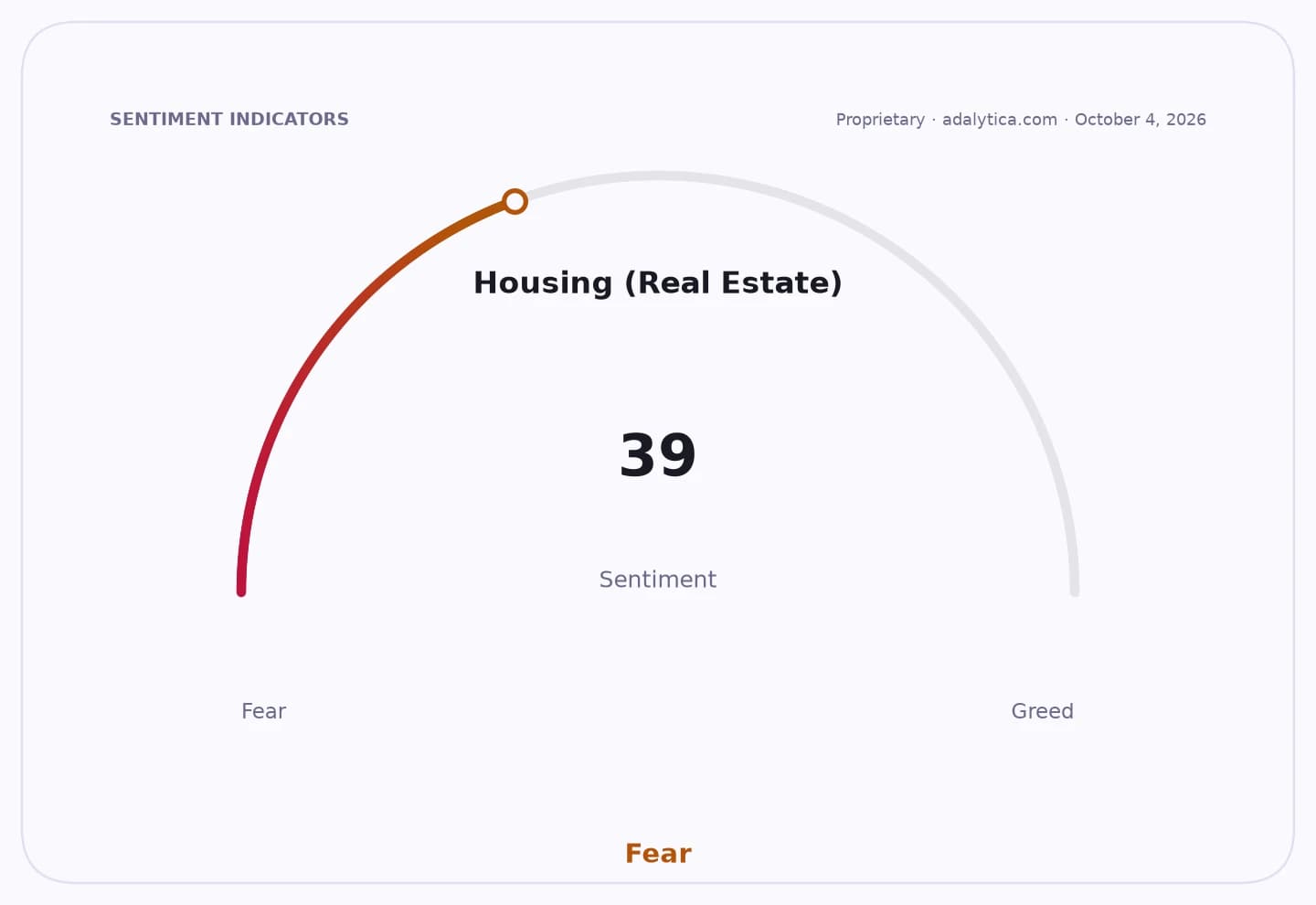
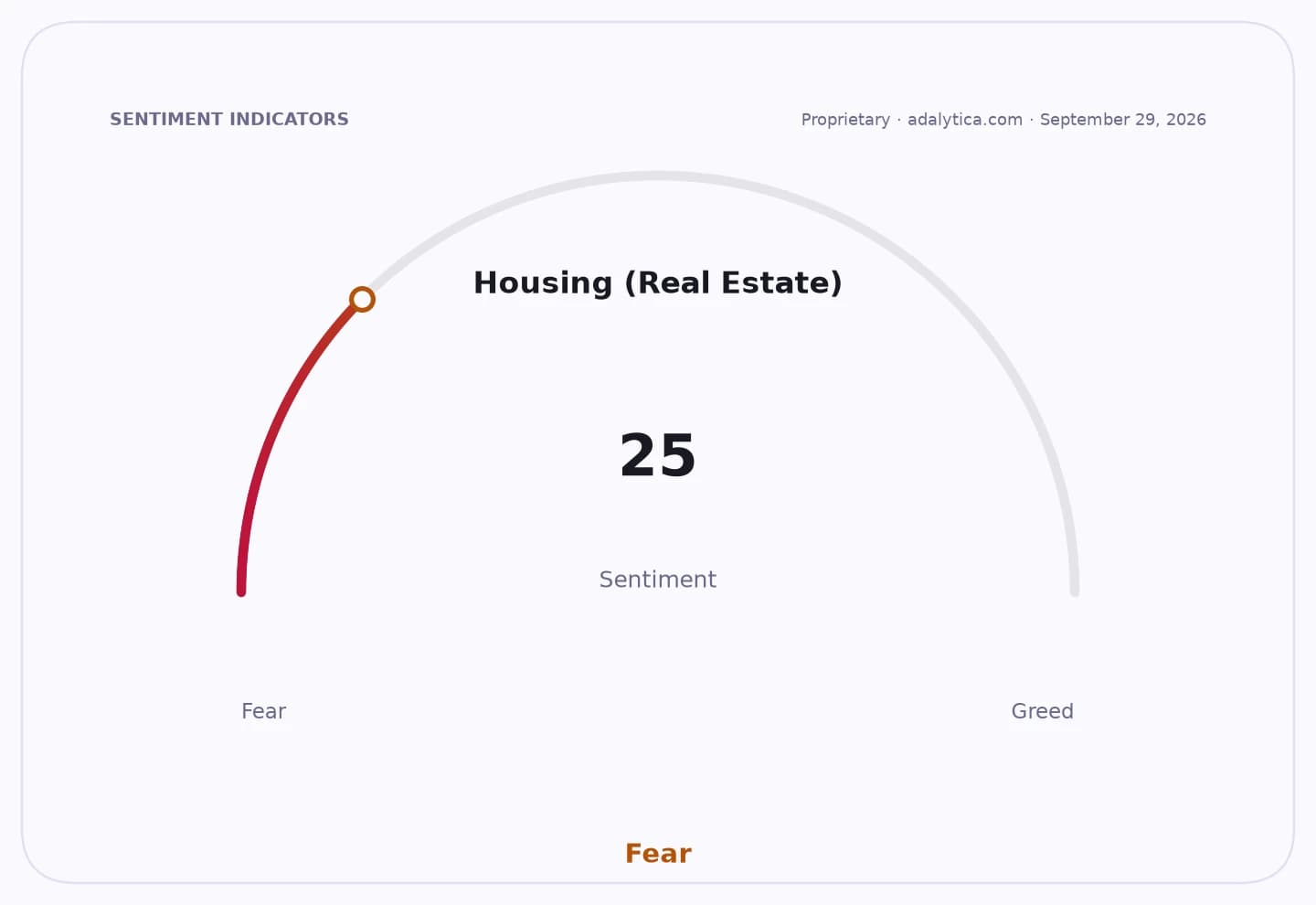
Sentiment IndicatorsⓘProprietary · adalytica.com · October 12, 2026
This is a snapshot — live sentiment, awareness and momentum for 130+ markets update continuously in the dashboard.Open AlphaPulse
According to mortgage broker IMS-FC, fixed mortgage rates have barely moved over the past 18 months even as broader rates have climbed, making a 30-year loan with a fixed rate for the first 10 years especially attractive. In the second quarter, average asking sale prices in central Athens rose 4.2% annually to 2,500 euros per square meter, while asking rents climbed 6.5% to 12 euros per square meter.
The gap is already visible in specific neighborhoods. In Ampelokipoi, buying an 80-square-meter apartment valued at 219,000 euros with an 80% loan at 3.92% fixed for 10 years would cost about 827 euros a month, versus 1,024 euros to rent a similar unit. In Marousi, a 100-square-meter home priced at 302,000 euros would carry a monthly mortgage payment of 1,140 euros, below the 1,260-euro rent.
Even in Peristeri, the difference is small: 657 euros a month for a mortgage on a 75-square-meter home, versus 660 euros for rent. The exception is the southern suburbs, where stronger price gains have kept buying slightly more expensive, as in Alimos, where the monthly loan payment for a 110-square-meter apartment comes to 1,655 euros compared with 1,606 euros in rent.
For investors and lenders, the story points to a broader revival in mortgage demand. IMS-FC said year-to-date mortgage disbursements reached 1.83 billion euros in the first eight months, up 35% from a year earlier, with the government’s “Spiti Mou” homebuying programs up 54.6%. Still, Greece remains underbanked by European standards: only 23% of property transactions are done with a mortgage, versus 45% across Europe.
The catch is that higher home prices are also forcing borrowers to ask for larger loans. IMS-FC said the average loan-to-value ratio has risen across categories, reaching 75.1% for loans up to 50,000 euros and 84% for loans between 150,000 and 200,000 euros. Some products now allow financing of as much as 90% of a property’s value, depending on the borrower’s credit profile.
That keeps the market dependent on both bank appetite and household savings, since buyers still need cash for the down payment and transfer costs. For investors watching Greece’s housing market, the near-term catalyst will be whether rents keep rising faster than sale prices — and whether mortgage lending can keep expanding without the help of subsidy schemes.
| Entity | Gains | Losses |
|---|---|---|
| Homebuyers in Attica | ▲Lower monthly costs | ▼Higher upfront cash needs |
| Landlords | ▲Higher rent demand | ▼More competition from buyers |
| Greek banks and mortgage brokers | ▲More loan demand | ▼Greater credit exposure |
| Renters in central Athens | ▲None | ▼Rising housing costs |