Artificial intelligence is lowering the cost of finding solutions, and that is sharpening a bigger opportunity in Guatemala: turning chronic shortages in water, sanitation, health, education and credit into scalable businesses.
Guatemala social enterprises gain from AI costs

That was the core message at the Volcano Innovation Summit in Antigua, where investors and entrepreneurs argued that the country’s most persistent social and environmental gaps can also be sources of revenue, scale and job creation. The narrative matters because it shifts the debate from charity to investable enterprise at a time when AI is compressing the cost of expertise and making it easier to test, refine and launch new models.
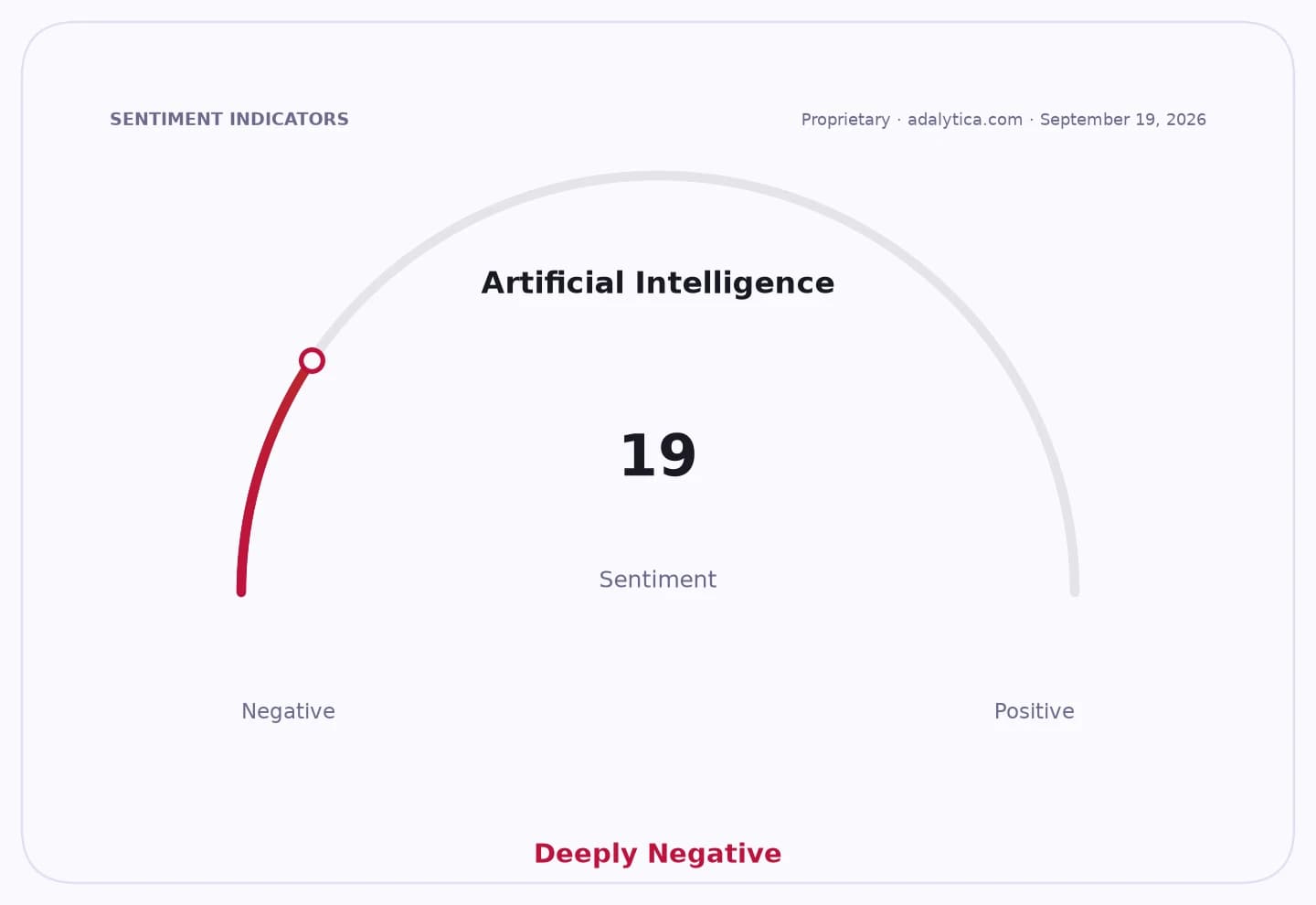
Sentiment IndicatorsⓘProprietary · adalytica.com · September 8, 2026
This is a snapshot — live sentiment, awareness and momentum for 130+ markets update continuously in the dashboard.Open AlphaPulse
For Guatemala, the economic logic is straightforward. A market with unresolved basic needs is also a market with unmet demand. If companies can build repeatable services around that demand — and finance them with fees, franchising, subscriptions or asset ownership — then problems that once looked like public-sector burdens can become private-sector growth opportunities. That is especially relevant in a lower-income economy where access to capital is constrained and where ventures must prove commercial durability, not just social impact.
Kim Tan, co-founder of Transformational Business Network, pointed to business models in Kenya and elsewhere that make that case more concrete. A sanitation franchise network there reportedly operates about 9,000 toilets, serves roughly 350,000 people a day and has created more than 1,000 jobs, while turning waste into fertilizer and animal-feed inputs. He also described an electric bus model in Kenya and Rwanda in which drivers pay for vehicles over seven to eight years as they work, and cited Sistema.bio’s biodigesters, which have been installed more than 100,000 times globally. The common thread is that the solution is not treated as a grant-dependent project, but as an operating business.
Guatemala’s own example, Ecofiltro, fits that framework. The company built a commercial model around clean water access while retaining a philanthropic arm that donates filters to schools that cannot afford them. For investors, that hybrid structure is important because it shows how impact and margin can coexist when the product solves a real, recurring need.
Carlos Baradello’s argument was that AI changes the economics of that process. If answers are now cheap, the scarce skill becomes asking the right question and identifying the right problem. In practical terms, that could reduce the advantage of established tech hubs and make places like Guatemala more attractive precisely because they are closer to the frictions that need solving. Health delivery in remote communities, credit for people without a formal record and education for children outside the system are all examples of addressable demand that AI can help entrepreneurs research and model faster than before.
That does not remove the risks. AI can produce confident answers to the wrong question, which raises the odds of misallocated capital. It also threatens some of the entry-level work that trains young professionals, forcing firms and universities to rethink how the next generation learns to spot solvable problems. For investors, the bull case is a pipeline of lower-cost venture creation around essential services. The bear case is that enthusiasm outruns execution, leaving too many solutions in search of viable unit economics.
The broader implication is that Guatemala’s innovation story may be less about catching up to Silicon Valley than about monetizing local constraints. If AI keeps lowering the cost of knowledge, the real scarcity may become access to real-world problems that can support scalable businesses. That makes the country’s social deficits not just a policy challenge, but a potential source of investable growth.
| Entity | Gains | Losses |
|---|---|---|
| Guatemala social enterprises | ▲Scalable demand, impact revenue | ▼Grant dependence |
| AI-enabled founders | ▲Lower research and prototyping costs | ▼Less edge from pure expertise |
| Local communities | ▲Better access to services | ▼Risk of poorly designed solutions |
| Traditional consulting hubs | ▲Less monopoly on knowledge | ▼Fee premium from proximity to expertise |