Flexible work can only survive if the people carrying extra load believe it is being shared fairly, and Sabrina Ho’s experience at Half the Sky shows how quickly goodwill can fray when deadlines start slipping.
Flexible work and accountability at Half the Sky
Ho, founder of the career and talent-solutions platform, runs a team of about 15 people and lets employees adjust hours or step away for personal matters as long as someone can cover the work. But when missed deadlines became a pattern, the arrangement exposed the central economic trade-off behind flexible work: it can improve retention, morale and productivity, yet it also creates hidden coordination costs if accountability is loose.
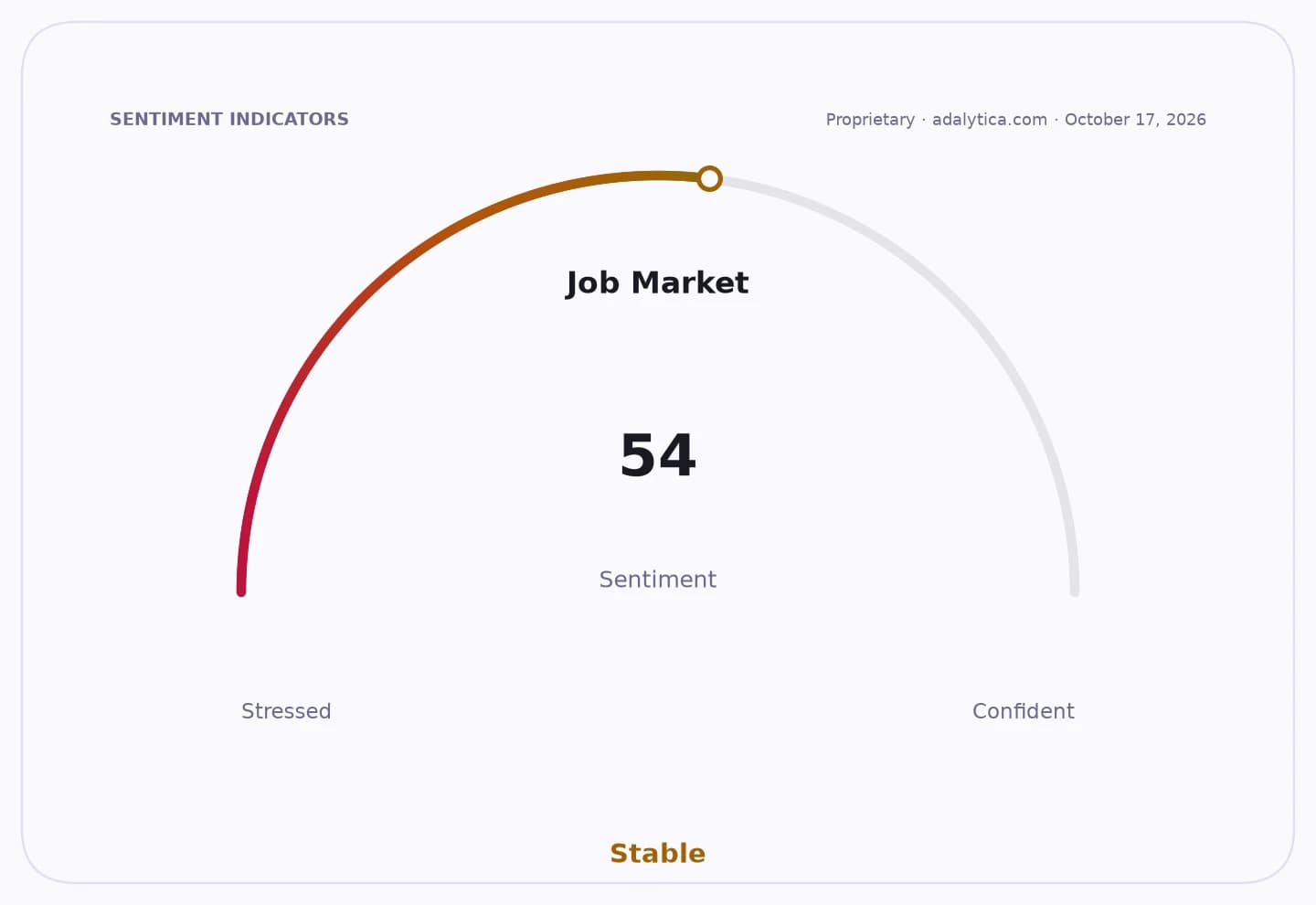
Sentiment Indicators
That matters well beyond one small company. Hybrid and flexible schedules have become a durable part of the labor market, but employers are still trying to balance autonomy with output in a tighter environment where managers are under pressure to do more with smaller teams. In Adalytica’s job-market sentiment gauge, sentiment is currently at 89, labeled “Extreme Greed,” while awareness remains in “Extreme Fear” territory at 7, suggesting workers may feel they have leverage even as employers remain cautious about labor efficiency and accountability. That tension helps explain why flexible policies increasingly come with clearer rules, coverage expectations and performance boundaries.
The economic logic is straightforward. Flexible work can reduce turnover and absenteeism, but only if firms avoid resentment among employees who repeatedly absorb someone else’s tasks. For a small business, that risk is amplified because each missed deadline has a larger effect on clients and revenue than it would in a larger organization with more redundancy. Ho’s approach — allowing flexibility, but conditioning it on colleague coverage — is effectively a low-cost governance system for protecting productivity without abandoning the policy.
For investors and business owners, the story is less about workplace culture than operating discipline. Companies that can preserve flexibility while keeping accountability tight may have an edge in recruiting and retention without eroding margins through rework, delays or burnout. The bearish case is that poorly managed flexibility becomes a drag on execution, especially in service businesses where labor is the main input. The bullish case is that clear guardrails make flexible work sustainable and can support higher-quality output.
For employers, the lesson is that flexibility is no longer the differentiator; fairness is. The next test is whether managers can make the rules transparent enough to prevent resentment while still giving staff the autonomy that keeps them loyal.
| Entity | Gains | Losses |
|---|---|---|
| Employees | ▲Autonomy and schedule control | ▼Less room for inconsistency |
| Employers | ▲Higher retention and morale | ▼More management overhead |
| Coworkers covering slack | ▲Clearer fairness rules | ▼Extra workload when others miss deadlines |
| Small businesses | ▲Flexible culture without policy drift | ▼Greater damage from missed work |