Hanshin Tigers’ championship run delivered an estimated 105.1 billion yen boost to Japan’s economy, underscoring how top-tier sports can move more than ticket sales and TV ratings by pulling forward consumer spending across travel, retail and hospitality.
Hanshin Tigers title run lifts Japan spending
The figure matters because it turns a championship into a measurable demand shock at a time when Japan is trying to sustain household spending and keep services momentum alive. Big sporting events rarely shift national GDP on their own, but they can concentrate spending in a short window, lift regional economies and create a temporary tailwind for consumer-facing businesses.
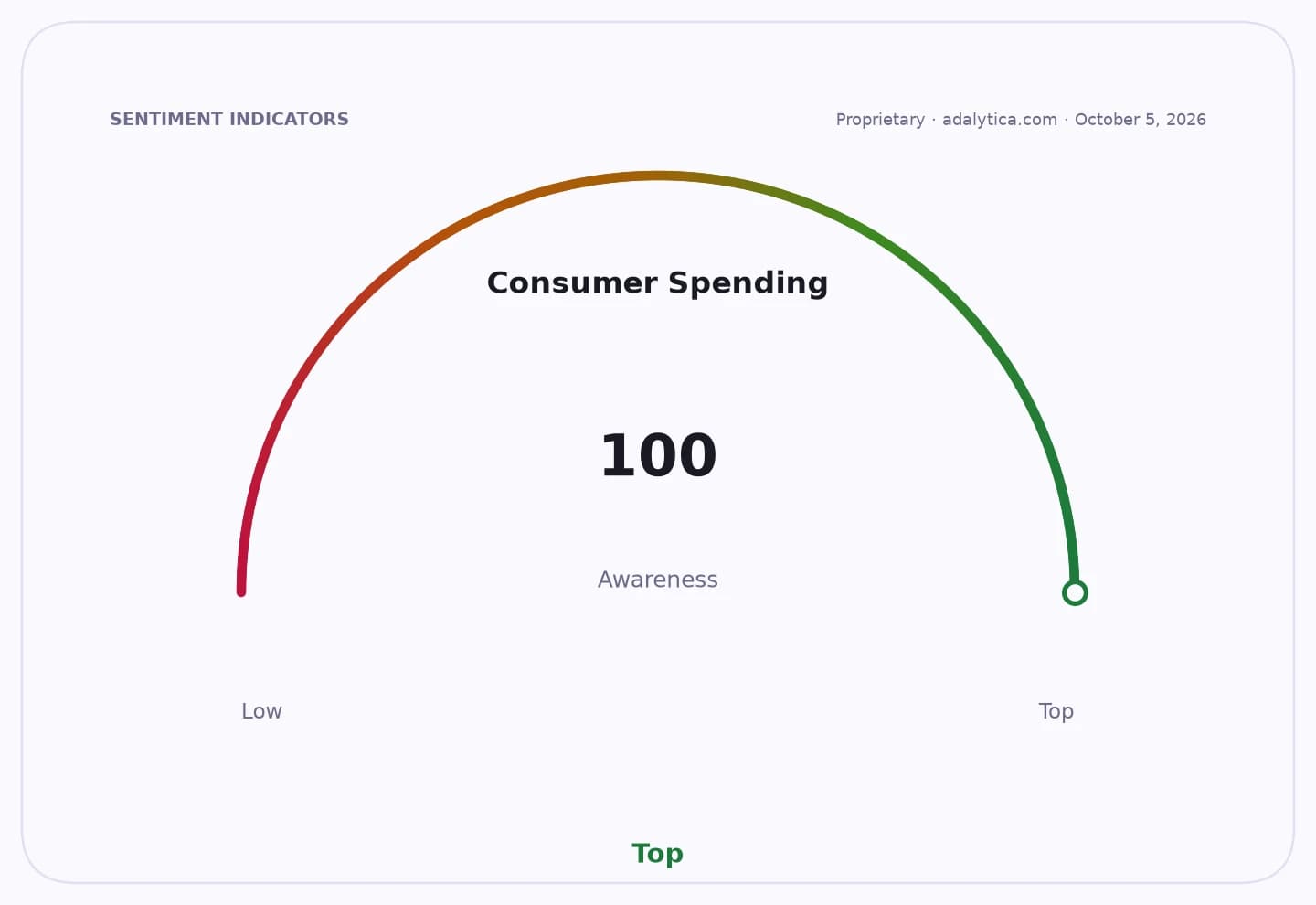
Sentiment IndicatorsⓘProprietary · adalytica.com · October 5, 2026
This is a snapshot — live sentiment, awareness and momentum for 130+ markets update continuously in the dashboard.Open AlphaPulse
The Hanshin effect is particularly significant in western Japan, where the team’s fan base is dense and spending tends to cluster around Osaka, Hyogo and neighboring prefectures. That makes the economic impulse more than symbolic. Hotels, restaurants, transport operators, merchandisers and convenience stores typically get the first lift, while broadcasters and sponsors also benefit from higher engagement and advertising value.
For investors, the question is less whether the number is precise than what it says about demand elasticity. A title run can trigger a surge in discretionary spending that is difficult to engineer through policy alone. In a country still working through uneven wage gains and a cautious consumer mood, that kind of event-driven impulse is welcome for domestic demand plays, especially leisure, retail and travel names with local exposure.
The market impact is likely to be most visible in companies linked to Kansai consumption rather than in the broader equity index. The upside should be concentrated and short-lived, but it can still matter for quarterly earnings momentum, especially if it coincides with tourism flows and seasonal spending.
There is also a behavioral angle. Sports victories create a feel-good effect that can nudge households to spend more on food, entertainment and souvenirs, even if the absolute macro contribution is modest. That is why economists often treat these episodes as distributional boosts rather than structural growth drivers: they help some sectors clearly, while offering little to exporters, utilities or other less cyclical businesses.
For Hanshin and the local economy, the bull case is a measurable consumption spike and stronger brand value. The bear case is that the benefit fades quickly once the celebratory period ends, leaving little lasting effect on real incomes or national growth.
What matters next is whether local spending persists into the next few weeks and whether retailers, hotels and transport operators in Kansai show any earnings lift in subsequent results. If they do, the Hanshin victory will be remembered not just as a sporting milestone but as a brief but real stimulus to Japan’s consumer economy.
| Entity | Gains | Losses |
|---|---|---|
| Hanshin Tigers | ▲Brand value | ▼Immediate title fade |
| Kansai retailers and hotels | ▲Higher foot traffic | ▼Normal demand afterward |
| Transport and entertainment operators | ▲Event-driven spending | ▼Limited duration |
| Competing local businesses | ▲Spillover customers | ▼Crowding from fans |