Kia is moving to cut Tasman pickup output after the brand’s first truck stumbled both at home and abroad, a sharp warning that the company has not yet cracked one of the auto market’s most durable profit pools: workhorse pickups bought by tradespeople, farmers and fleet operators.
Kia Tasman Pickup Output Cut After Weak Sales

That matters because pickups are supposed to be volume and margin engines, not niche lifestyle products. Instead, Tasman is losing ground just as demand in the broader auto market is being lifted by tax relief and festive-season buying, underscoring that Kia’s problem is product-market fit, not a weak sector backdrop. For investors, the issue is whether this is a manageable launch miss or a sign Kia misread the economics of a segment where diesel, durability and fleet relationships often matter more than showroom appeal.
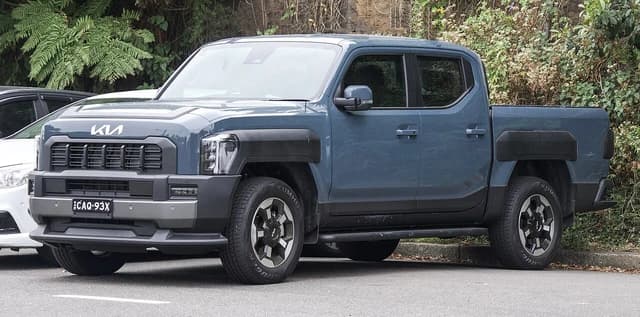
The numbers are hard to ignore. Kia sold just 378 Tasman units in South Korea in August, down 57.4% from a year earlier, while overseas sales plunged 73.2% to 704 units. September domestic sales came in at 404 units, down 48% from the same month a year earlier. After opening with monthly sales of 1,200 to 1,300 units in the April-July period last year, the model has since fallen to roughly 300 to 400 units a month, with one month slipping to 250.
The fade is even more striking in export markets. Overseas sales peaked at 3,412 units in July last year, but this year have mostly hovered between 400 and 900 units a month. Kia has sold 12,157 units at home and 21,158 overseas since launch, but those totals do not mask the deceleration.
Australia has been especially disappointing. Kia had targeted 20,000 annual sales there, yet combined sales in Australia and New Zealand are only about 8,500 units. The company has already acknowledged that it has done better with leisure buyers than with fleet and rural customers, the very groups that often define pickup demand and help sustain residual values, service revenue and repeat purchases.
That is the key investment takeaway: Kia is running into the same reality that has long governed pickup markets around the world. These are not just dressed-up SUVs with beds attached. They are tools. Buyers care about engine choice, fuel economy, towing, payload and fleet economics. Tasman’s domestic lineup relies on a single 2.5-liter gasoline turbo, while rival KGM’s Musso diesel has been eating into share. In South Korea’s domestic pickup market, Tasman’s share has dropped to 17.6% in January-September from 37.0% a year earlier, while KGM’s Musso and Musso EV accounted for 82.4%.
The strategic risk is bigger than one model cycle. If Kia cannot convert work-use and fleet customers, it may be forced into exactly the kind of volume discipline now being discussed: smaller production runs, tighter inventory and a more cautious export push. That can protect pricing, but it also limits the scale economics Kia wanted from its first pickup. For a company trying to broaden its product mix and lift mix-driven profitability, a pickup that struggles to penetrate core demand is a setback to the growth narrative.
Investors should watch two things next. First, whether Kia responds with a diesel or fleet-friendly variant to address the gap in the market. Second, whether production cuts spill over to suppliers, including parts affiliates, which would show the slowdown is moving beyond one showroom miss and into the wider supply chain. For now, Tasman looks less like a breakout and more like a reminder that in pickups, the market rewards utility first and style second.
| Entity | Gains | Losses |
|---|---|---|
| KGM Musso / Musso EV | ▲Share gains | ▼Less pressure |
| Kia Tasman buyers in leisure segment | ▲Wider choice | ▼No major change |
| Kia production planners | ▲Inventory control | ▼Lower volume |
| Fleet and rural competitors | ▲Stronger position | ▼Kia market share |