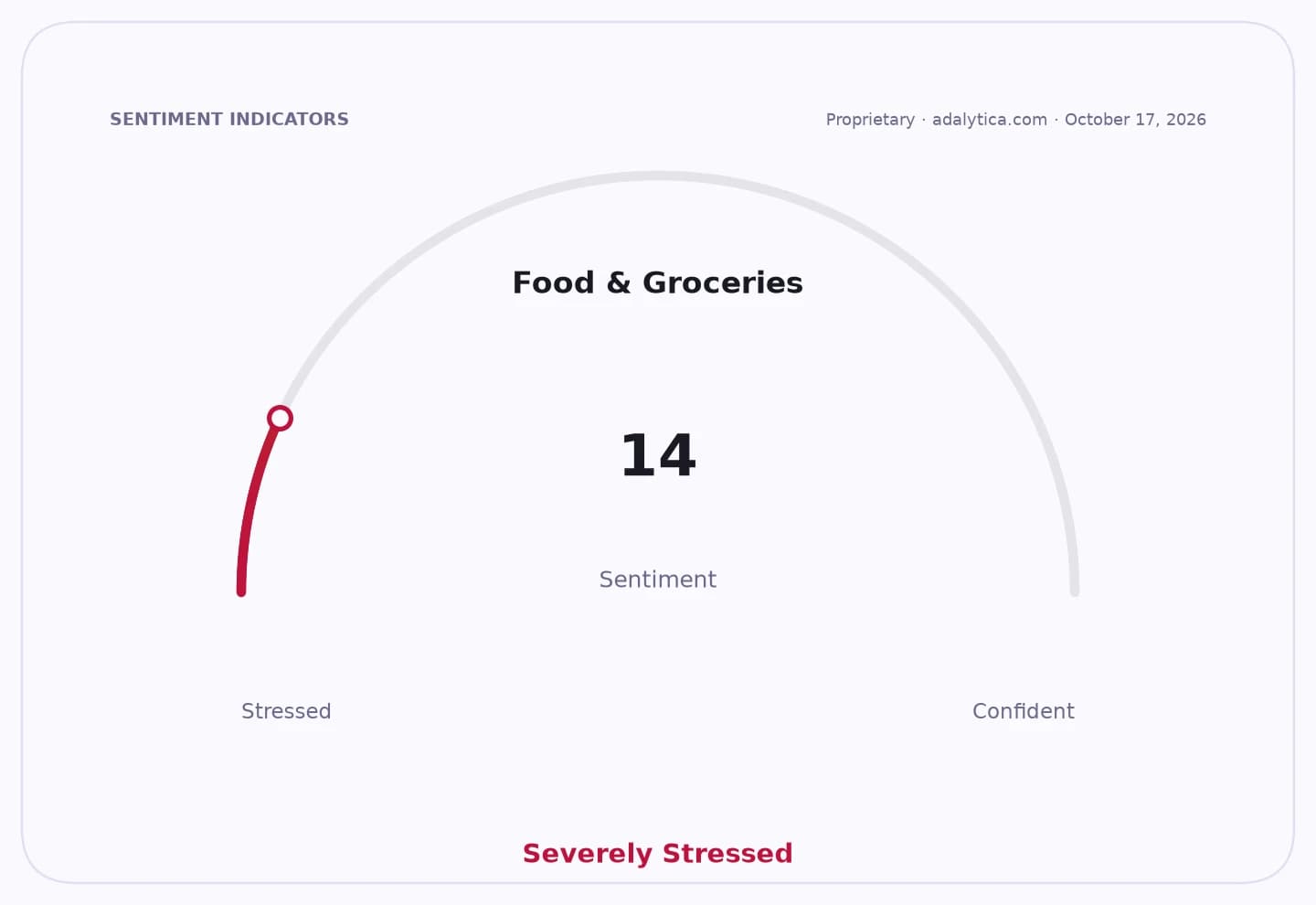
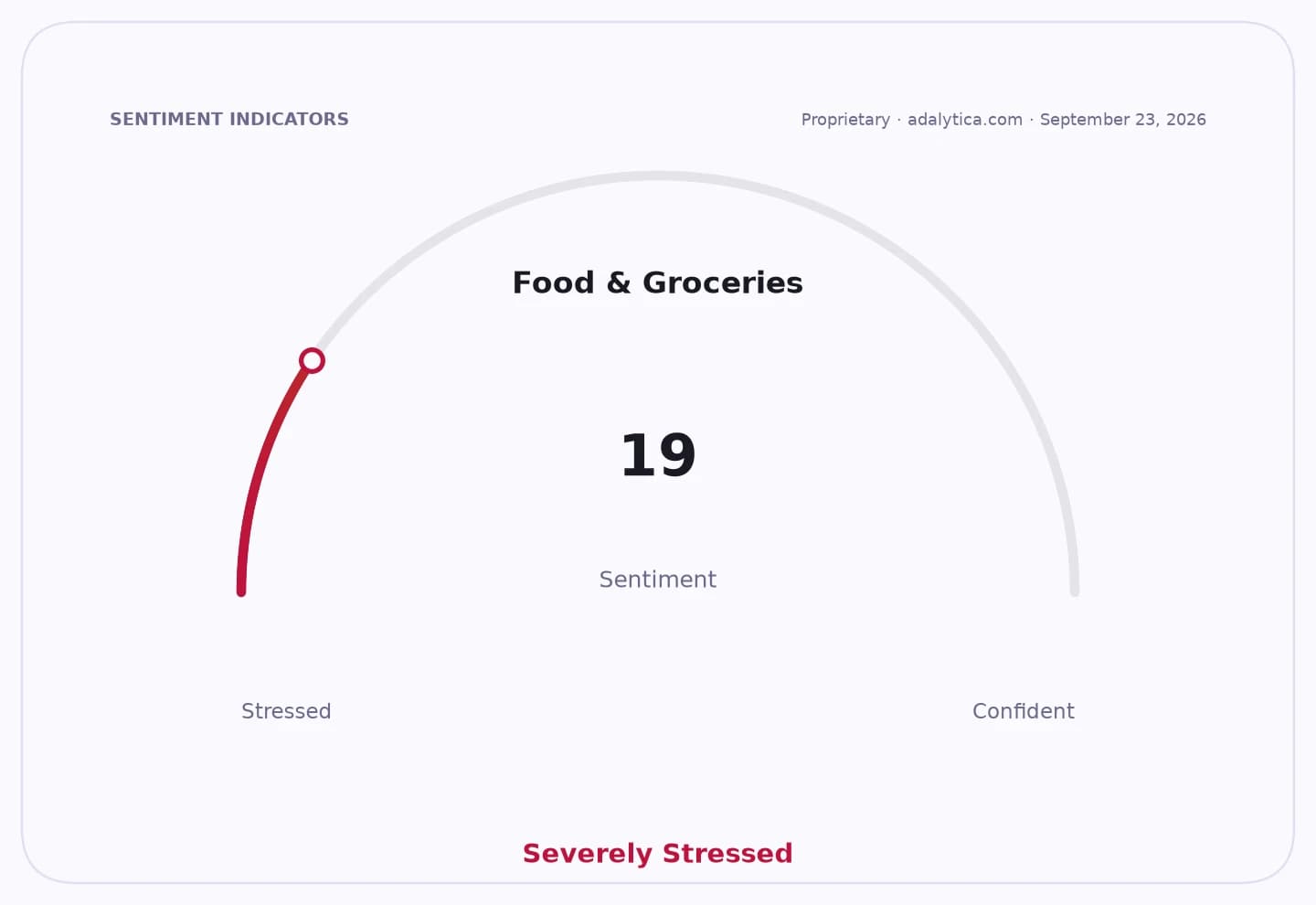
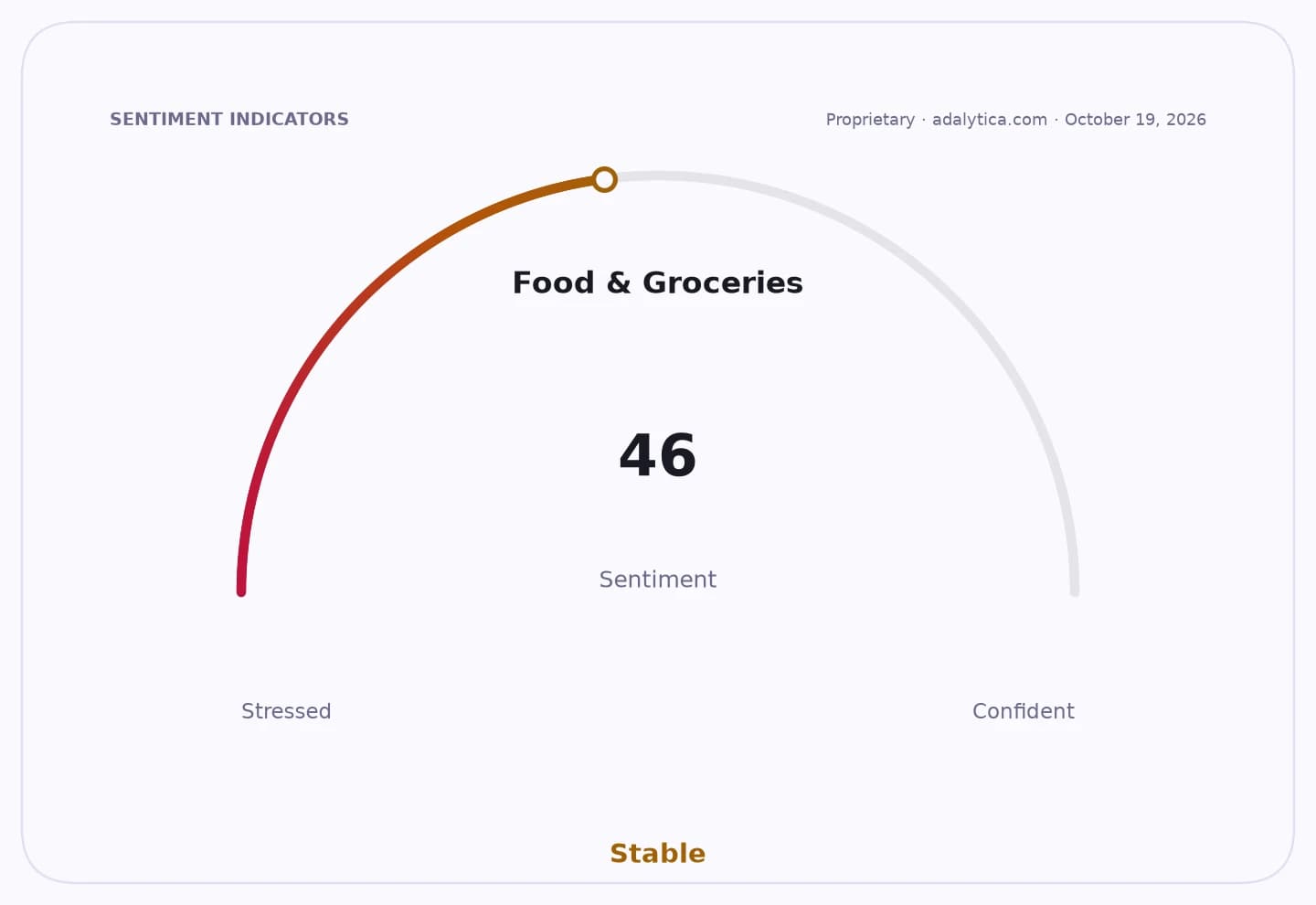
A drying-weight loss of 1,200 quintals of wheat in Haryana’s Narnaul belt is turning into a costly dispute over who pays when grain bought with high moisture loses weight after storage.
Haryana wheat shortage dispute over storage losses
The immediate issue is not the grain itself, but the liability. Haryana Warehousing Corp has sent recovery notices to commission agents and transporters after stock in Rewari and Mahendragarh districts shrank during the 2026-27 rabi season, while traders accuse officials of illegal collections and financial wrongdoing. That makes the case more than a local billing fight: it goes to the heart of how India’s procurement system prices moisture risk, allocates losses and enforces accountability across the farm-to-warehouse chain.
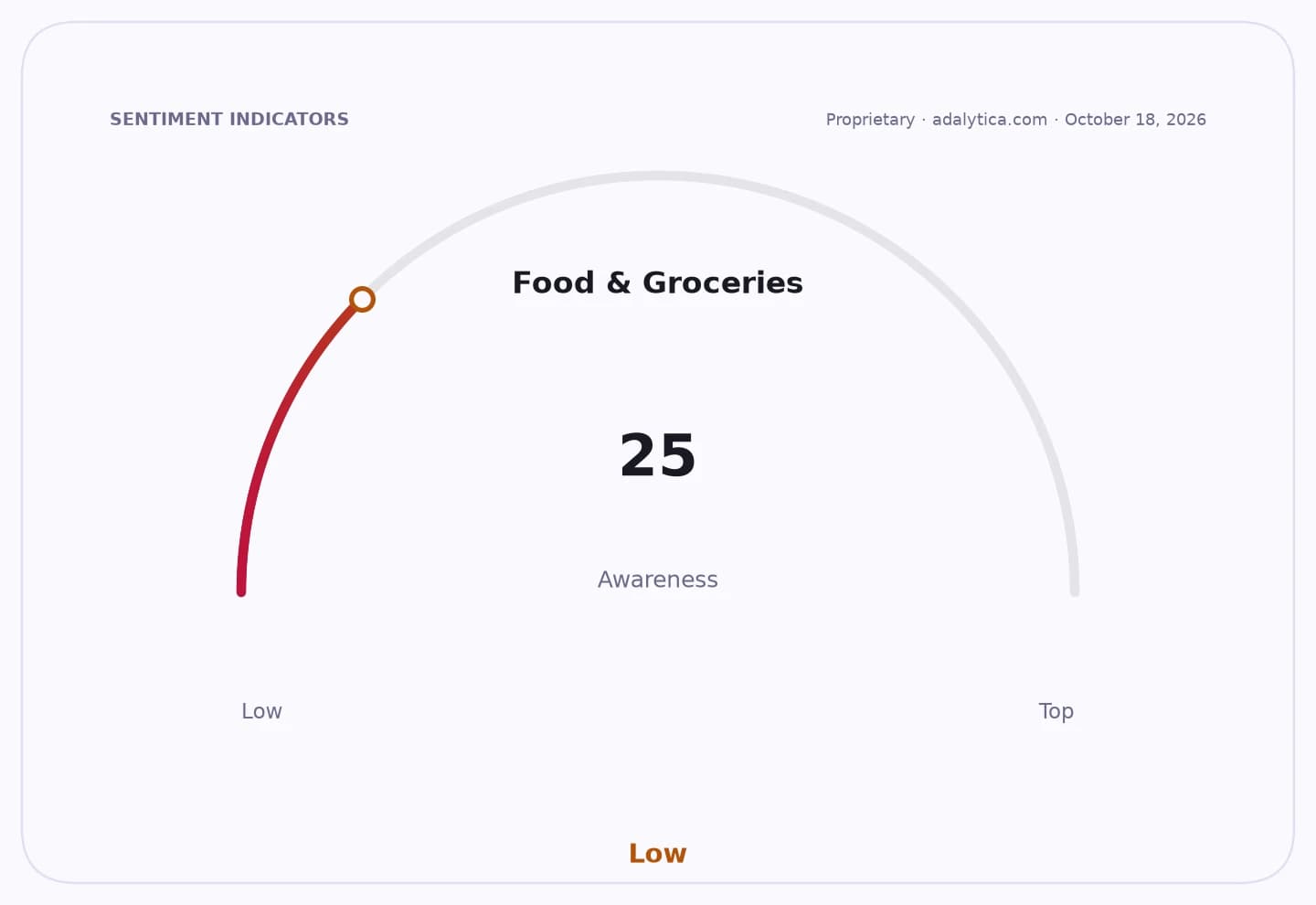
Sentiment IndicatorsⓘProprietary · adalytica.com · October 18, 2026
This is a snapshot — live sentiment, awareness and momentum for 130+ markets update continuously in the dashboard.Open AlphaPulse
The numbers show why tensions are high. Officially, 1,200 quintals were found short after drying, including 1,154 quintals in Kosli mandi and 19 quintals each in Satnali and Kanina. One warehouse official said wheat with moisture of 13% to 14% had been purchased, then shrank after drying, justifying deductions from traders and transport contractors. Traders say the deductions went too far, alleging collections of as much as three rupees a bag during procurement and another 5,000 rupees a truck at storage, with further cuts made during payment settlement.
For investors, the bigger takeaway is that India’s wheat supply chain remains exposed to execution risk even when the crop is already procured. Any dispute over shrinkage, recovery notices and payment delays can ripple through local mandis, warehousing operations and logistics contractors, increasing working-capital stress and raising the cost of moving grain. It also reinforces the value of better storage, moisture testing and loss-control systems — the unglamorous but essential infrastructure of food distribution.
The story also matters because wheat is not just a local commodity but a policy-sensitive staple. With wheat reserves, procurement and quality control already under scrutiny across markets, even a district-level shortage highlights how fragile margins can be when weather, moisture and handling collide. If officials keep recovering losses from intermediaries, the burden will likely be pushed down the chain; if the deductions are challenged successfully, it could force tighter rules on how moisture discounts and stock shortages are measured.
This is why the dispute bears watching. It is a reminder that in India’s grain economy, the next margin opportunity is often in storage, logistics and compliance, not just in the crop itself. For traders, warehouse operators and transport contractors, the message is clear: the system is getting less tolerant of unexplained losses, and the financial consequences can be immediate.
| Entity | Gains | Losses |
|---|---|---|
| Haryana Warehousing Corp | ▲recovery leverage | ▼reputational risk |
| Commission agents | ▲none | ▼deduction notices |
| Transport contractors | ▲none | ▼payment cuts |
| Wheat farmers | ▲stable procurement | ▼indirect dispute over settlement |