AI in medicine is only as good as the data behind it, and that makes the push for gender equality in research more than an ethics debate — it is now a material investment issue for insurers, drugmakers and the entire healthcare AI stack.
Healthcare AI Bias and Gender Equality in Research
The warning from researchers is simple but powerful: if women are underrepresented in clinical trials and preclinical research, then algorithms trained on that evidence can scale the error instead of correcting it. That matters because healthcare is moving fast toward AI-assisted diagnosis, drug development and claims management at the same time regulators and clinicians are asking whether those systems reproduce old blind spots.
Sentiment Indicators
For investors, the risk is not abstract. Bias in medical data can translate into misdiagnosis, weaker treatment outcomes, higher litigation exposure and slower adoption of AI tools inside hospitals and payers. It also raises the stakes for companies trying to use AI to cut costs or improve care quality, because flawed models can destroy the very efficiency gains management is promising.
The issue lands hardest on large healthcare platforms such as UnitedHealth, which has already warned in filings about the risk of inaccurate, biased or otherwise flawed AI outputs. It also matters for pharmaceutical groups like Pfizer and Johnson & Johnson, where trial design, safety interpretation and real-world evidence increasingly feed AI systems used across discovery and development. If the underlying dataset is male-skewed or otherwise incomplete, the next generation of models can simply automate the same imbalance at scale.
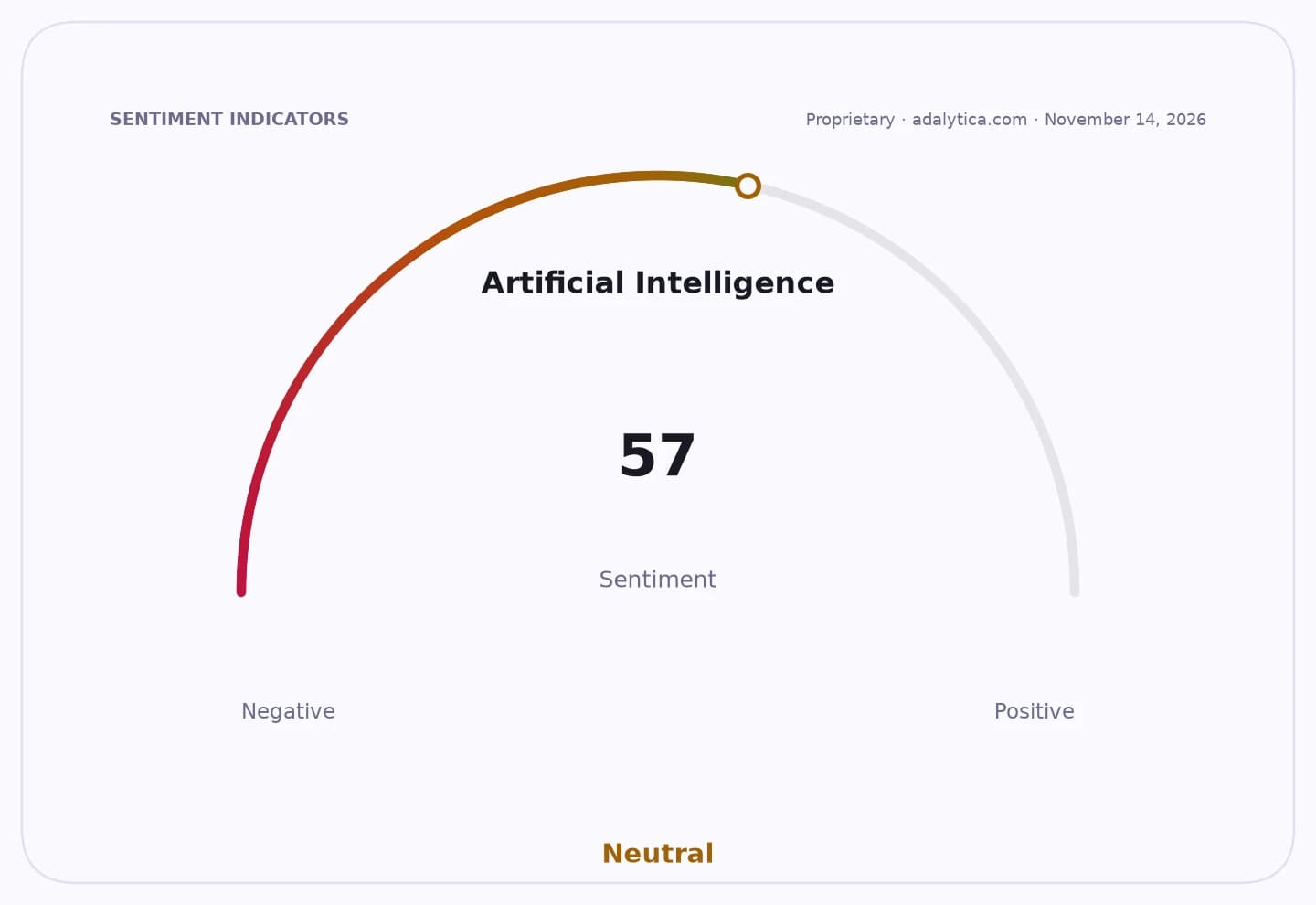
The market is also showing how quickly sentiment can swing around AI exposure. Adalytica’s AI snapshot shows sentiment at 11, in “Extreme Fear,” after a 30-day plunge, even as awareness remains at 96, or “Extreme Greed.” That split is a reminder that investors are still scrambling to separate genuine productivity gains from governance risk, especially in regulated industries where the cost of a bad model can be far higher than in software.
The investable takeaway is that the winners in healthcare AI will be the companies that combine data depth, clinical diversity and strong governance, not just the ones that deploy the most automation. That favors scaled incumbents with the capital to fix their datasets and the compliance infrastructure to defend them, while punishing any business that treats biased data as a footnote.
For long-term investors, the opportunity is in the picks-and-shovels of trustworthy healthcare AI: platforms that improve trial diversity, data quality, auditability and model oversight. The next catalyst will come as regulators, hospitals and payers start demanding proof that AI systems work across sexes, ages and populations — and that is when the market will reprice the difference between real intelligence and fast-moving error.
| Entity | Gains | Losses |
|---|---|---|
| Healthcare AI firms with strong data governance | ▲Trust premium, faster adoption | ▼— |
| UnitedHealth | ▲Better AI oversight, lower legal risk | ▼Exposure to flawed models |
| Pfizer and Johnson & Johnson | ▲Better trial quality, safer AI use | ▼Bias in clinical evidence |
| Women patients and researchers | ▲More accurate diagnosis, better inclusion | ▼Underrepresentation in data |