AI tools that read cardiac MRI scans in 3 to 4 seconds per patient slightly outperformed expert clinicians in predicting all-cause mortality in a study of more than 27,000 patients, underscoring how machine learning could cut workload in cardiology without yet replacing human oversight.
AI Cardiac MRI Reads Outperform Clinicians in Study
The retrospective analysis, published in The Lancet Digital Health, found that AI-derived left-ventricular ejection fraction beat clinician-derived measurements on statistical model fit and discrimination, though the gains were modest and the authors said prospective trials are still needed before the workflow can be called clinically transformative.
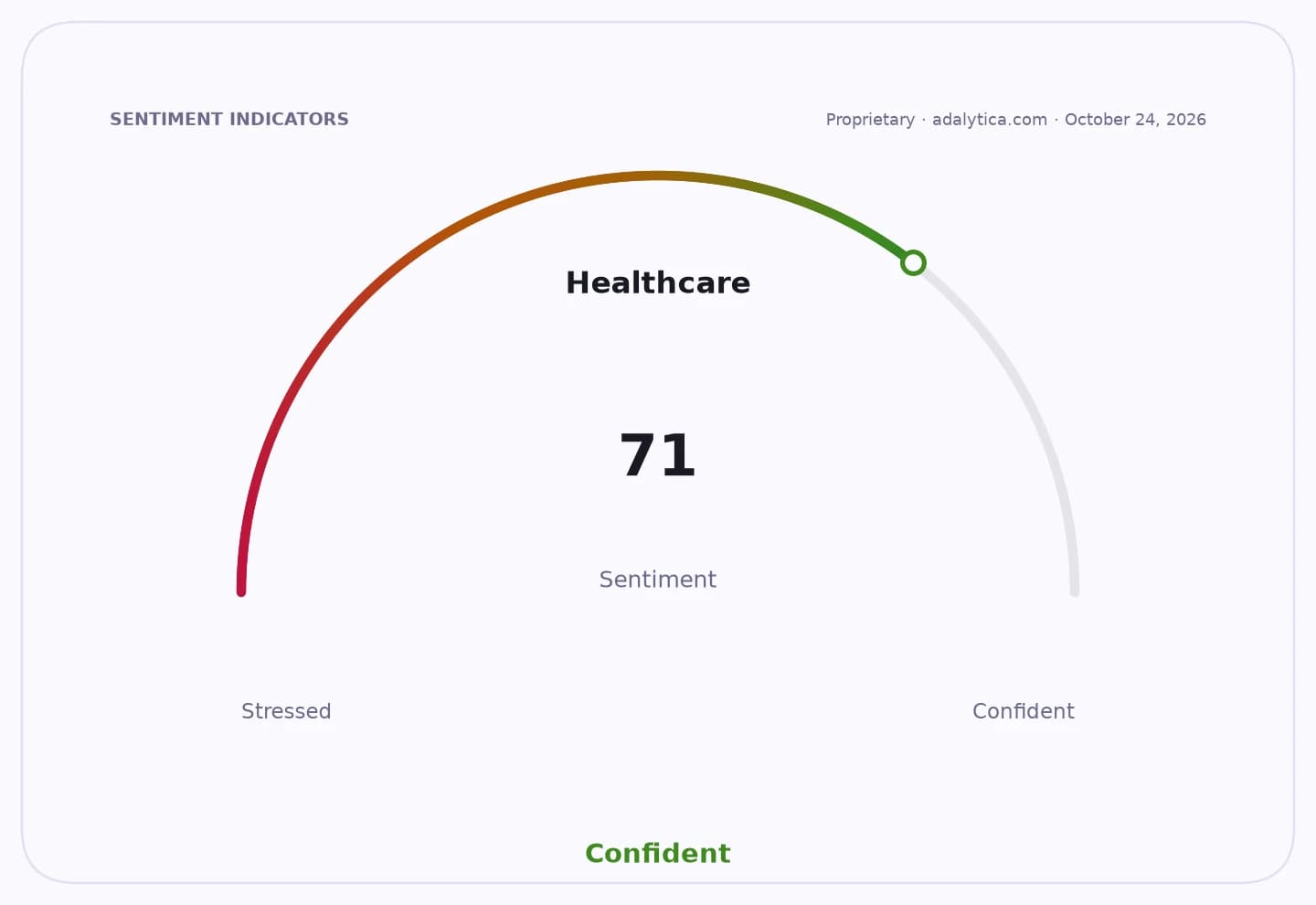
Sentiment Indicators
The study covered 27,382 patients at two centers in the UK and the US, with a median 5.6-year follow-up and 13% mortality. Before age and sex adjustment, the AI-based model produced a C-index of 0.669 versus 0.637 for clinician readings; after adjustment, the gap narrowed to 0.781 versus 0.777.
That matters for investors because cardiac imaging sits at the intersection of hospital efficiency, diagnostic software and the broader push to automate expensive clinical workflows. Faster segmentation could reduce physician time spent on routine analysis, improve throughput and support wider use of AI in radiology and cardiology, even if human review remains essential for edge cases.
The study also showed where AI falls short. Errors occurred in 1% of a 600-patient sample, but they were more common in scans with extremely low ejection fractions, and the algorithm produced lower median ejection fraction readings than clinicians — 57.8% versus 62.1% — without proving which was anatomically more accurate.
For companies and investors tied to medical imaging, the message is that AI is moving from promise to measurable, if incremental, clinical advantage. That keeps attention on software vendors, imaging platforms and hospital systems looking to trim costs, while also raising scrutiny on validation standards, reimbursement and liability.
The authors said AI may be most useful as a first-line measurement tool with clinician oversight, especially where speed and consistency matter most. The next catalyst is prospective validation that shows whether these faster reads actually improve decisions, outcomes and economics of care.
| Entity | Gains | Losses |
|---|---|---|
| AI imaging vendors | ▲Faster adoption case | ▼Need for prospective proof |
| Cardiologists | ▲Less manual segmentation work | ▼Less control over edge cases |
| Hospitals | ▲Higher throughput, lower labor burden | ▼Validation and oversight costs |
| Clinician-only workflows | ▲None | ▼Efficiency advantage to AI |