HH Linh Dam’s apartment market has become a case study in how unresolved legal problems can overwhelm even deep price discounts, leaving sellers forced to cut and buyers still refusing to commit.
HH Linh Dam apartment prices fall on legal issues
The biggest development is not just that prices are falling, but that transactions have slowed sharply after Hanoi moved to address violations at the HH Linh Dam complex. Average apartment prices across the project fell to about 36.7 million dong per square meter in August, down 19.5% from a year earlier and roughly 35% below the 56.6 million dong peak recorded in December 2025, according to Batdongsan.com.vn data cited in local reports.
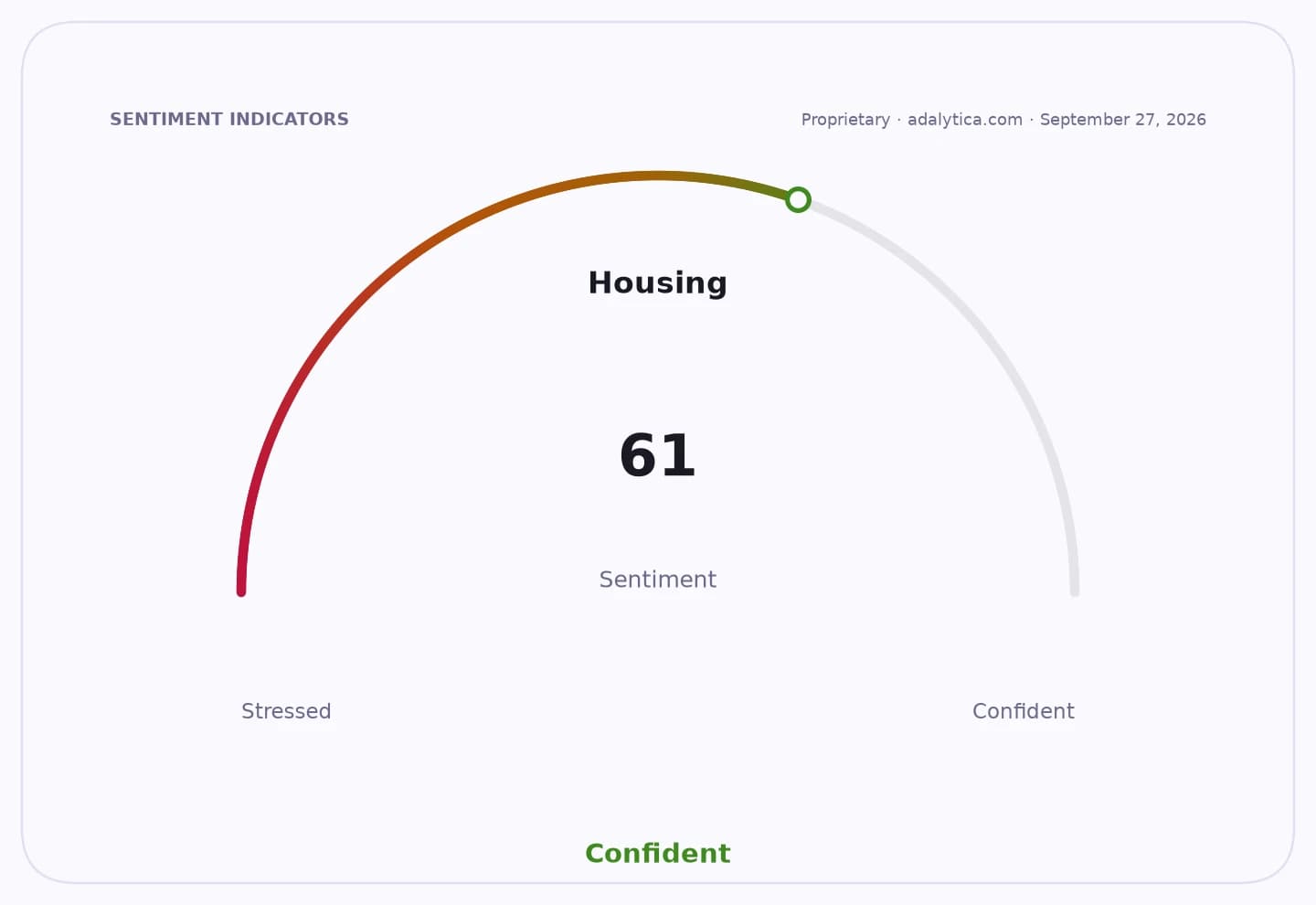
Sentiment IndicatorsⓘProprietary · adalytica.com · September 29, 2026
This is a snapshot — live sentiment, awareness and momentum for 130+ markets update continuously in the dashboard.Open AlphaPulse
That drop matters because HH Linh Dam is one of Hanoi’s most visible mass-market apartment clusters, and its weakness is now feeding into a broader affordability and confidence problem. Homes that were listed at 50 million to 65 million dong per square meter late last year are now changing hands, if at all, closer to 37 million dong per square meter. A 70-square-meter unit has reportedly sold for about 2.6 billion dong, while some larger apartments that once fetched above 4 billion dong are now being offered around 2.6 billion to 3 billion dong. For owners who bought near the top and financed with bank debt, that translates into losses of more than 1 billion dong before interest and fees.
The market’s main problem is legal certainty, not just price. Buyers are wary because the project still lacks red books, or ownership certificates, and violations tied to parts of the development have not been fully resolved. In practice, that has shut out the most price-sensitive demand as well as investors looking for resale liquidity. Brokers say apartments in the non-compliant sections are attracting almost no interest, and some agents are unwilling to take those listings at all.
A second drag is physical deterioration. The complex has been in use for about a decade, but many units have aged badly, especially those used for rental income and left without regular refurbishment. Parking shortages and overloaded basements add to the sense that the discount is not a bargain but compensation for risk and inconvenience. That helps explain why a lower asking price is not enough to clear inventory.
For investors, the lesson is twofold. For existing owners, HH Linh Dam shows how quickly paper gains can reverse when regulatory enforcement and market sentiment turn against a project. For prospective buyers, the sale prices may look attractive on a per-square-meter basis, but the lack of title clarity means the usual valuation metrics matter less than legal certainty and exitability. A unit that appears cheap can still be illiquid if resale is constrained and financing is harder to secure.
The broader narrative is that Vietnam’s housing market is splitting between projects with clean legal status and those carrying legacy violations. That divide is likely to keep discounts wide in troubled complexes even when demand for affordable housing remains strong. Unless authorities can resolve HH Linh Dam’s legal bottlenecks without disrupting residents, prices may stay under pressure and trading may remain thin, even after some of the steepest markdowns in Hanoi’s apartment market.
| Entity | Gains | Losses |
|---|---|---|
| Buyers with cash | ▲Lower entry prices | ▼Legal/title risk |
| Existing owners | ▲Potentially none | ▼Mark-to-market losses |
| Brokers | ▲Faster turnover on clean units | ▼Hard-to-sell disputed units |
| Hanoi housing market | ▲Greater pressure for legal reform | ▼Confidence in resale liquidity |