A growing backlog of undelivered apartments is turning housing from a wealth-building trade into a confidence shock, and that matters far beyond one developer’s balance sheet.
Indonesia apartment delays hurt housing confidence
The most important development is not simply that some buyers are still waiting for units promised years ago. It is that delayed handovers, refund disputes and unfinished transit-oriented projects are eroding trust in housing at the exact moment when affordability, mortgage rates and job security are already pressuring consumers. In Indonesia, ANTARA described one buyer who spent nearly Rp1.3 billion on two apartments in 2018 under a soft-cash scheme, was promised delivery in April 2021 and still has no clarity. The report also said media coverage points to thousands of consumers still awaiting unit handovers, with some seeking refunds while management says it cannot return funds to everyone at once.
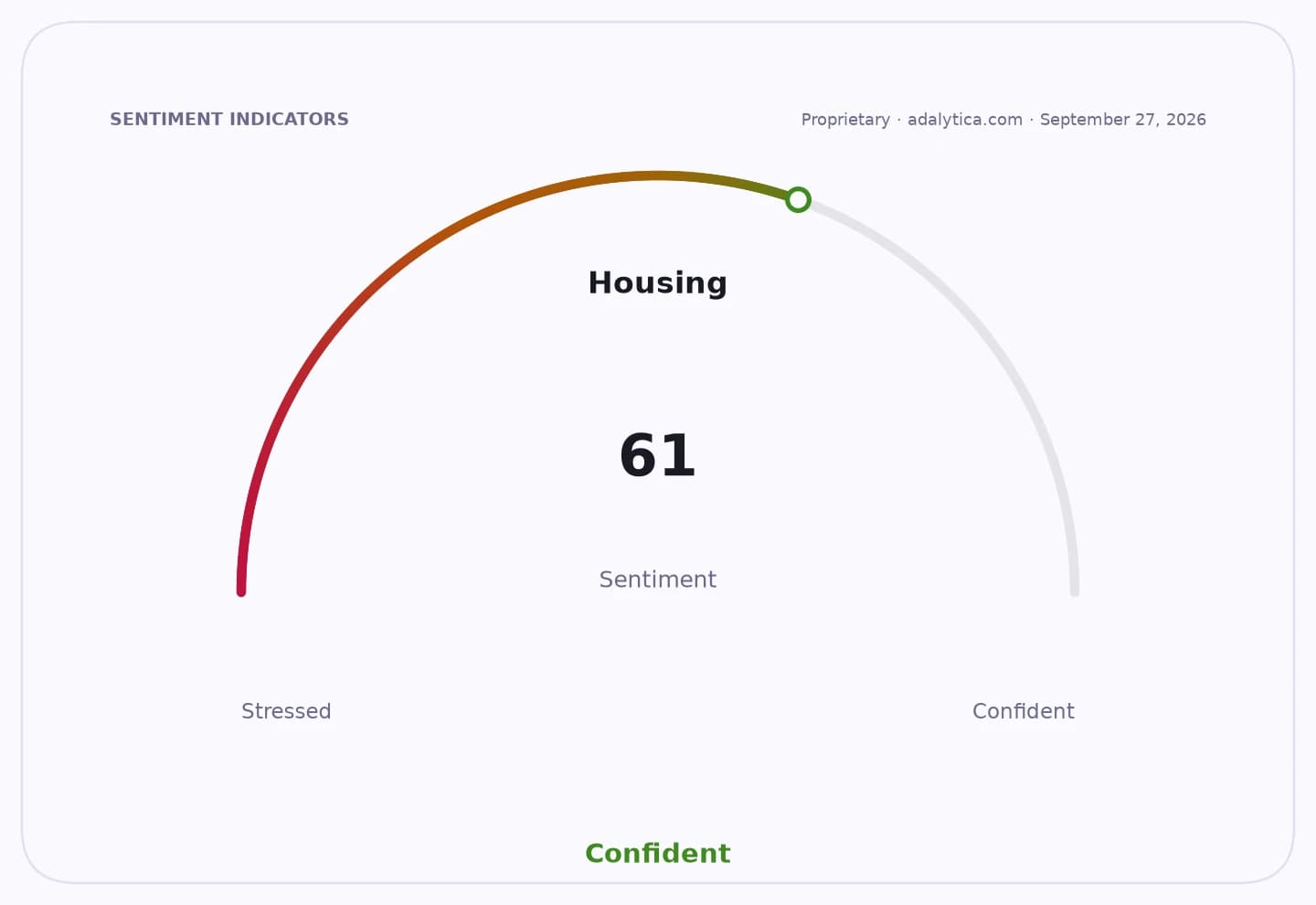
Sentiment IndicatorsⓘProprietary · adalytica.com · September 27, 2026
This is a snapshot — live sentiment, awareness and momentum for 130+ markets update continuously in the dashboard.Open AlphaPulse
That is economically significant because housing is one of the most psychologically important purchases households make. When buyers begin to see apartments as delayed financial claims rather than homes, they become more cautious across the property chain. They defer deposits, slow booking momentum and demand steeper discounts or stronger guarantees. That can weaken cash flow for developers, reduce construction activity and ripple into banks, contractors and suppliers tied to the housing ecosystem.
The timing makes the damage bigger. Consumer confidence is already fragile, with Adalytica’s consumer confidence recession gauge sitting at 89 and awareness at 82, while consumer spending sentiment has swung sharply lower in recent days. In the U.S. housing market, mortgage rates in the mid-to-upper 6% range have kept affordability under pressure, and public homebuilders have been warning that elevated rates and weak consumer confidence are weighing on demand. The message is consistent across markets: when households feel stretched, trust becomes as important as pricing.
That is why the LRT City-type story matters to investors. Transit-oriented development is supposed to command a premium because it promises convenience, mobility and long-term urban value. But if delivery risk rises, the premium becomes harder to defend. For developers, the near-term cost is reputational; the medium-term cost is financing. Projects that rely on pre-sales and continued buyer confidence become more expensive to fund when customers worry about delays or refunds. For the market, that can compress valuation multiples for exposed names and shift capital toward developers with stronger balance sheets, cleaner execution records and better access to refinancing.
There is also a broader macro implication. Governments in emerging markets want more private capital in housing and urban infrastructure, especially where transit-linked projects are meant to reduce congestion and support modern city growth. But those ambitions depend on credible governance and consumer protection. If buyers conclude that legal remedies are slow and refund mechanisms uncertain, the housing market can lose one of its most important funding engines: trust-based pre-sales.
For investors, the trade is less about chasing the obvious headline and more about positioning for the second-order effects. I believe the market underestimates how quickly confidence loss can spread from a few delayed projects to the wider apartment and homebuilder complex. The beneficiaries are not the developers facing scrutiny, but the companies that sell into housing without taking delivery risk: building materials suppliers with diversified customers, mortgage and financial service platforms with stronger underwriting, and well-capitalized homebuilders that can still convert demand into closings.
The near-term catalyst is whether delayed-project disputes are resolved through refunds, restructuring or more formal consumer protection action. The longer-term catalyst is whether buyers continue to favor developers that can prove execution, not just ambition. In housing, trust is a form of capital. Once it starts leaking, the cost of rebuilding it is high.
| Entity | Gains | Losses |
|---|---|---|
| Well-capitalized homebuilders | ▲Share gains from cautious buyers | ▼Less pressure from trust issues |
| Exposed apartment developers | ▲Little | ▼Reputation and pre-sales momentum |
| Buyers and consumers | ▲Better protections if refunds improve | ▼Delayed homes and locked-up savings |
| Housing lenders and contractors | ▲Selective work with stronger counterparties | ▼Slower project financing and demand |