Artificial intelligence is moving deeper into aviation operations, but the industry’s next phase of digital transformation is likely to be defined less by hype than by discipline, with airlines under pressure to modernize without compromising safety, continuity or regulatory control.
Hitit Airlines AI and digital upgrades
That was the central message from Hitit executives at Lisbon’s World Aviation Festival, where the Turkish airline-software provider argued that carriers can no longer afford to treat digital upgrades as optional, even as most have yet to move beyond planning. Aras Kubilay said 72% of airline executives viewed digital transformation as crucial last year and that figure appears to have climbed above 90% this year, while only 27% of airlines have taken concrete steps.
Economically, that gap matters because aviation is one of the few large-scale consumer industries still running on legacy systems that were built for paper tickets and fragmented back-office processes. Airlines operate around the clock and cannot simply shut down to replace core technology, which makes the modernization cycle slower, costlier and more error-prone than in many other sectors. For suppliers such as Hitit, that creates a multi-year replacement market for reservation, scheduling, disruption management, accounting and customer-service software.
The opportunity is not just operational efficiency. Kubilay argued that airlines need to use AI against a defined business objective — higher revenue, lower costs or better service — rather than layering the technology onto existing workflows without a clear use case. That framing reflects a broader shift in enterprise technology spending: budgets are being released for applications that can measurably improve conversion, reduce disruption costs or automate repetitive tasks, but not for open-ended experimentation.
Hitit says it is already using AI in cost accounting, reporting and irregular-operations management, including tools that let staff generate reports through written prompts rather than manual parameter entry. The company also pointed to predictive models that combine runway characteristics, wind direction and weather patterns to anticipate when flights may need to be rescheduled. Those are the kinds of applications airlines can justify because they touch delay costs, customer disruption and airport productivity.
Still, the story’s most important constraint is that aviation’s economics are inseparable from safety and compliance. Kubilay warned against relying blindly on AI in customer service after citing a case in which a system allegedly allowed refunds above the ticket price and unauthorized itinerary changes. In a sector where mistakes can cascade into operational and regulatory problems, airlines are likely to keep human oversight and hard-coded limits in place even as automation expands.
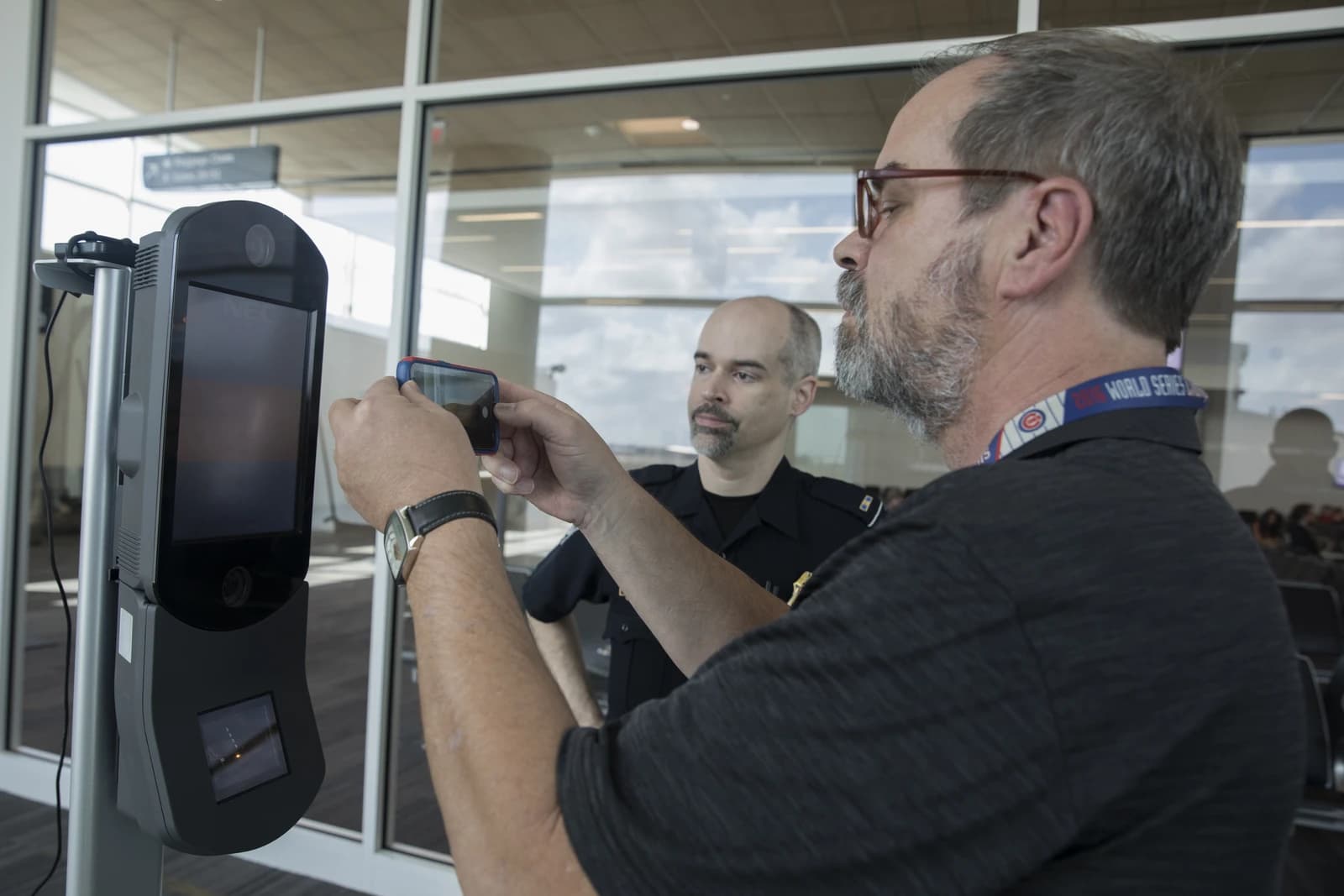
That tension also explains why the most ambitious ideas — such as eliminating check-in altogether — will depend on industry-wide coordination rather than a single software upgrade. Kubilay pointed to IATA-backed Digital Travel Credentials, based on ICAO standards, as a way to reduce the repeated identity checks passengers face throughout a journey. He said an IATA study found travelers are asked to provide the same information seven times on average. If airlines, border agencies and airports can align on digital identity verification, the payoff could be faster throughput, lower friction and better data sharing. If not, old processes will continue to slow adoption.
For investors, the implications extend beyond aviation software vendors. The winners are likely to be companies that can prove interoperability, regulatory discipline and measurable ROI, not those pitching broad AI narratives. Airlines that successfully modernize could lower operating friction and improve direct customer relationships, reducing reliance on online travel agencies and other intermediaries. But the bear case is that fragmented systems, weak governance and security concerns delay spending and limit the pace of adoption.
The backdrop is a sector increasingly aware that digitalization is no longer optional, but also unwilling to trade resilience for speed. Over the next few years, the market will likely reward vendors and carriers that can modernize incrementally, keep systems compatible with future standards and prove that AI improves operations without weakening control.
| Entity | Gains | Losses |
|---|---|---|
| Hitit | ▲More airline software demand | ▼Slow buyers delaying upgrades |
| Airlines | ▲Lower costs, better control | ▼Legacy-system inefficiency |
| Passengers | ▲Faster, more personalized travel | ▼Friction from old processes |
| OTAs/intermediaries | ▲Less direct impact | ▼Airlines regaining customer access |