Using generative AI to plan holidays is becoming mainstream, but the bigger issue for travel companies is not adoption — it is whether travellers trust the answers enough to book through them.
Travelers Use Generative AI for Trip Planning
A new study of 421 Australian travellers found 28.8% had already used generative AI to search deals, research destinations or build itineraries, with usage rising to 30% among Gen Z. That matters because AI is increasingly acting as the first layer between consumers and the travel market, filtering which flights, hotels and experiences ever get considered. For online travel agencies such as Booking Holdings, Expedia and TripAdvisor, the shift raises a familiar but more acute question: if AI becomes the gateway, who captures the customer relationship and the booking margin?
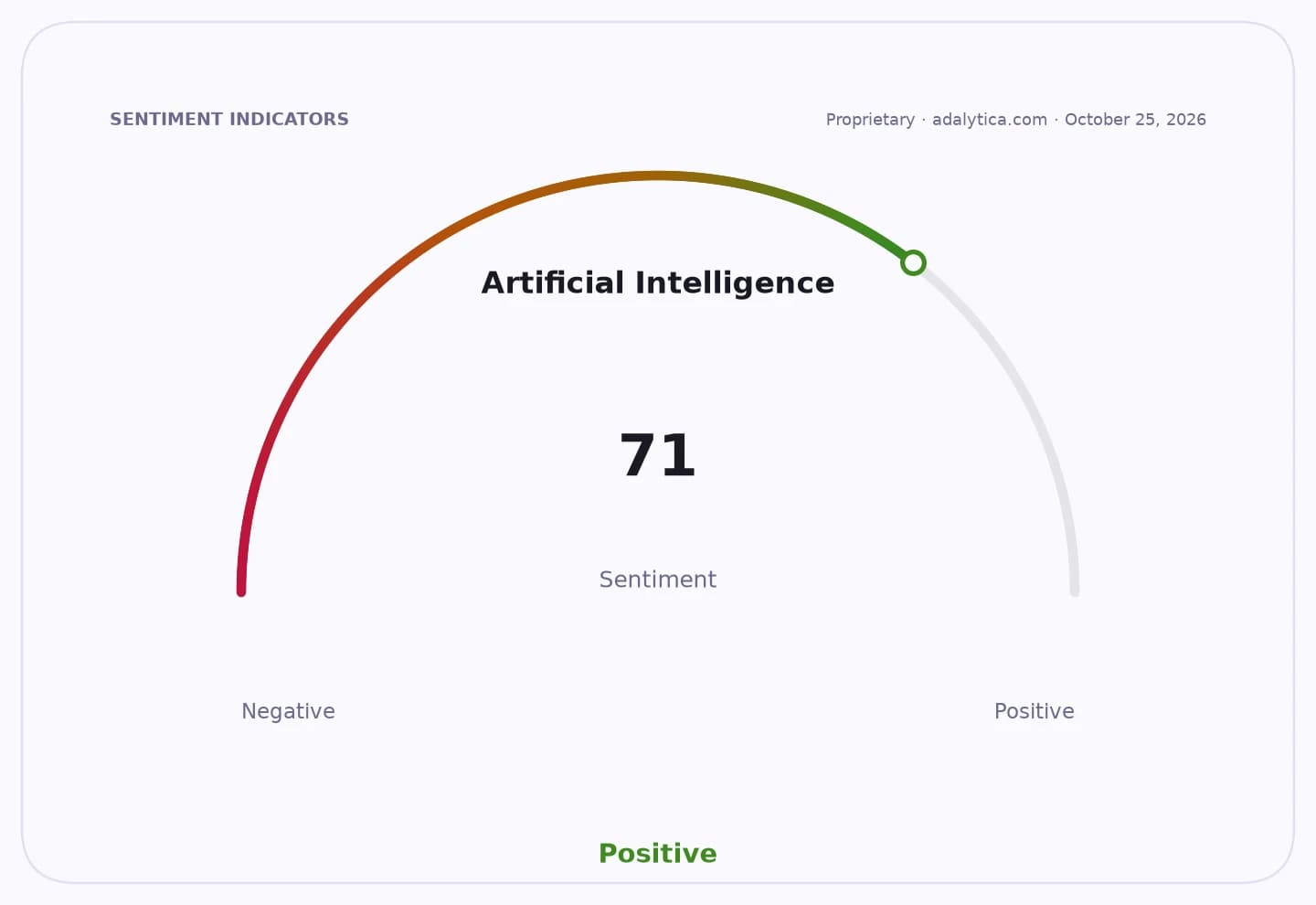
Sentiment IndicatorsⓘProprietary · adalytica.com · October 25, 2026
This is a snapshot — live sentiment, awareness and momentum for 130+ markets update continuously in the dashboard.Open AlphaPulse
The research suggests the commercial winners will be the platforms that can make AI feel reliable, accountable and fair. Travellers were more willing to delegate planning when they believed recommendations were consistent, when providers could be held responsible if something went wrong, and when the system was seen as trustworthy. That aligns with the economics of travel, where a single bad recommendation — a cancelled hotel, an outdated train timetable or the wrong visa advice — can destroy confidence and push users back to traditional search or human agents.
The surprise is that more explanation did not automatically help. Greater perceived transparency was linked to less willingness to delegate at every level, a result the researchers call the “transparency paradox.” For investors, that matters because it challenges a common assumption in AI product design: that more disclosure is always better. In travel, too much detail can feel like friction, undermining the convenience AI is supposed to provide.
That has strategic implications for the sector. Tourism Australia has already flagged AI-mediated discovery as a priority, and travel groups are racing to add AI assistants, recommendation engines and booking tools. But the race is not just about rolling out features. It is about building systems that are useful enough to drive conversion without overwhelming users with process, sourcing and caveats. The likely model is “progressive disclosure” — give the headline answer first, then let users dig into the evidence only if they want it.
For listed travel companies, the market question is whether AI becomes a defensive layer that reinforces existing brands or a disintermediating layer that weakens them. TripAdvisor, Expedia and Booking have all argued in filings that search, discovery and user-generated content remain central to high-intent demand, but AI threatens to sit in front of those touchpoints and compress traffic and advertising economics if it owns the first query. The stock action underscores the uncertainty: TripAdvisor and Expedia have seen sharp swings over recent months, while Booking has also retraced from earlier highs as investors weigh AI opportunity against margin and distribution risk.
The bull case is that trusted AI tools increase convenience, improve conversion and deepen engagement across booking ecosystems. The bear case is that if AI answers are inaccurate, opaque or too burdensome to review, travellers will either abandon the tools or stick to larger platforms that can absorb the trust cost. In other words, the next battleground in travel is not just who has the best inventory, but who can make algorithmic advice feel safe enough to follow.
For investors, the takeaway is straightforward: AI in travel is moving from novelty to channel power. The companies that can pair accuracy with accountability — without turning convenience into homework — are best placed to capture the economics of the shift.
| Entity | Gains | Losses |
|---|---|---|
| AI-enabled travel platforms | ▲more bookings, stronger gatekeeper role | ▼higher liability if recommendations fail |
| Booking, Expedia, TripAdvisor | ▲better conversion if trust is won | ▼traffic and pricing power if disintermediated |
| Travellers | ▲faster planning, less search friction | ▼misinformation and poor outcomes |
| Traditional search/manual booking | ▲less relevance, lower demand | ▼fewer direct customer touchpoints |