Businesses in Ho Chi Minh City are pouring more money and attention into artificial intelligence, but the clearest economic message from a new survey is that most are still not getting measurable productivity gains — a warning that the AI boom is running ahead of execution.
Ho Chi Minh City firms see weak AI productivity gains
Artificial Intelligence
That gap matters because it goes to the heart of the global AI trade: capital is moving fast into software, models and infrastructure, but the payoff at the company level is still uneven. For investors, that means the winners may not be the broad swath of “AI adopters” the market assumes, but the vendors selling the tools, compute and services that help firms move from pilot projects to scaled deployment.
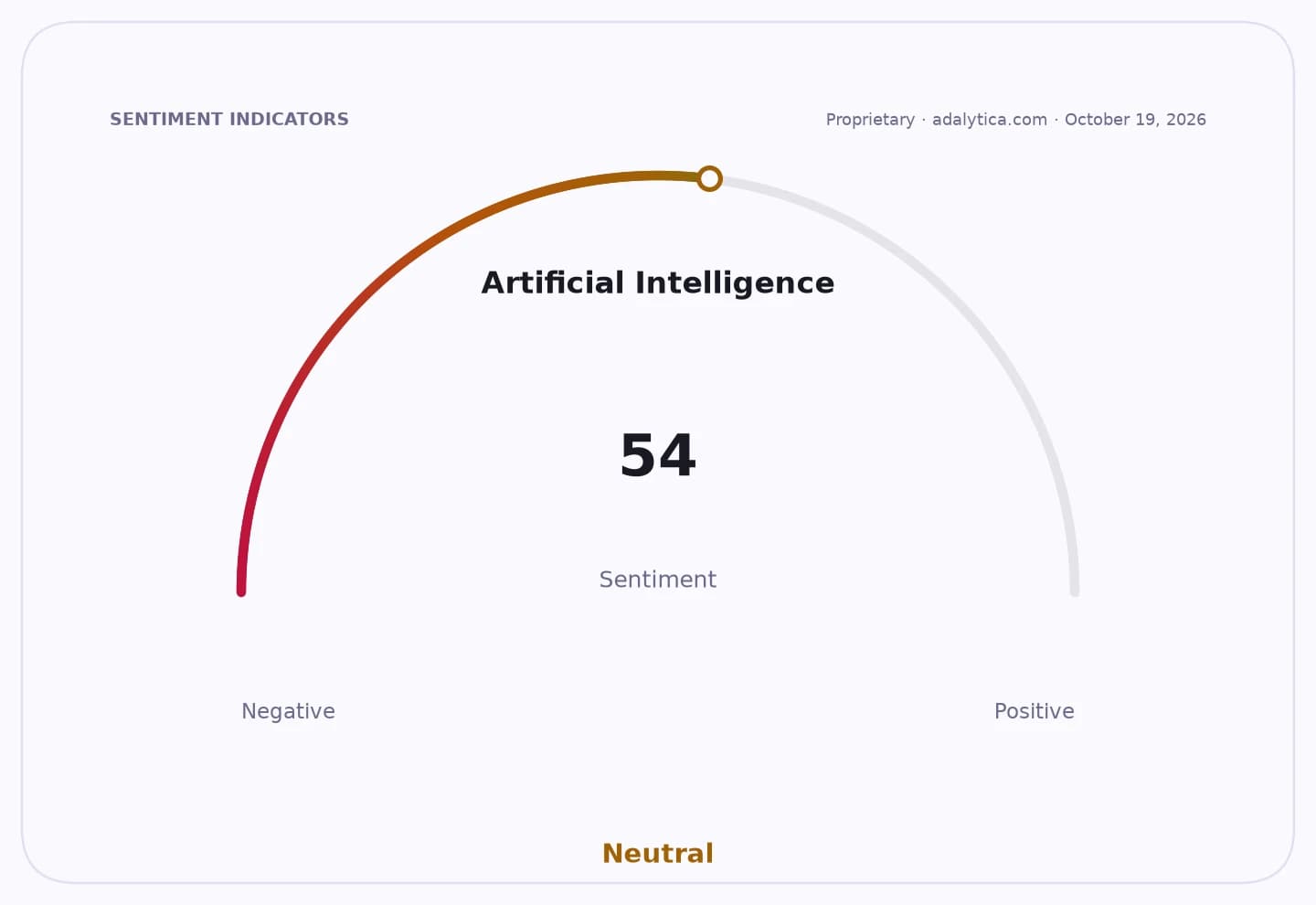
Sentiment Indicators
Artificial Intelligence
The survey’s finding that most businesses in the city are only operating AI in a preliminary way suggests adoption is still shallow. In practical terms, that means AI is being tested more than embedded in workflows, customer service, supply chains or decision-making systems where it can actually lift margins. Without that integration, AI tends to add cost and complexity before it adds earnings power.
That distinction is critical for valuation. The market often prices “AI exposure” as if every buyer of the technology will see immediate efficiency gains. In reality, the first wave of spending often goes to experimentation, vendor selection, data cleanup and employee retraining. Those are necessary steps, but they do not yet translate into higher throughput, lower headcount costs or stronger returns on capital.
For investors, the implication is that the AI theme remains intact — but the opportunity is shifting. The easy trade is no longer simply owning companies that talk about AI adoption. The higher-conviction bet is on the picks-and-shovels layer: chipmakers, cloud providers, data infrastructure, cybersecurity and enterprise software platforms that help businesses industrialize AI rather than merely dabble in it. That is where spending is most likely to compound.
Nvidia remains the most obvious bellwether for that compute demand, even as its stock has been volatile and technical indicators such as the 50-day moving average and RSI have pointed to short-term fatigue. Microsoft, meanwhile, remains a core beneficiary of enterprise AI rollout even though its own shares have recently softened and sentiment around the name has turned cautious in Adalytica’s AI earnings snapshot. The disconnect is that market noise can obscure a much larger secular trend: businesses are still in the first innings of learning how to monetize AI.
The regional angle also matters. Ho Chi Minh City is one of Southeast Asia’s more dynamic commercial hubs, and if firms there are still stuck in early-stage deployment, that underscores how long the runway remains across emerging markets. The next phase is likely to be less about headline-grabbing AI announcements and more about workflow redesign, automation of back-office functions and integration into sales and manufacturing systems.
That is why the story is not that AI demand is fading. It is that the market underestimates how long it takes for AI to convert from spending into productivity. The investment takeaway is straightforward: stay overweight the infrastructure and platform layer, and be selective on the companies whose AI story is still mostly marketing. The real upside will come from firms that can turn experimentation into measurable margin expansion.
| Entity | Gains | Losses |
|---|---|---|
| Nvidia | ▲Compute demand | ▼Buyers delaying scale |
| Microsoft | ▲Enterprise AI rollout | ▼Near-term margin skepticism |
| AI infrastructure vendors | ▲Higher spending | ▼Pilot-only adopters |
| Ho Chi Minh City businesses | ▲Learning curve on AI | ▼Near-term efficiency gains |