More than half of Americans expect inflation to spoil the holiday season, a warning sign for consumer spending just as retailers head into their most important sales stretch of the year.
Holiday inflation worries weigh on U.S. shoppers
CPI
A WalletHub survey found 52% of respondents think inflation will ruin Christmas or the holiday they celebrate, while 79% said their holiday budget is the same as last year or smaller. One in four are still paying down debt from last holiday season, underscoring how years of elevated prices are still squeezing household balance sheets.
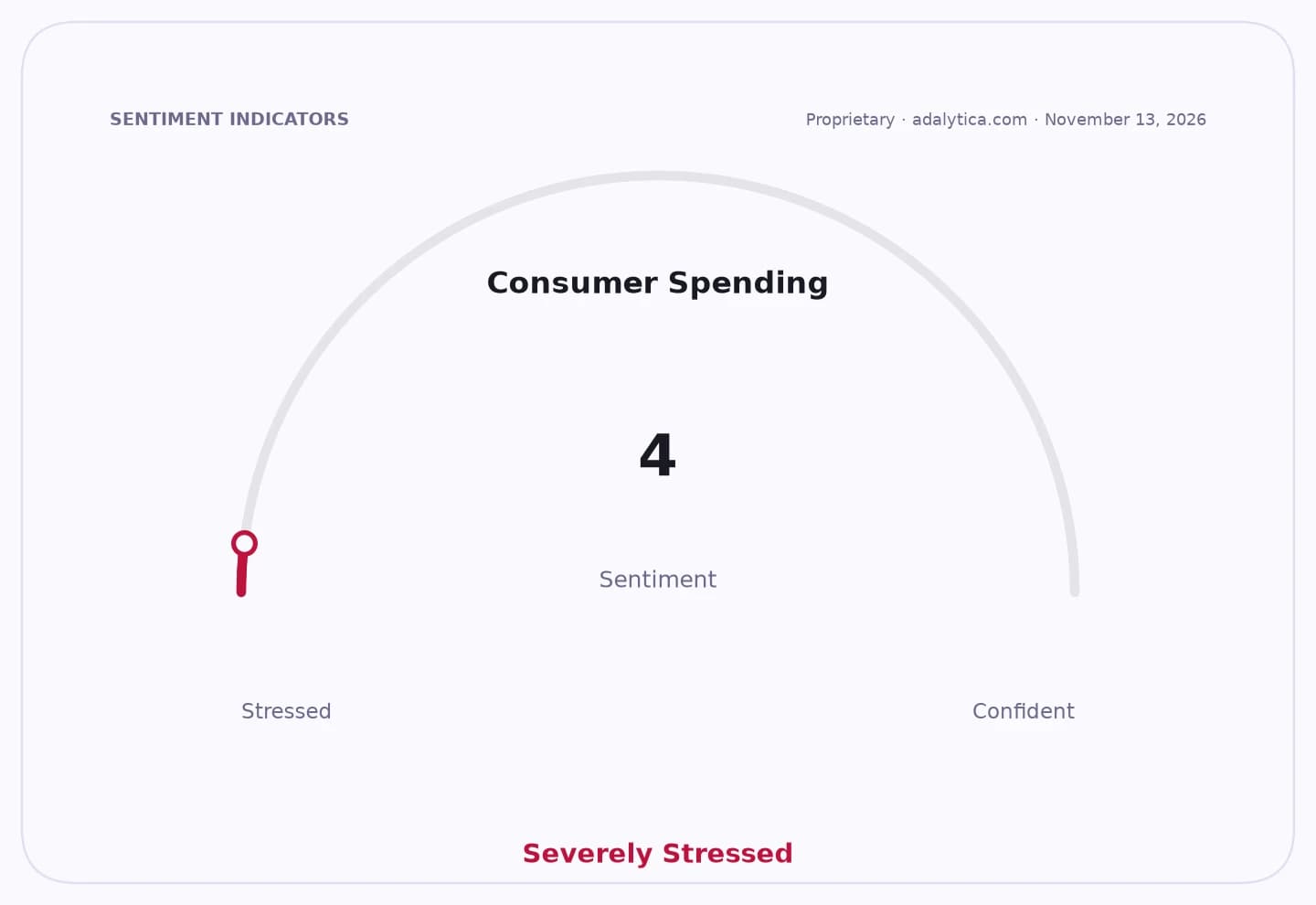
Sentiment Indicators
Consumer Confidence
The findings matter because holiday spending is a key driver of fourth-quarter retail sales, and consumer caution can quickly show up in order volumes, discounting and margins. The survey suggests shoppers are likely to trade down, buy earlier and chase promotions more aggressively, which helps some big-box and e-commerce chains but leaves discretionary retailers with more pricing pressure.
The timing also fits a broader inflation backdrop that has kept Americans on edge. Even as consumer prices have cooled from the peaks, the latest data show inflation is still elevated enough to shape behavior, with the CPI forecast pointing to another monthly increase and core prices continuing to rise. Separate sentiment gauges tied to inflation and confidence also show consumers remain uneasy about the Federal Reserve’s 2% inflation target, even as some expectations have improved.
CPI — 30-day sentimentadalytica.com
Explore this data interactively — full history, time series and cross-market comparisons.
For investors, the message is that holiday demand may be there, but it is likely to be more price-sensitive than in prior years. That favors retailers and brands with strong value positioning, private-label exposure and flexible inventory, while it raises the risk of heavier markdowns for sellers leaning on discretionary gift spending.
WalletHub’s survey also found 41% of people usually start holiday shopping in October or earlier, and more than two-thirds believe shopping early saves money overall. More than half said they do not trust AI to help with holiday shopping, a sign that consumers are still relying on price comparisons and old-fashioned deal hunting rather than automation.
The next test comes with early holiday sales data, which should show whether inflation fatigue is changing not just how much Americans spend, but when and where they spend it.
| Entity | Gains | Losses |
|---|---|---|
| Value retailers | ▲More traffic from bargain hunters | ▼Less pricing power |
| Discretionary brands | ▲Early planning-driven demand | ▼Higher markdown risk |
| Budget-conscious consumers | ▲More deal-seeking leverage | ▼Lower holiday flexibility |
| Higher-price retailers | ▲— | ▼Weaker conversion and margin pressure |