Hollywood’s latest tech takedown is not just a cultural sideshow — it is a reminder that the AI boom is colliding with a powerful counter-narrative that could shape consumer sentiment, regulatory pressure and the economics of entertainment platforms.
Hollywood tech backlash hits Meta, Netflix and Disney
Nathan Fielder and Lance Oppenheim’s You Can See Everything, A24’s Elizabeth Holmes documentary, arrives as a cluster of films and dramas aimed at Elon Musk, Mark Zuckerberg and Sam Altman are drawing attention for turning Silicon Valley’s most powerful figures into box-office targets. The immediate significance for investors is not the revenge fantasy itself, but the way Hollywood is using mainstream distribution to challenge the credibility of Big Tech at a time when those companies are racing to embed AI deeper into everyday life.
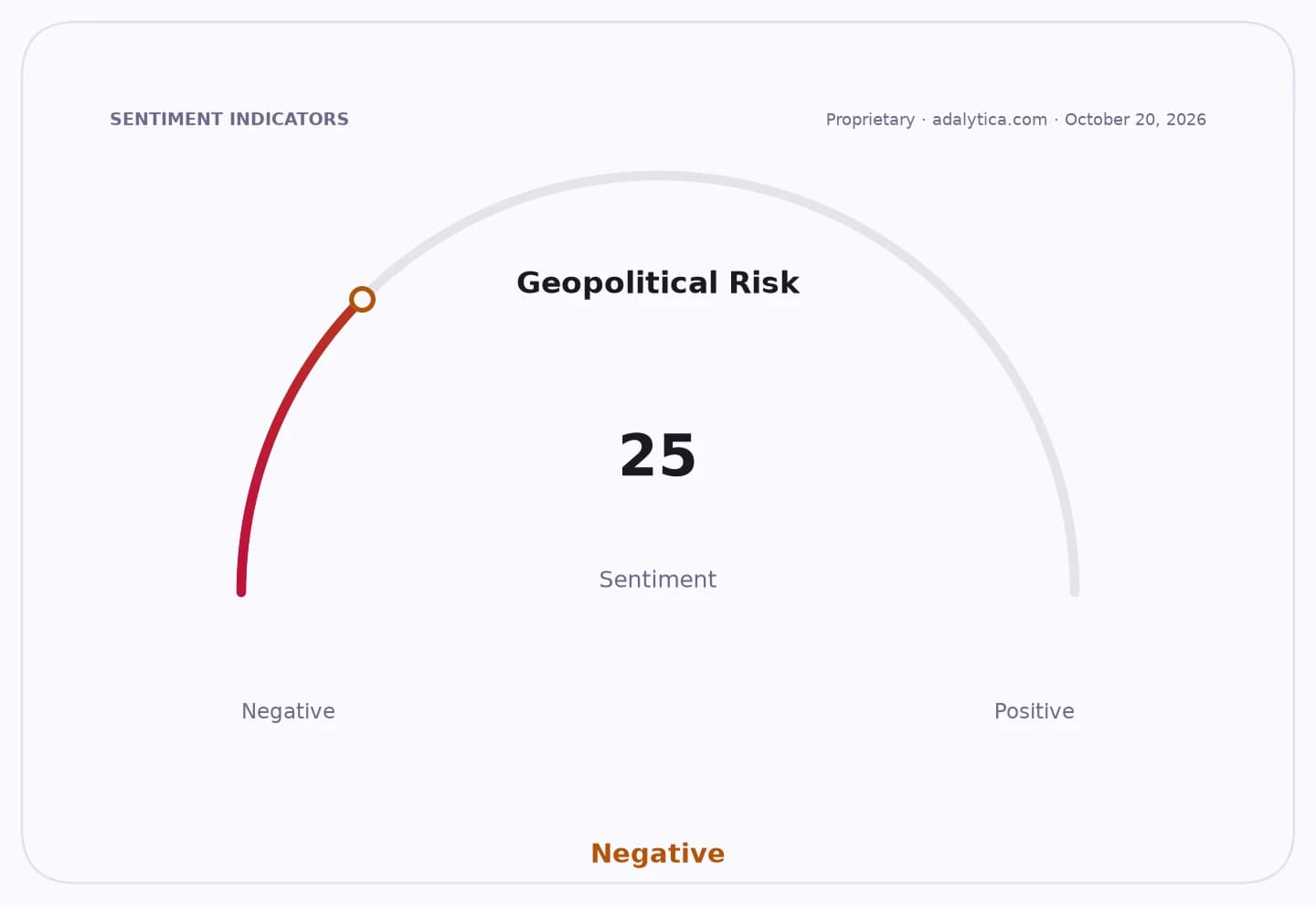
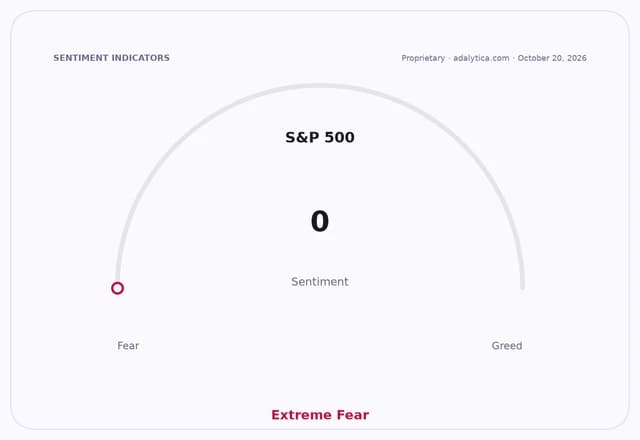
Sentiment IndicatorsⓘProprietary · adalytica.com · October 20, 2026
This is a snapshot — live sentiment, awareness and momentum for 130+ markets update continuously in the dashboard.Open AlphaPulse
That matters because the fight over narrative is increasingly the fight over adoption. In the article’s framing, tech leaders have spent years pitching AI as the solution to everything, while filmmakers are now arguing that human judgment, storytelling and skepticism still matter. That is a cultural argument, but it also has economic consequences: AI businesses need mass consumer trust and engagement to justify their valuations, while media companies need differentiated content to defend subscriptions, advertising and pricing power.
The movie wave also underlines how concentrated the clash has become. The stories center on Musk, Zuckerberg and Altman — three executives whose companies sit at the intersection of social media, AI and digital advertising. Their brands have the scale to shape public perception, but also enough visibility to attract backlash. The piece notes that Musk and The Social Reckoning are explicitly deconstructing surveillance, manipulation and platform power, while Artificial recasts OpenAI’s rise as a warning about investor hype and internal dissent. That is not merely entertainment industry chatter; it feeds directly into the broader debate over whether AI leaders are overpromising on product and underestimating social resistance.

For investors, the clearest implication is that Hollywood’s resistance may become one more headwind for Big Tech’s public image, even if it does little to alter earnings trajectories in the near term. Meta, Netflix and Disney all trade on the durability of attention: Meta on ad engagement, Netflix on subscription stickiness, Disney on the strength of its franchises and the appeal of its streaming bundle. A sustained anti-tech cultural cycle could raise scrutiny around AI use, deepen consumer skepticism and strengthen the case for human-made content in an industry already fighting churn and margin pressure.
That is particularly relevant for Netflix, where the stock has been under pressure. The shares closed at $69.85 on Oct. 19, well below the 50-day moving average of $75.01 and the 200-day average of $82.76. The RSI reading of 48.4 suggests the stock is neither technically oversold nor strong enough to signal a decisive reversal, while MACD remains negative. Disney, by contrast, is holding up better, with the shares at $109.59 and above both the 50-day and 200-day moving averages, suggesting investors see more resilience in its media and theme-park mix. Meta remains the market’s strongest name in the group despite a pullback from recent highs, with the stock at $705.44 — still far above its 200-day average of $631.30, though well off the September peak near $777.59.
The bigger strategic point is that the entertainment industry is not simply reacting to Silicon Valley; it is trying to reclaim moral and commercial ground. The article argues that studios such as A24, Sony, HBO and Neon are benefiting from a moment in which artists can frame tech executives as the villains rather than the saviors. That could help studios and streamers market premium, human-driven content at a time when audiences are increasingly saturated with algorithmic media and AI-generated material.
There is also a regulatory undertone. The same public mood that welcomes films about tech excess can support tougher scrutiny of platform power, data use and AI deployment, especially if lawmakers begin to see media access and trusted information as public-interest issues. That creates a potentially longer-lasting overhang for the tech platforms at the center of these stories, even if the immediate box-office impact is modest.
The likely market effect is incremental rather than dramatic: no one should expect a documentary cycle to rerate the Nasdaq. But the direction of travel matters. If Hollywood can sustain a narrative that casts Big Tech as manipulative, overconfident and socially corrosive, then the cost of trust for AI companies rises, while premium content owners gain a clearer cultural contrast. In that sense, the revenge plot is not only artistic — it is commercial.
| Entity | Gains | Losses |
|---|---|---|
| Hollywood studios and filmmakers | ▲Cultural leverage | ▼Big Tech’s halo |
| Netflix and Disney | ▲Premium-content differentiation | ▼Algorithmic entertainment rivals |
| Meta, OpenAI and Musk-aligned platforms | ▲Short-term attention | ▼Public trust and brand goodwill |