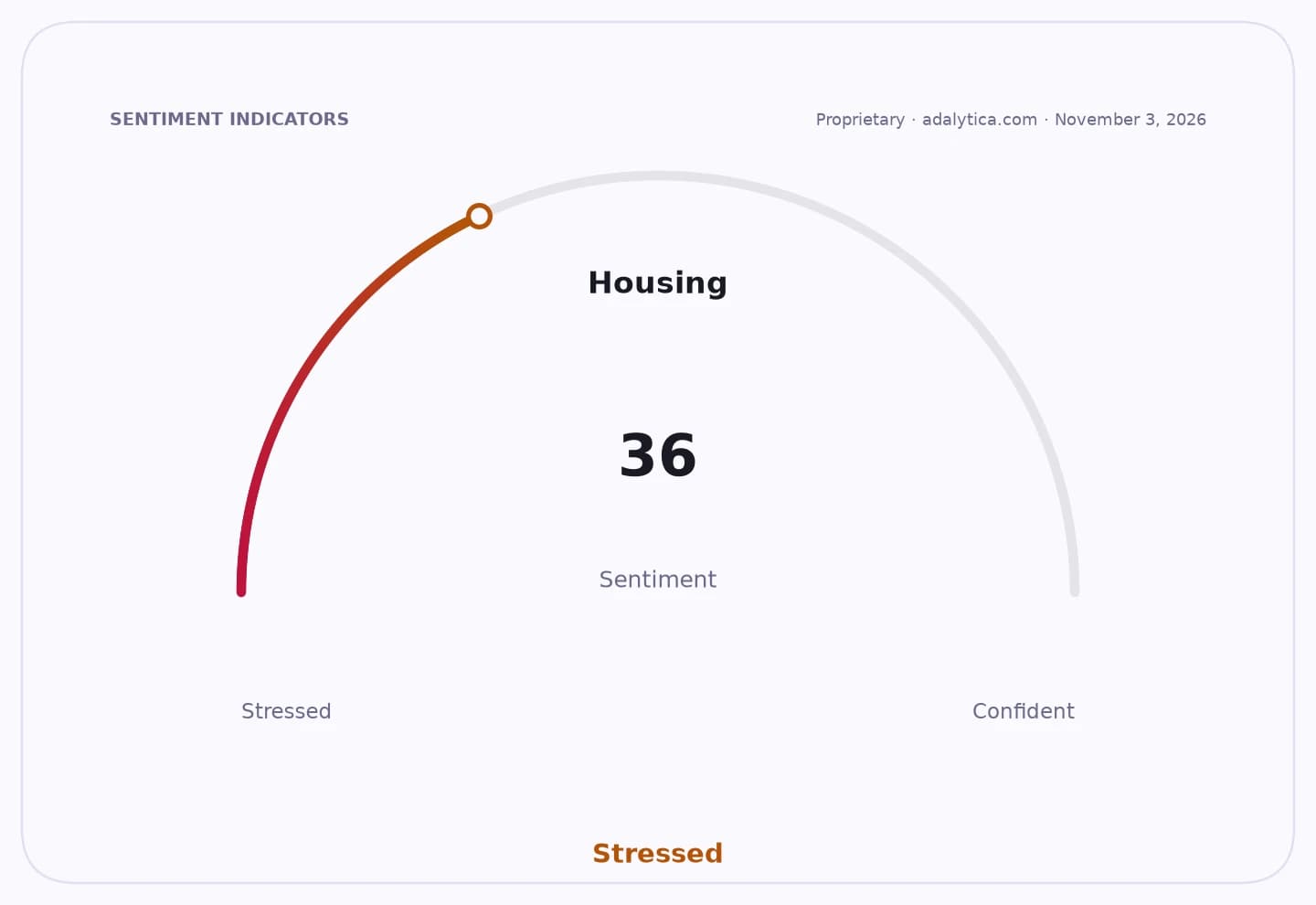
Home Depot’s latest quarter showed shoppers were still spending more than expected, but the company’s softer outlook and a CEO transition underscore how dependent the home-improvement giant remains on a housing market pinched by mortgage rates above 7%.
Home Depot Outlook Softens as Mortgage Rates Stay High

That combination matters because Home Depot is one of the clearest real-time reads on whether homeowners are willing to remodel, repair or refinance their way through a high-rate environment. The stock’s recent recovery has largely reflected relief that demand has not broken down, yet the earnings setup still points to a business growing into a tougher housing backdrop rather than escaping it.
Sentiment Indicators
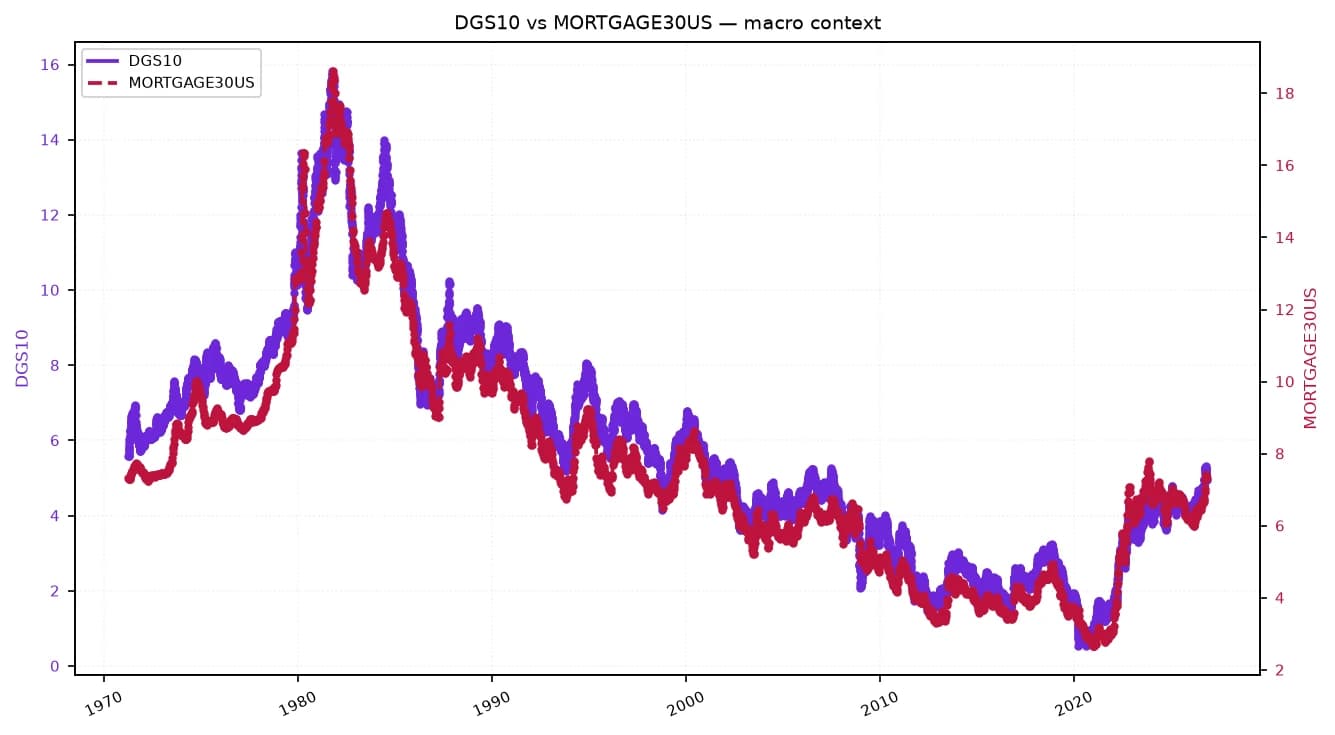
The 30-year mortgage rate was 7.28% in the latest reading, near the upper end of the cycle and well above the roughly 5.3% level seen in mid-2022. Higher borrowing costs continue to suppress mobility, making homeowners more likely to stay put and spend selectively on maintenance rather than major projects. That helps support Home Depot’s repair-and-maintenance mix, but it also keeps a lid on big-ticket renovation activity and pressures discretionary purchases.
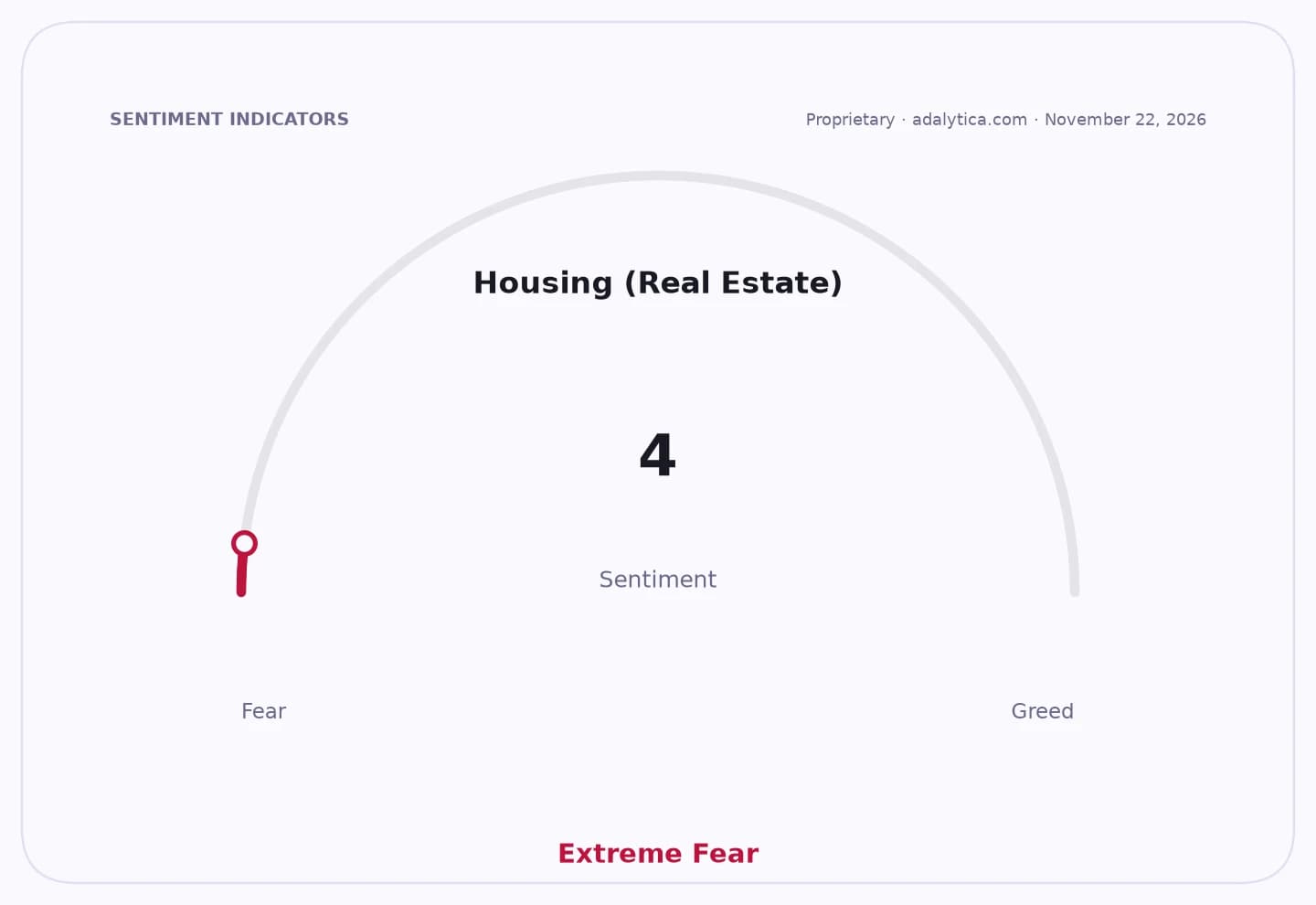
The housing market backdrop remains weak. U.S. housing starts were running at 1,309,000 in October, but the November forecast points to a drop to 1,186,200, highlighting a still-fragile construction pipeline. For suppliers tied to kitchens, flooring, lumber and new-build activity, that means the market is not offering the kind of broad-based lift that can offset slower turnover in existing homes.
S&P 500
Investors have also been watching Home Depot’s stock for signs that expectations had gotten ahead of fundamentals. Shares closed at $336.68 on Nov. 19, close to the 50-day moving average of $314.35 and above the 200-day average of $328.77, suggesting the recent rebound has held even as momentum indicators cooled from overbought levels. That leaves little room for an earnings miss or a more cautious read on the consumer.
The new CEO adds another layer to the investment case. Leadership changes at a company of Home Depot’s scale typically matter less for near-term sales than for execution, capital allocation and the pace of strategic responses to a slower housing cycle. For shareholders, the question is whether the new regime can preserve margin discipline while steering through a market where mortgage rates remain punitive and housing activity is not yet normalizing.
Peer performance shows the pressure is industry-wide rather than company-specific. Lowe’s has also rebounded sharply but remains below its own longer-term trend, while builders such as Toll Brothers have shown that even the upper end of the housing market is sensitive to financing conditions. That reinforces the central tension for Home Depot investors: stable remodeling demand can cushion the downturn, but a sustained improvement in shares likely needs either lower rates or a clearer acceleration in housing turnover.
For now, the stock is trading on the idea that Home Depot can out-earn a sluggish housing cycle. The risk is that mortgage rates near 7.3% keep that cycle sluggish for longer than the market wants to believe.
| Entity | Gains | Losses |
|---|---|---|
| Home Depot | ▲repair-and-maintenance demand | ▼major renovation demand |
| Homeowners | ▲equity-funded repairs | ▼mortgage affordability |
| Lowe’s | ▲sector resilience | ▼housing-cycle drag |
| New CEO | ▲mandate to reset strategy | ▼short-term execution pressure |