D.R. Horton said mortgage pressure is still squeezing U.S. housing demand and warned that margins will remain under strain into fiscal 2027, underscoring how high borrowing costs are keeping even the biggest homebuilders from passing through price increases.
D.R. Horton warns on mortgage pressure and margins
Housing
The nation’s largest homebuilder reported fourth-quarter earnings of $2.67 a share, missing Wall Street’s $3.03 estimate, even as revenue of $9.37 billion beat forecasts. The miss came as weaker sales, higher incentives and lower pricing power offset the top line, with management pointing directly to elevated mortgage rates, affordability constraints and cautious consumer sentiment.
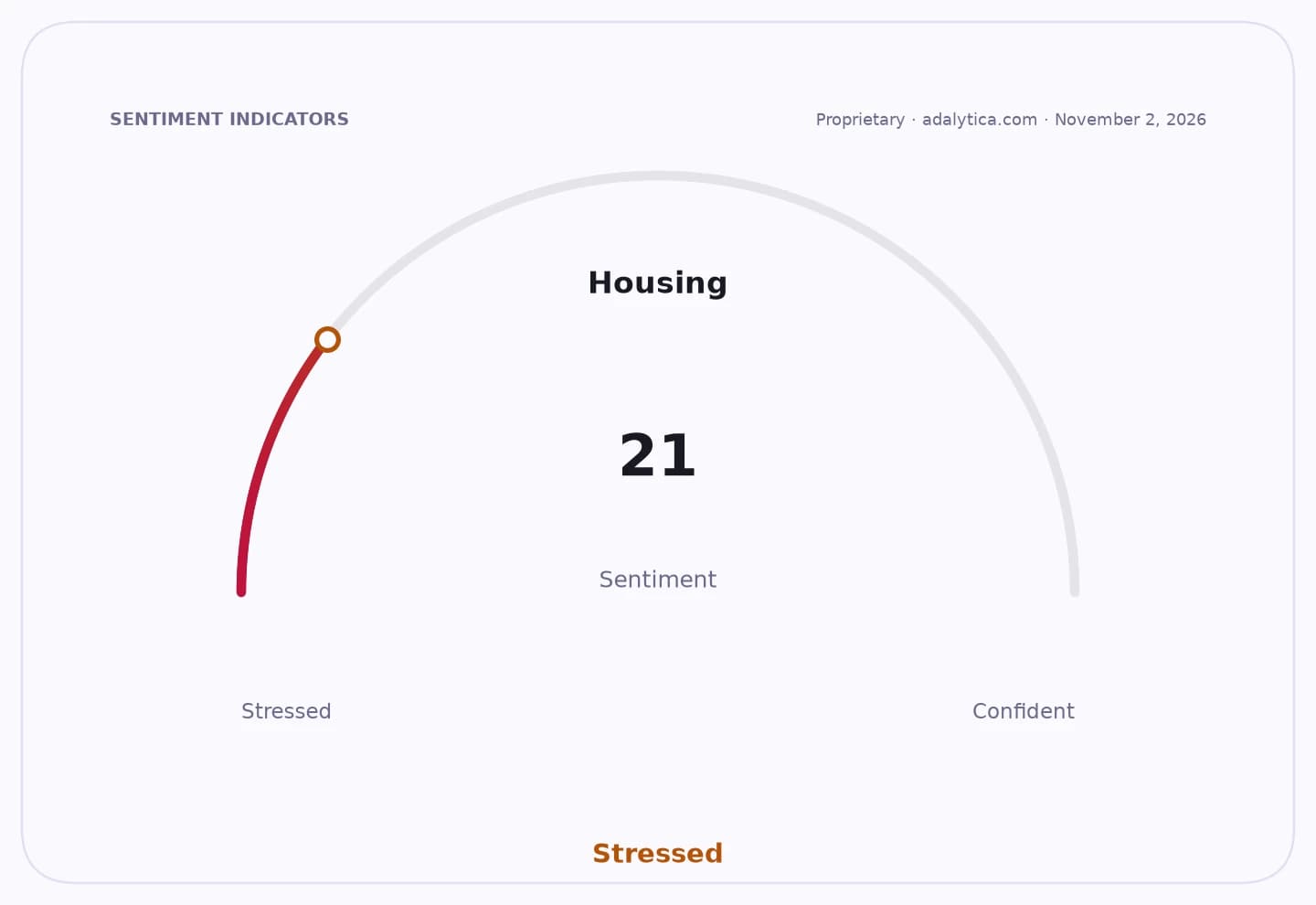
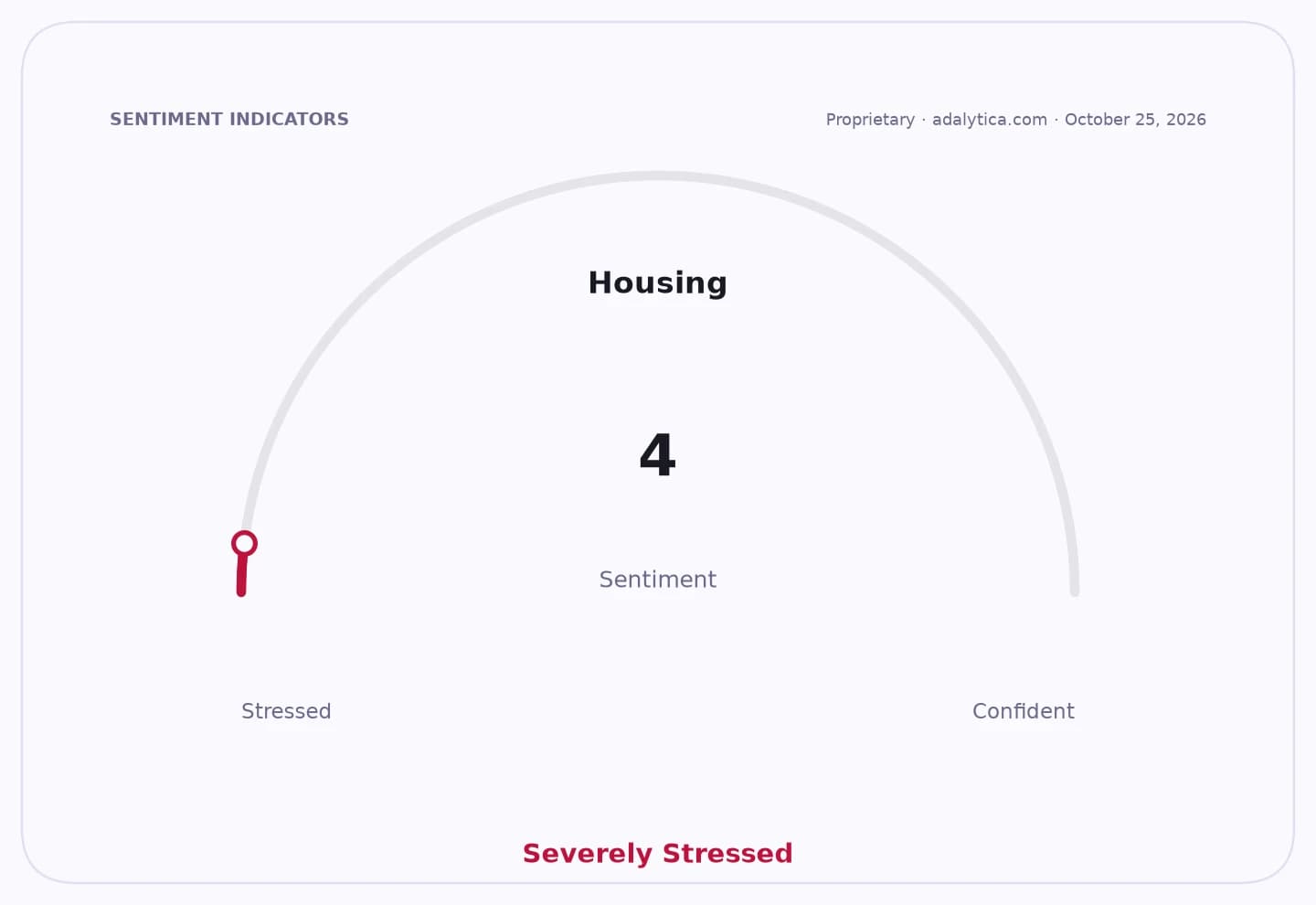
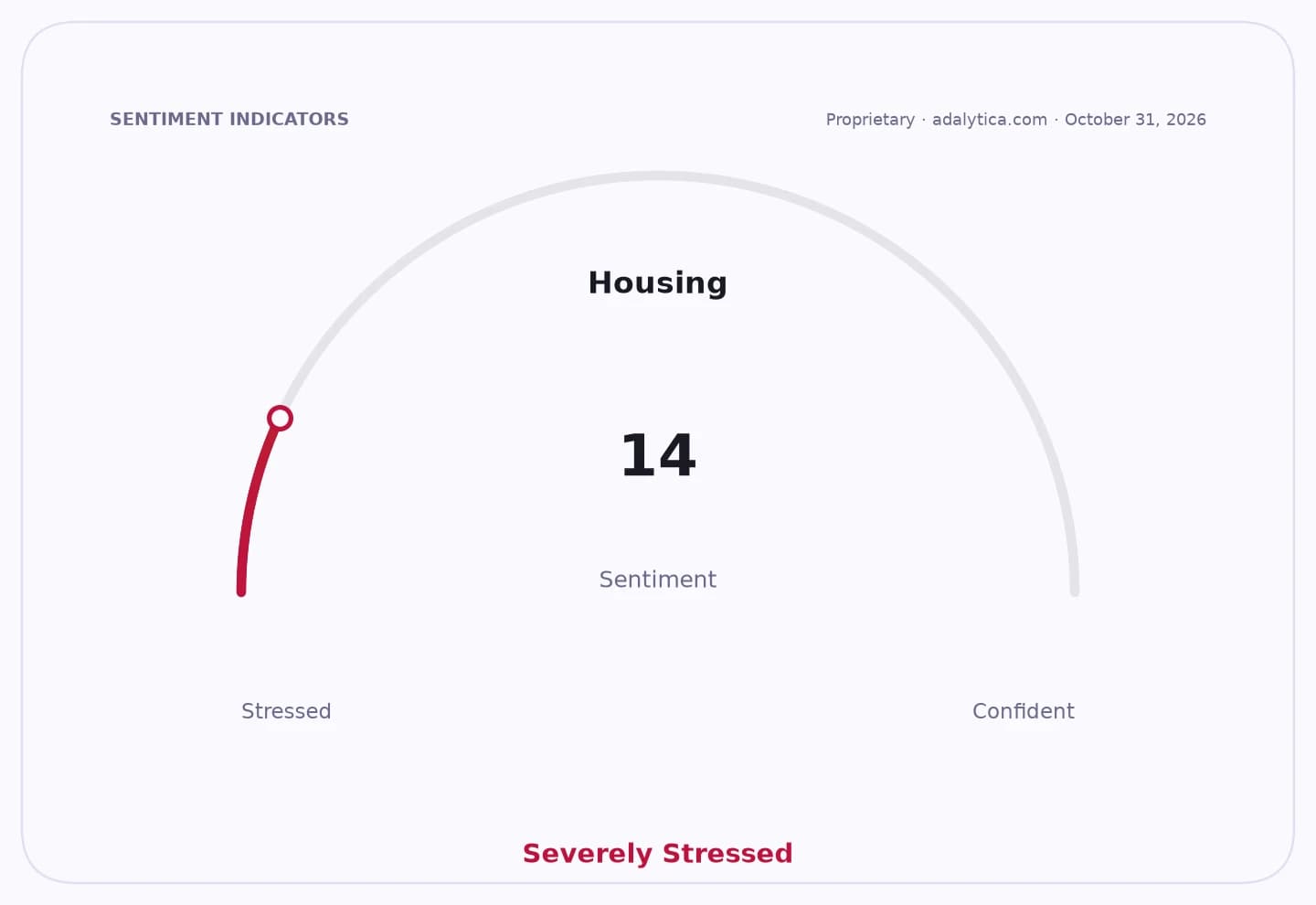
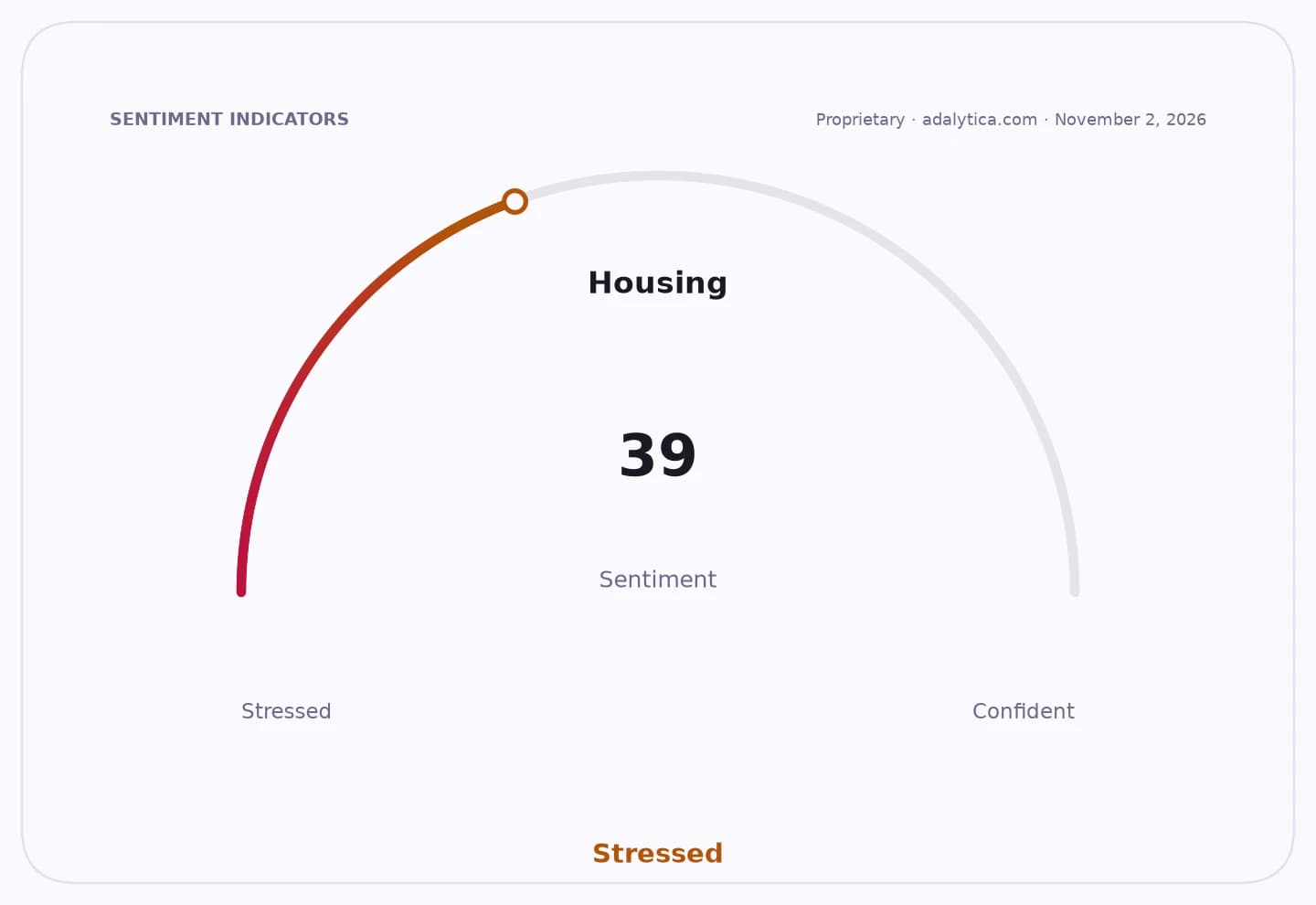
Sentiment Indicators
Homebuilding revenue slipped 2% from a year earlier to $8.4 billion, while closings fell to 22,915 homes. Net orders fell 7% to 18,619 and order value dropped 9% to $6.6 billion, while the cancellation rate climbed to 23% from 20% a year ago, a sign buyers are still balking at monthly payments near current mortgage rates.
D.R. Horton’s average closing price of $365,600 remained well below the broader new-home market, but even that price point did not insulate demand from the rate backdrop. The company said it expects continued margin pressure and elevated incentives in fiscal 2027, after home sales gross margin fell 120 basis points sequentially to 19.5%.
DGS10 vs MORTGAGE30US — macro contextadalytica.com
Explore this data interactively — full history, time series and cross-market comparisons.
The outlook is important for investors because D.R. Horton is often treated as a read-through on the broader U.S. housing cycle. Its first-quarter revenue forecast of $5.9 billion to $6.4 billion also came in below analysts’ $6.96 billion estimate, while its full-year 2027 sales outlook of $30 billion to $32 billion trailed the $33.65 billion consensus, suggesting the slowdown is not just a one-quarter issue.
The backdrop remains hostile for housing affordability. The 30-year mortgage rate is hovering around 7.3%, near a level that has kept many buyers on the sidelines, while U.S. home prices continue to run far above pre-pandemic norms. That combination has made the monthly payment, not the sticker price, the key constraint on demand.
Still, D.R. Horton is not under financial stress. It generated $3.5 billion of operating cash flow in fiscal 2026, ended the year with $7.2 billion of liquidity and returned $4.1 billion to shareholders through buybacks and dividends. The board lifted the quarterly dividend 11% to 50 cents a share, extending a 13-year streak of annual dividend growth.
For the sector, the message is that demand may stabilize only if mortgage rates ease or builders cut prices further. Until then, incentives, slower starts and thinner margins are likely to remain the trade-off for volume.
| Entity | Gains | Losses |
|---|---|---|
| Homebuyers | ▲More incentives and lower prices | ▼Higher mortgage payments |
| D.R. Horton | ▲Strong liquidity and cash returns | ▼Margin pressure and weaker orders |
| U.S. Homebuilders | ▲Affordability-focused sales strategy | ▼Lower pricing power |
| Existing homeowners | ▲Support from limited supply | ▼Slower housing market activity |