The Hungarian forint strengthened on Monday, with the euro trading around 364.2 and the dollar near 325, as falling oil prices and weakness in the Polish zloty supported central and eastern European currencies tied to energy imports.
Hungarian forint rises as oil prices fall

The move matters because it eases some imported inflation pressure in Hungary, where a stronger currency can help soften the local cost of energy, fuel and other dollar-priced goods. That gives policymakers a little more room at a time when markets are focused on how long high global interest rates will stay in place and how much room central banks have to pivot.
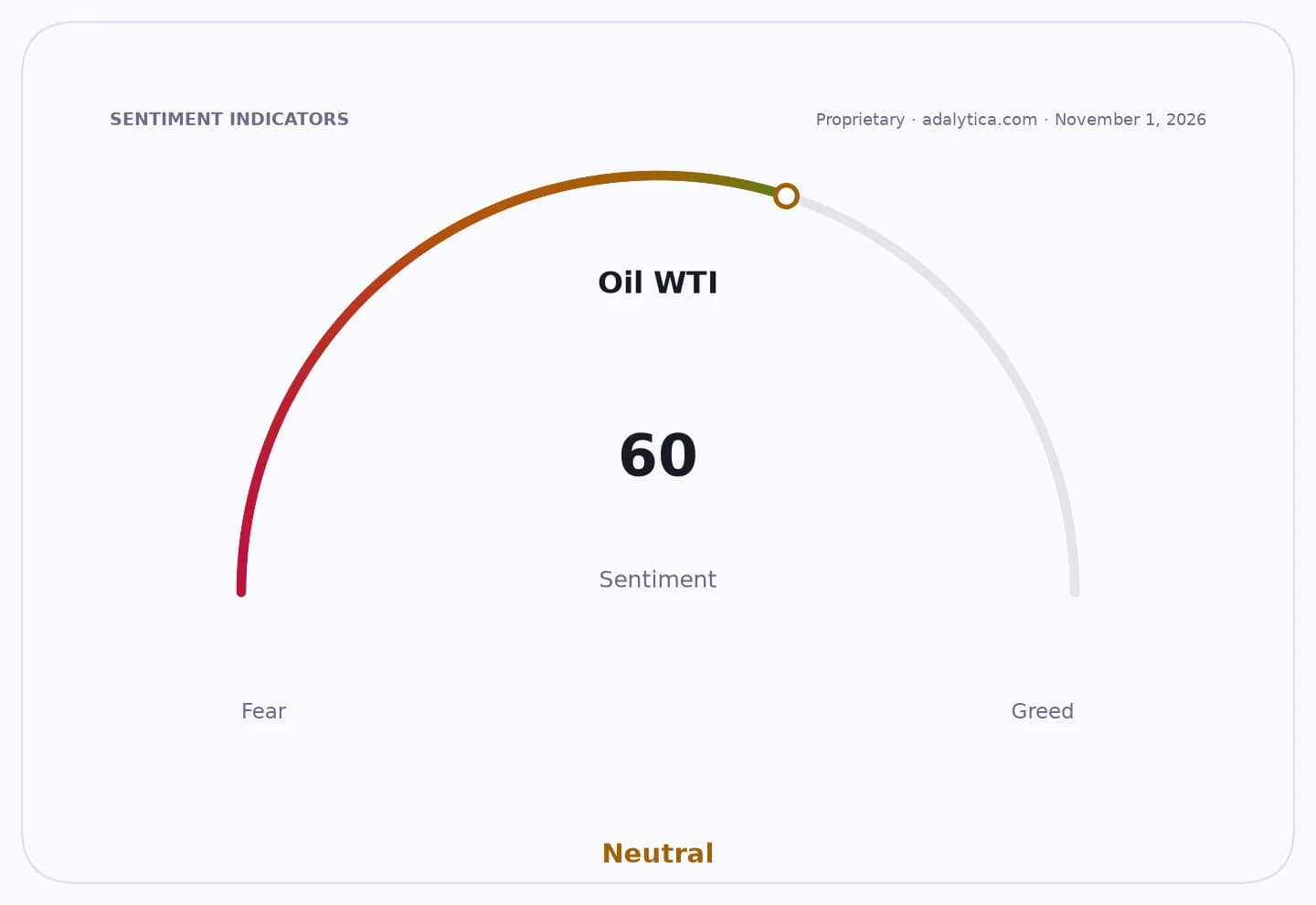
Sentiment Indicators
By late afternoon, the forint was up about 0.5% against the euro and 1% against the dollar from earlier levels, leaving EUR/HUF close to the day’s low. It also firmed against regional peers, rising 0.8% versus the zloty and 0.4% against the Czech koruna. The zloty, by contrast, fell to a three-year low versus the euro as Poland’s deepening political crisis weighed on sentiment.
The immediate catalyst was a drop in crude prices after reports that Donald Trump was prepared to allow more time for diplomatic efforts with Iran, easing concern over supply disruptions. That helped currencies of oil-importing economies such as Hungary, India and South Africa. In Hungary’s case, the currency also benefited from a broader risk tone that was steadier than earlier in the session.
The backdrop was not entirely supportive. The dollar had been stronger after a better-than-expected US manufacturing report, with the ISM index rising to 55.5 in October from 54.5, reinforcing expectations that the Federal Reserve may keep policy tight for longer. Normally that would pressure emerging-market currencies. But the fall in oil and the zloty’s slide outweighed that effect for the forint on Monday.
For investors, the main question is whether this is the start of a broader recovery in the forint or just a short-lived move driven by commodity prices and regional dispersion. A sustained break below 365 to the euro would be constructive for local assets, especially if energy prices stay contained. But the currency remains vulnerable to a stronger dollar, Fed hawkishness and renewed stress in neighboring markets.
For now, the forint is benefiting from a favorable external shock rather than a domestic breakthrough. That leaves its near-term direction tied less to Hungary alone than to the broader mix of oil, US rates and political risk in central Europe.
| Entity | Gains | Losses |
|---|---|---|
| Hungarian forint | ▲Lower import costs | ▼Stronger dollar backdrop |
| Hungary’s consumers/importers | ▲Softer inflation pressure | ▼Volatile energy prices |
| Oil-importing EM currencies | ▲Relief from cheaper crude | ▼Higher US rates |
| Polish zloty | ▲— | ▼Political-risk selloff |