The zloty is stuck near its weakest levels in months against both the euro and the dollar, with traders seeing little near-term scope for a rebound as Poland’s policy outlook and a risk-averse global backdrop work against the currency.
Zloty Nears January 2024 Lows on Risk Aversion

At 16:55 local time, the euro traded at 4.3888 zlotys, up 0.23% on the day, while the dollar climbed 0.19% to 3.9185 zlotys. That leaves EUR/PLN at its highest since January 2024 and USD/PLN at roughly a year-and-a-half peak, underscoring how far the currency has weakened since mid-year.
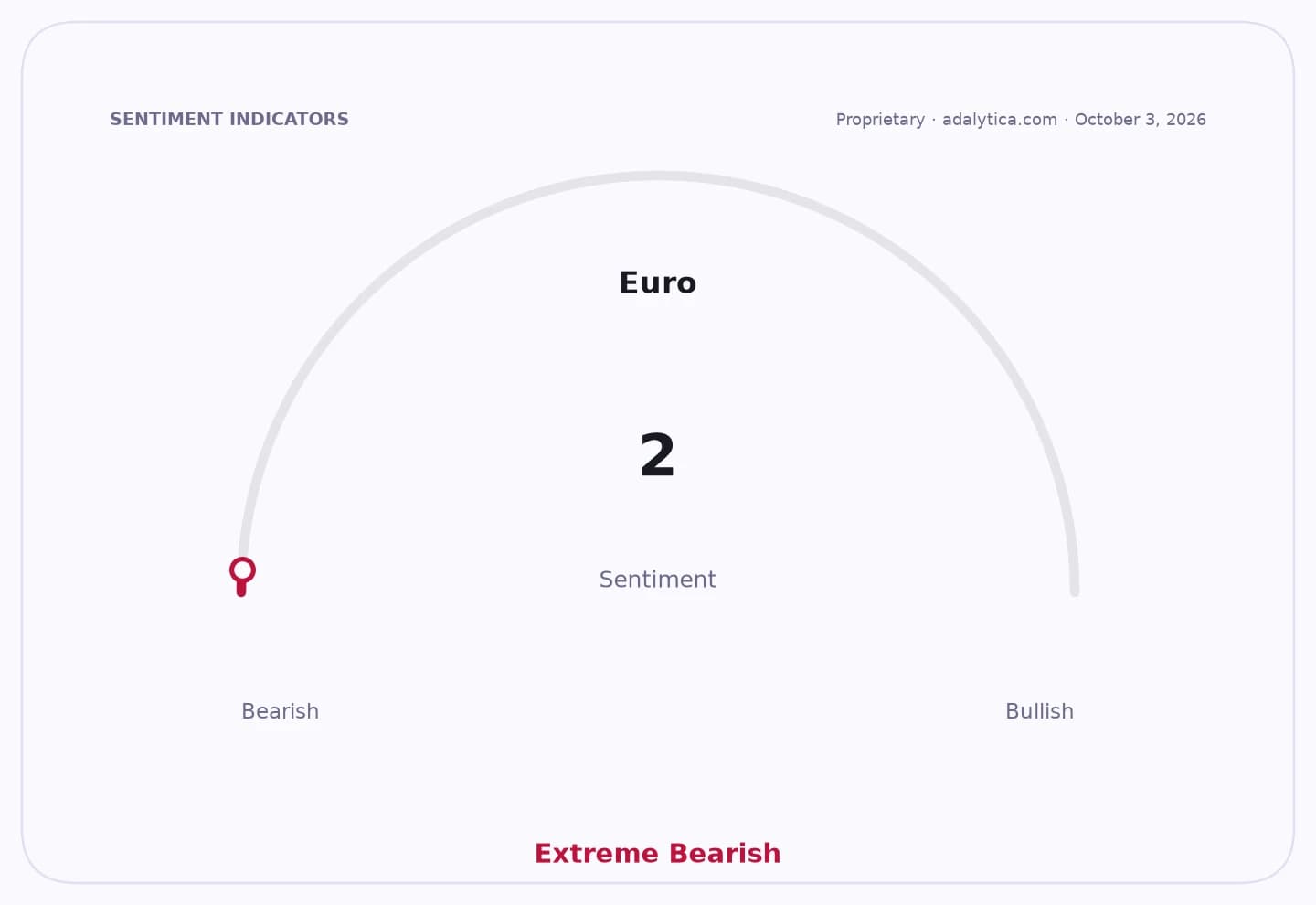
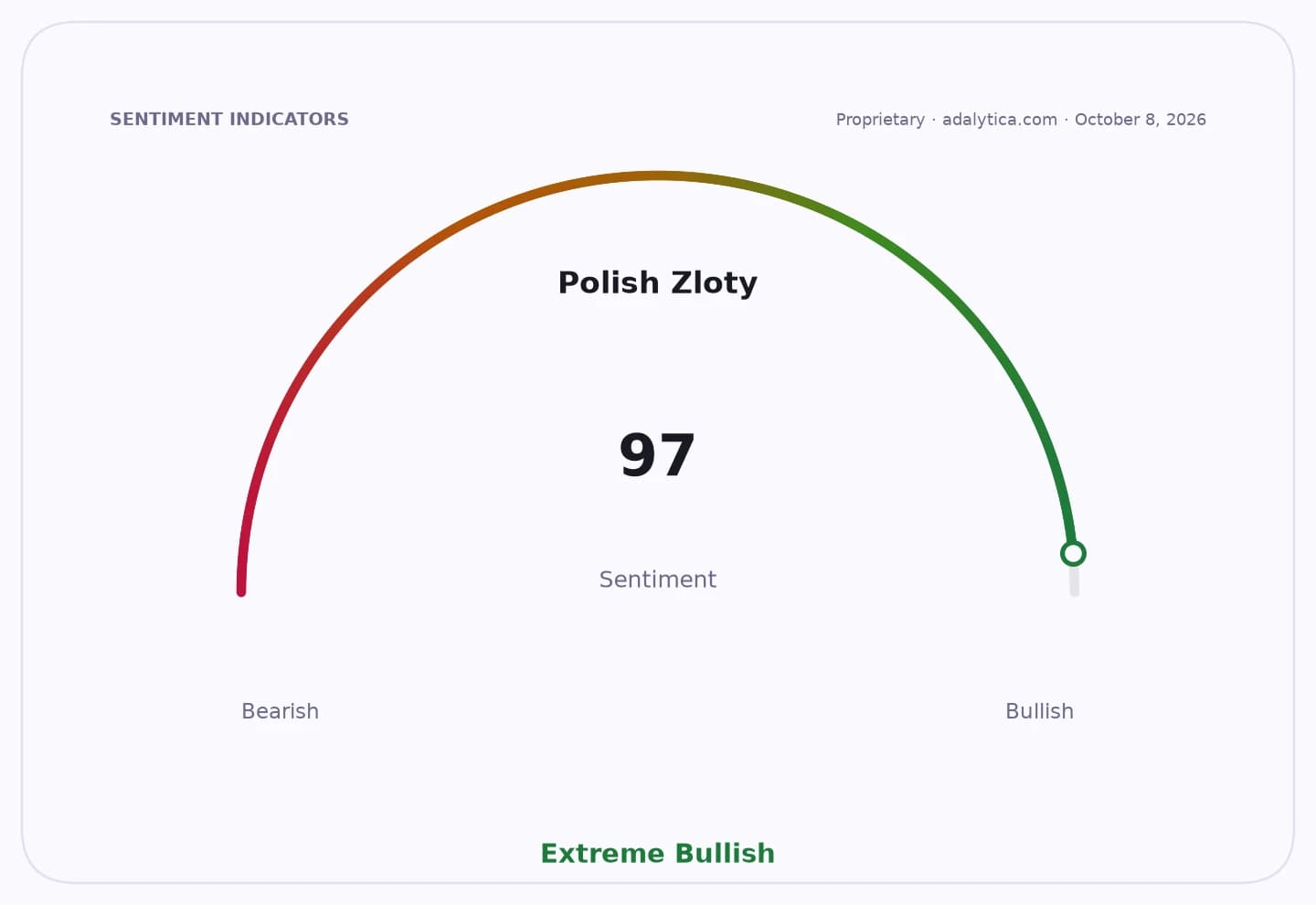
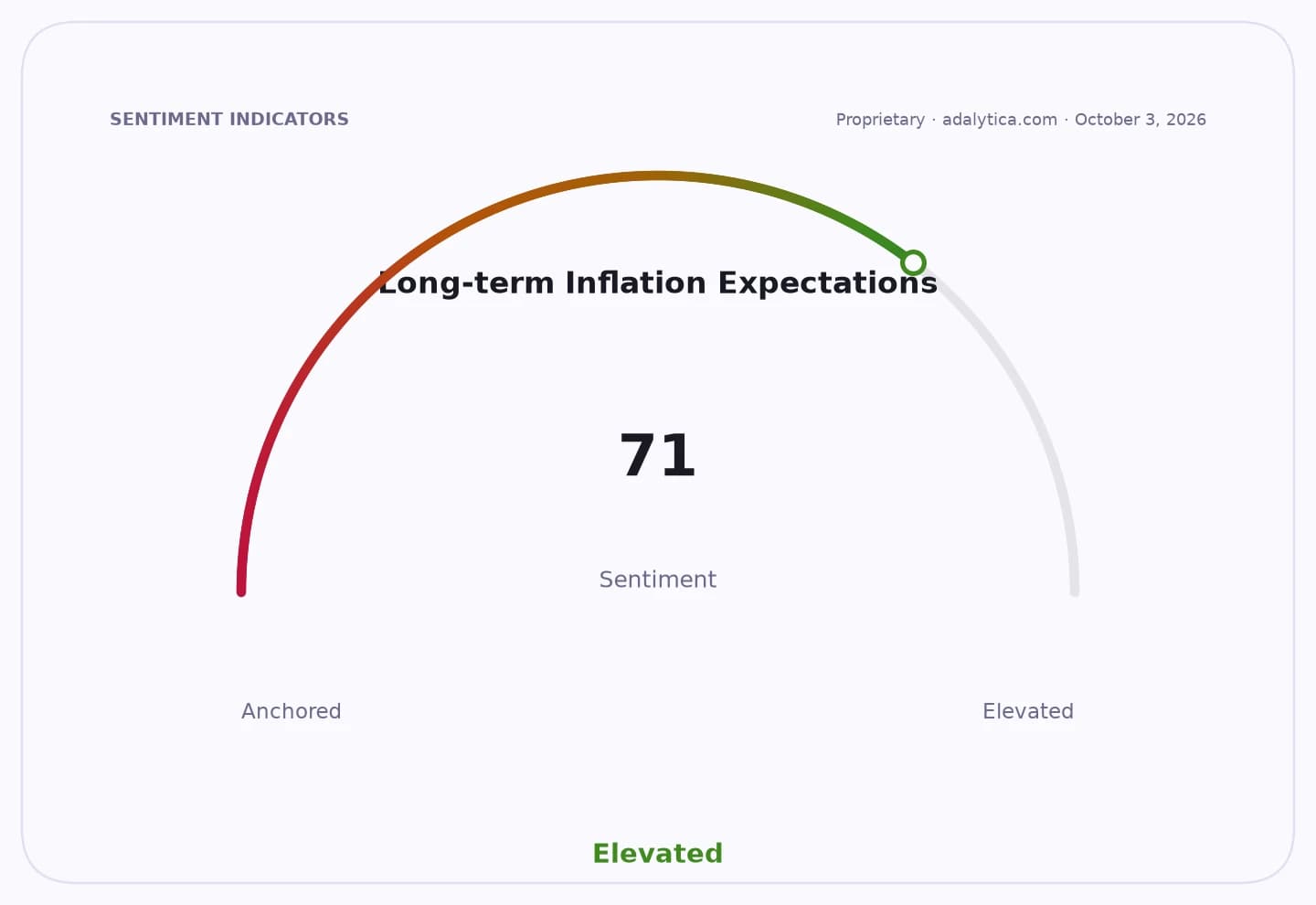
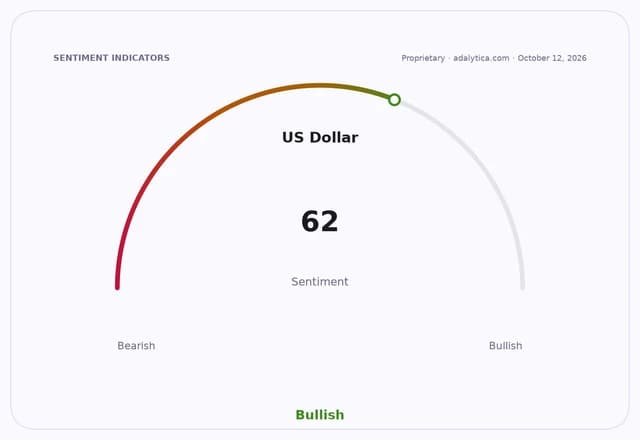
Sentiment IndicatorsⓘProprietary · adalytica.com · October 12, 2026
This is a snapshot — live sentiment, awareness and momentum for 130+ markets update continuously in the dashboard.Open AlphaPulse

The move matters because a softer zloty feeds directly into import costs, inflation dynamics and the valuation of foreign-currency debt, while also reducing the returns international investors get from Polish assets when translated back into euros or dollars. It also complicates the policy task for the National Bank of Poland, which is trying to keep inflation on a credible path back toward target without choking off growth.
Erste Bank economists said they see no meaningful chance of zloty strength over the next two weeks, arguing that poor global market sentiment has prevented EUR/PLN from breaking lower even after briefly appearing to have room to fall. They said the currency is likely to remain range-bound around 4.37-4.38 per euro and that weak upcoming economic readings will not help.
That warning lands at a sensitive moment for the broader rate market. Polish government bonds were calmer than a week earlier, but yields remain elevated in Poland and in other major economies, keeping financial conditions tight. The curve has steepened as two-year paper firmed slightly while longer maturities sold off, a sign investors are demanding more compensation for duration risk and for the possibility that policy stays restrictive for longer.
The domestic policy debate is also turning more hawkish. NBP governor Adam Glapiński has said the central bank is ready to act, while MPC member Ludwik Kotecki said the council’s stance is now much more hawkish than a month ago. Kotecki also argued that if the November inflation projection does not show consumer prices returning close to 2.5% by late 2027 or early 2028, the MPC may need to propose a 25-basis-point rate increase. That backdrop is important for the zloty because higher expected rates usually support a currency — but only if investors believe the tightening cycle is credible and not too late to anchor inflation.
For now, global risk aversion is outweighing any domestic rate support. Brent crude and other oil benchmarks remain above $102-$103 a barrel, and uncertainty over geopolitics and U.S. inflation data due this week is keeping investors defensive. The resulting mix is unfavorable for emerging-market currencies, especially those like the zloty that are sensitive to swings in risk appetite and energy prices.
The near-term test for PLN will come from a dense run of Polish and U.S. releases, including final September inflation in Poland, the August balance of payments and revised quarterly GDP data, alongside U.S. CPI. Stronger-than-expected inflation readings at home would reinforce the hawkish RPP narrative, but they could also deepen concern that policy tightening will lag price pressures. If the data disappoints growth-wise, the case for a sustained zloty recovery looks even weaker.
For investors, the message is that Poland’s currency is no longer trading primarily on the promise of disinflation and eventual easing. Instead, it is being priced as a market caught between sticky inflation, a hawkish but reactive central bank and a hostile global backdrop. Until one of those forces changes decisively, the zloty is likely to stay under pressure.
| Entity | Gains | Losses |
|---|---|---|
| Exporters in Poland | ▲Higher PLN revenue conversion | ▼None |
| Importers and consumers | ▲None | ▼Higher import costs |
| NBP/RPP hawks | ▲Stronger case for tighter policy | ▼Slower growth flexibility |
| Foreign bond and FX investors | ▲Higher yields on paper | ▼Mark-to-market FX losses |