Hungary’s euro debate is moving from theory to corporate planning, with MBH Bank saying a common currency could cut conversion costs, reduce exchange-rate risk and improve financing conditions for domestic companies — but only if Budapest keeps inflation, deficits and growth on a stable path.
Hungary Euro Debate Moves Into Corporate Planning
That matters because the euro would change how Hungarian companies price, hedge and fund themselves in Europe’s largest trading bloc. For exporters and firms with euro-denominated revenues, the disappearance of forint-to-euro conversion costs would simplify cash management and reduce volatility in margins. It could also strengthen investor confidence and lower borrowing costs over time, especially if the country can credibly align with euro-area standards.
Sentiment Indicators
MBH Bank’s treasury experts framed the issue as an economic trade-off rather than a political slogan. Dénes Szilárd said the inflation effect from previous euro conversions was generally limited, citing estimates of around 0.1 to 0.3 percentage points in several cases, countering fears that adoption automatically triggers a broad price shock. The larger benefit, in his view, is the removal of foreign-exchange risk for firms active in euro trade, along with simpler financial operations and potentially better access to capital.
At the same time, the bank stressed that the euro is not a cure-all. Giving up monetary sovereignty would leave Hungary unable to adjust interest rates or the exchange rate to country-specific shocks, a meaningful constraint for an economy that can still diverge from the euro zone’s cycle. That warning is central for investors: euro membership can reduce volatility, but only if macro discipline is strong enough to absorb the loss of policy flexibility.
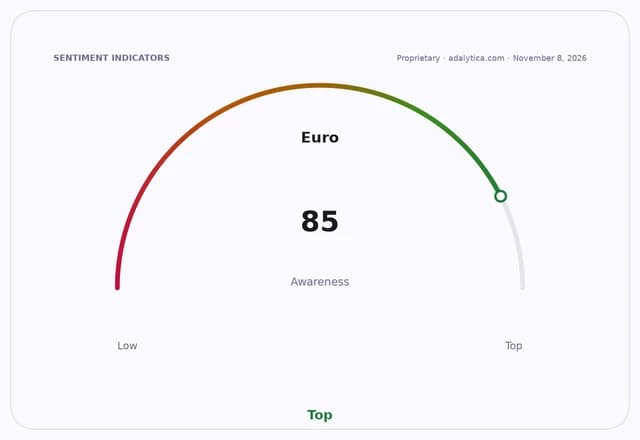
Euro — 30-day sentimentadalytica.com
Explore this data interactively — full history, time series and cross-market comparisons.
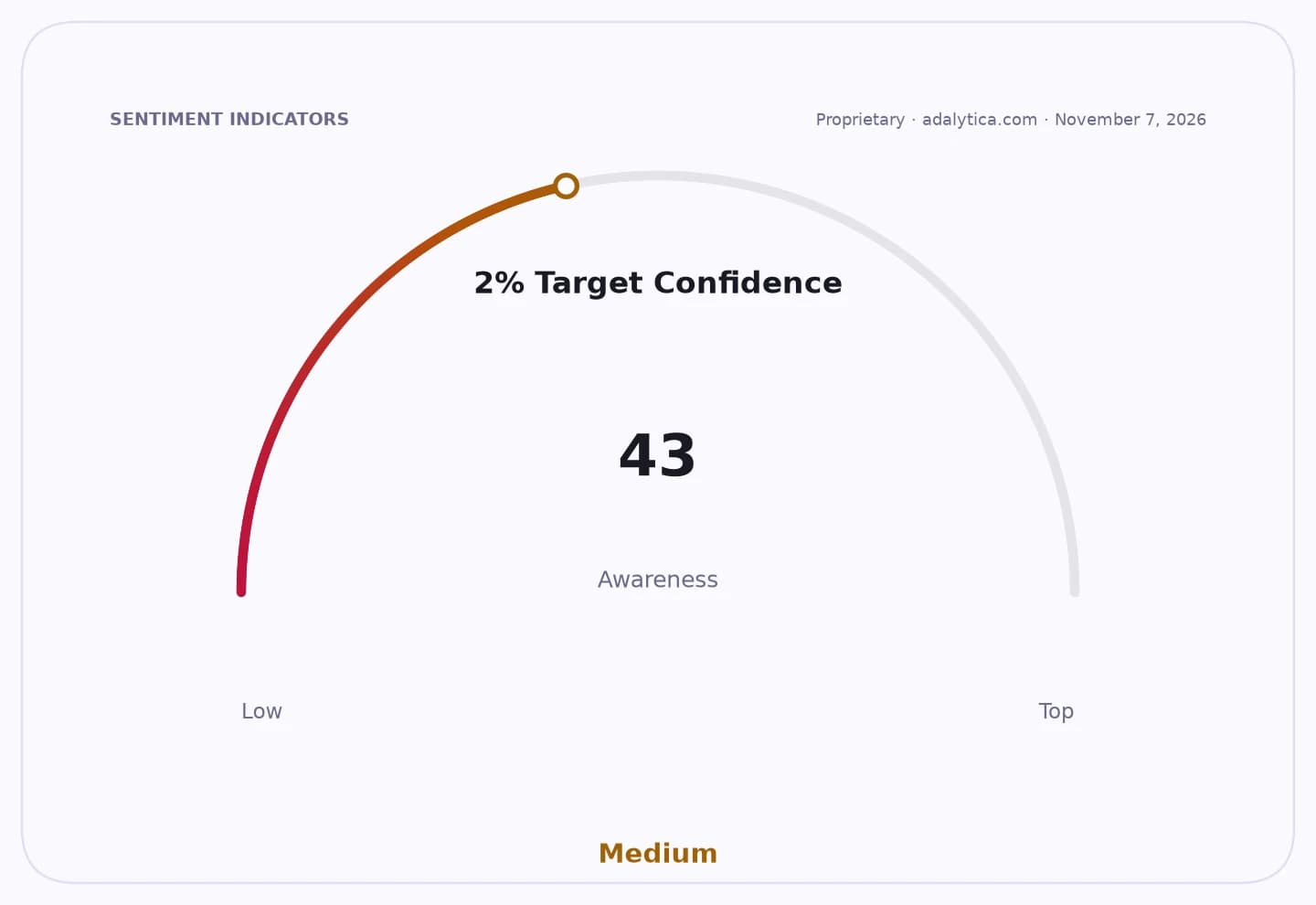
Árokszállási Zoltán, head of analysis at MBH Bank, said a favorable international backdrop could emerge in 2027, helped by a recovery in Germany, Hungary’s key export market. He also put 2027-style euro accession on a 2032 track as potentially achievable, but only if Hungary gets close to a 3% budget deficit and 2% inflation by the end of the decade, while sustaining growth and improving corporate sentiment. He forecast inflation of around 3% next year, though he said fiscal plans pose upside risks.
That combination — lower inflation, tighter deficits and firmer growth — is what ultimately determines whether euro adoption would be a competitiveness boost or simply a symbolic step. For markets, the implications reach beyond foreign exchange. A credible path toward the euro would likely support the forint, compress sovereign and corporate risk premia and improve the valuation case for Hungarian assets. A muddled path would do the opposite, leaving firms to keep hedging currency exposure while investors price in policy uncertainty.
Banai Ádám of the Magyar Nemzeti Bank added that geopolitical conflict and international uncertainty still filter through financing conditions and sentiment, especially for longer-term investment decisions. That makes the euro question even more relevant for capital allocators: it is not just about currency mechanics, but about whether Hungary can present itself as a lower-risk, more predictable destination for investment within the European economy.
For now, the message from MBH Bank is that euro adoption could open real opportunities for domestic companies, but only after Hungary does the harder work of locking in fiscal credibility, disinflation and stronger productivity. The investment case will hinge less on the date of entry than on whether the economy can meet the discipline the currency requires.
| Entity | Gains | Losses |
|---|---|---|
| Hungarian exporters | ▲Lower FX risk, simpler hedging | ▼Less policy flexibility |
| Domestic borrowers | ▲Potentially cheaper funding | ▼Exposed to stricter fiscal discipline |
| Government / policymakers | ▲Stronger integration narrative | ▼Need for tighter budgets |
| Forint hedge users | ▲Reduced conversion costs | ▼Fewer currency opportunities |