Hungary’s planned Wekerle+ housing program would leave most buyers with less credit and higher monthly payments, with the sharpest hit falling on households looking at used apartments, the segment that dominated the original subsidized scheme.
Hungary Wekerle+ housing plan raises used-home rates
The shift matters because it changes the economics of homeownership for the majority of borrowers rather than just the margins. Under the new terms, the government would keep a 3% fixed rate for new-build purchases or construction, but raise the rate to 5% for used homes, while also narrowing eligibility to people aged 18 to 41 and tightening ownership rules. That combination reduces the maximum loan size a borrower can support under Hungary’s debt-service limits and makes the effective subsidy far less generous than the current Otthon Start program.
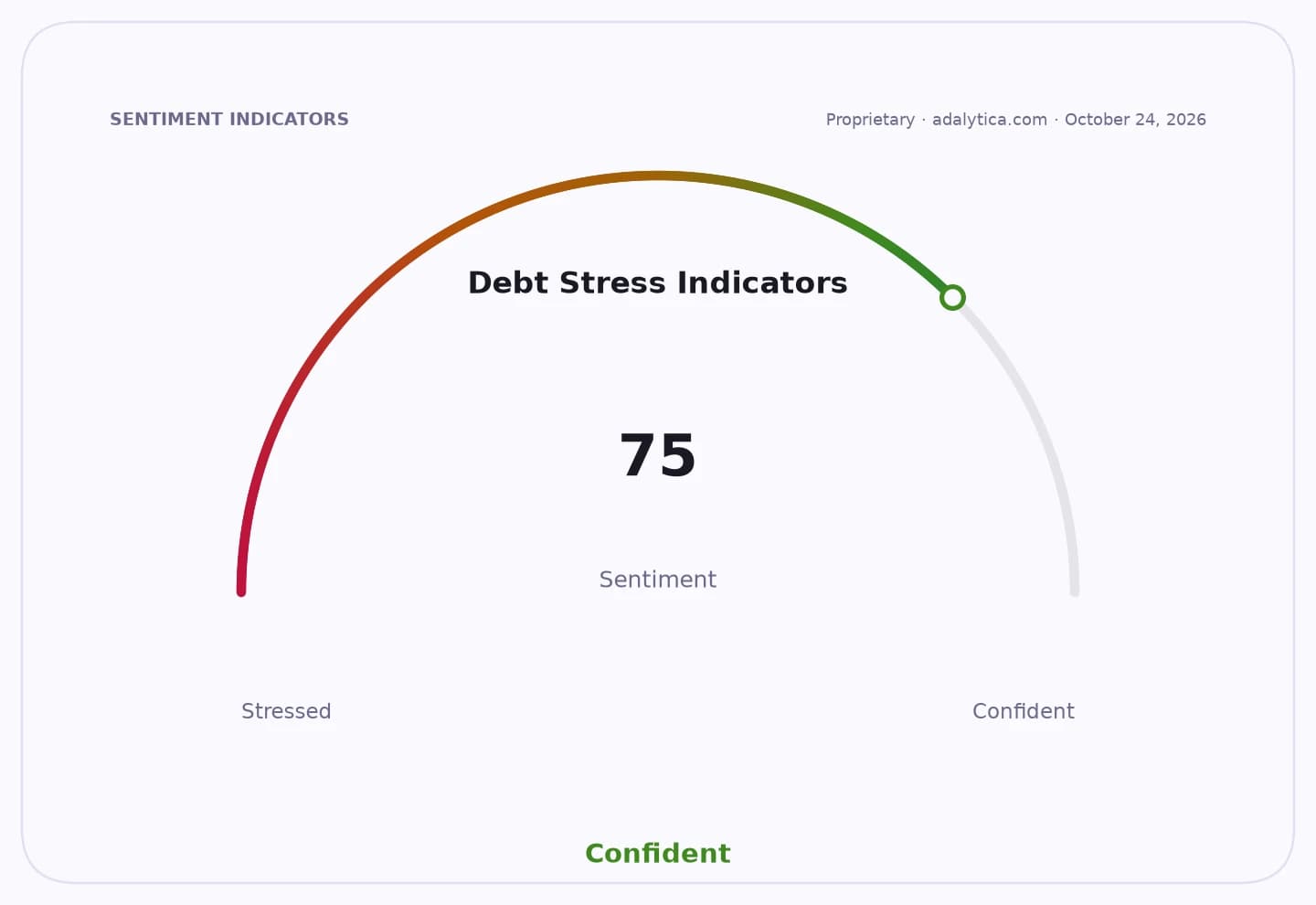
Sentiment IndicatorsⓘProprietary · adalytica.com · October 24, 2026
This is a snapshot — live sentiment, awareness and momentum for 130+ markets update continuously in the dashboard.Open AlphaPulse
On a 50 million forint loan over 25 years, Bankmonitor calculated that the 3% version saves 30.1 million forints versus a market mortgage priced at 6.5%, but the 5% used-home loan saves only 13.6 million forints. For the same monthly installment, a borrower would be able to take roughly 36.8 million forints under Wekerle+ instead of 45.3 million forints under Otthon Start. That is a 9.4 million forint drop in borrowing capacity for someone right at the threshold of the current program.
The practical impact is likely larger because used homes accounted for about 90% of purchases in the first 100 days of Otthon Start, according to government data cited in the report. If that mix holds, most future recipients of subsidized housing credit would face the higher 5% rate. For those borrowers, the switch also means an extra 55,189 forints a month in repayments compared with Otthon Start, or 16.6 million forints more over the full loan term.
The policy is also a redistribution of who benefits. Prime Minister Viktor Orban has argued that 59% of Otthon Start loans went to the top income decile, and Wekerle+ appears designed to redirect support away from wealthier buyers and investors. The new five-year owner-occupancy requirement and the rule barring applicants whose spouse already owns at least half of a property would effectively shut out many investment-style purchases. Older borrowers lose out too: anyone over 41 would be pushed entirely into market-rate mortgages.
For investors and lenders, the bigger question is whether the government is trying to cool the housing market without puncturing demand. The tighter rules should curb speculative buying and may soften pressure on prices in the resale market, but they also risk slowing transaction volumes, especially if the final design trims the loan cap or keeps the current price ceilings. Lower bank commissions would further squeeze lender economics at a time when housing credit has been a key growth engine.
The political and macro backdrop is equally important. Hungary’s government has signaled a broader review of housing support, and Bankmonitor said the most severe outcome would be a material tightening or scrapping of the subsidy scheme, which would ripple through both the mortgage market and housing demand. The central bank’s debt-service rule already limits how much households can borrow relative to income, so any rise in rates mechanically reduces access to credit. That is why the new terms would bite hardest at lower-income households, even if the state’s savings plan helps some families build a down payment over time.
The likely takeaway for the market is a two-speed housing system: subsidized credit will remain available, but on less favorable terms and mainly for younger owner-occupiers buying new homes. Used-home sellers, investors and older buyers would lose the most, while first-time buyers in the new-build segment may still find support. The next catalyst is whether Budapest confirms the final loan ceiling, price caps and tenor, because those details will determine whether Wekerle+ is a replacement for Otthon Start or a much smaller program in practice.
| Entity | Gains | Losses |
|---|---|---|
| Young first-time buyers | ▲Cheaper access to new builds | ▼Less support for used homes |
| Used-home sellers | ▲— | ▼Lower demand, weaker pricing power |
| Banks | ▲Some continued mortgage volume | ▼Lower commissions, tighter lending economics |
| Investors/older buyers | ▲— | ▼Stricter eligibility, fewer subsidized loans |