Mortgage rates in Russia are expected to ease by about four percentage points by the end of 2027, but the benefit to borrowers will be partly offset if home prices keep rising, leaving affordability gains far less certain than the headline suggests.
Russia Mortgage Rates May Fall by 2027

That is the key catch in the housing market: lower financing costs do not automatically translate into cheaper monthly ownership if developers continue to reprice homes upward. For a buyer taking out a 6.4 million-ruble loan on an 8 million-ruble apartment with a 20% down payment, a drop in the mortgage rate from 18.69% to 14.69% would cut the monthly payment to 82,800 rubles from 102,200 rubles, a reduction of nearly 19%. But if the apartment price rises 10% over the same period, the effective gain shrinks to 10.9%, and a 20% price increase would leave almost no improvement at 2.7%.
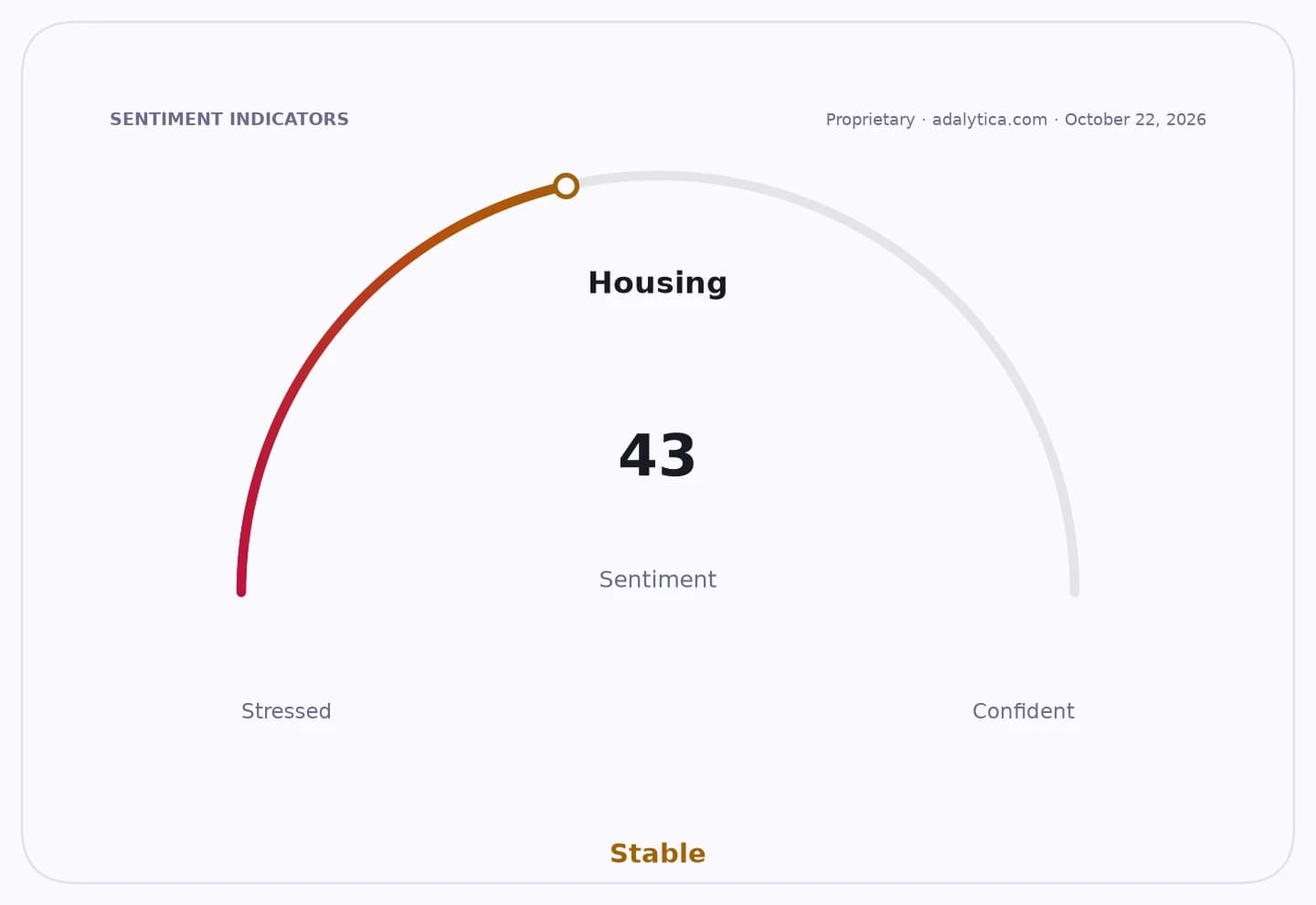
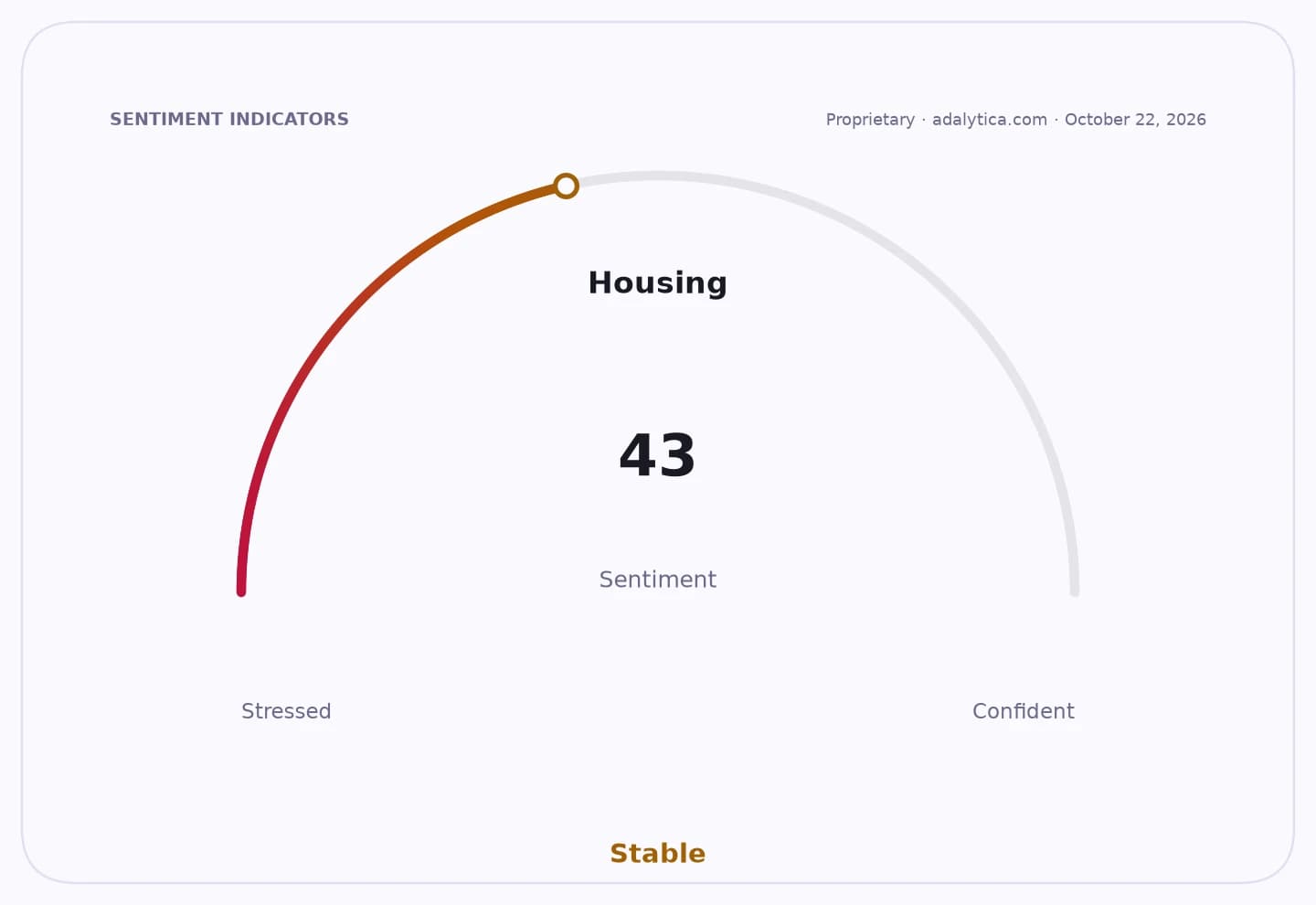
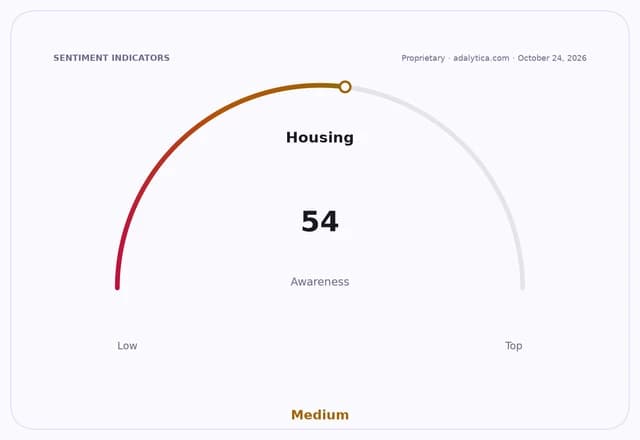
Sentiment IndicatorsⓘProprietary · adalytica.com · October 24, 2026
This is a snapshot — live sentiment, awareness and momentum for 130+ markets update continuously in the dashboard.Open AlphaPulse

That dynamic matters because Russian household demand for housing is being shaped by the interaction of rates, subsidies and prices, not rates alone. Market mortgage rates are currently in a wide range of 15.9% to 19.4%, while the average on existing loans is about 10.1% because a large share of borrowing sits inside subsidized programs. That gap underscores how dependent the market has become on state support and developer-led financing schemes, rather than on a normal transmission of monetary conditions to consumers.
The implication for the broader economy is that lower rates would help revive transaction volumes and reduce debt service burdens, but they may also support housing inflation if sellers absorb some of the benefit. In that case, the housing market becomes less a story of improved affordability and more one of redistributed demand: borrowers gain some relief, while builders and sellers preserve pricing power. That is a familiar pattern in markets where credit is scarce and subsidized lending distorts the pricing mechanism.
The example also shows why the down payment matters as much as the rate. Raising the initial contribution from 20% to 30% would trim the loan principal by 12.5%, while a 50% down payment would reduce it by 37.5%. For borrowers who plan to repay quickly, a discount on the purchase price can be more valuable than a lower coupon; for those stretching payments over decades, a cheaper mortgage may matter more. The practical takeaway is that there is no universal “best” choice between a new-build and a resale flat, because the real economics depend on price, loan term, renovation costs and cash on hand.
For investors, the story matters less as a consumer anecdote than as a signal for housing-linked cash flows and credit conditions. Easier mortgage rates would be supportive for Russian developers, mortgage originators and banks with housing exposure, but only if they translate into higher volumes rather than higher asking prices. The strongest near-term beneficiaries would be lenders and builders able to capture incremental demand; the weakest would be buyers if price inflation eats up the rate relief.
The next phase of the housing cycle will be determined by whether falling borrowing costs outrun home-price growth. If they do, affordability improves and activity can recover. If they do not, the market may simply replace one form of strain with another.
| Entity | Gains | Losses |
|---|---|---|
| Homebuyers | ▲Lower monthly payments | ▼Price increases |
| Developers | ▲Higher sales volumes | ▼Margin compression if discounts rise |
| Banks/Mortgage lenders | ▲More origination activity | ▼Lower yield if rates fall fast |
| Existing homeowners/sellers | ▲Stronger pricing power | ▼Buyers’ affordability improves |