Spain’s IBEX 35 started Wednesday in the red as investors shifted back toward inflation risk and earnings scrutiny, a combination that is keeping European equities from extending their recent advance and pressuring rate-sensitive sectors.
IBEX 35 Falls as Inflation and Earnings Weigh
The benchmark was down 0.25% at 19,045.0 points by 0714 GMT, even as the broader FTSE Eurofirst 300 was fractionally higher. That tells you the market is not being driven by a broad risk-off shock so much as by a narrow repricing of what matters most now: inflation staying sticky enough to complicate central-bank easing, while company results determine who can still grow through it.
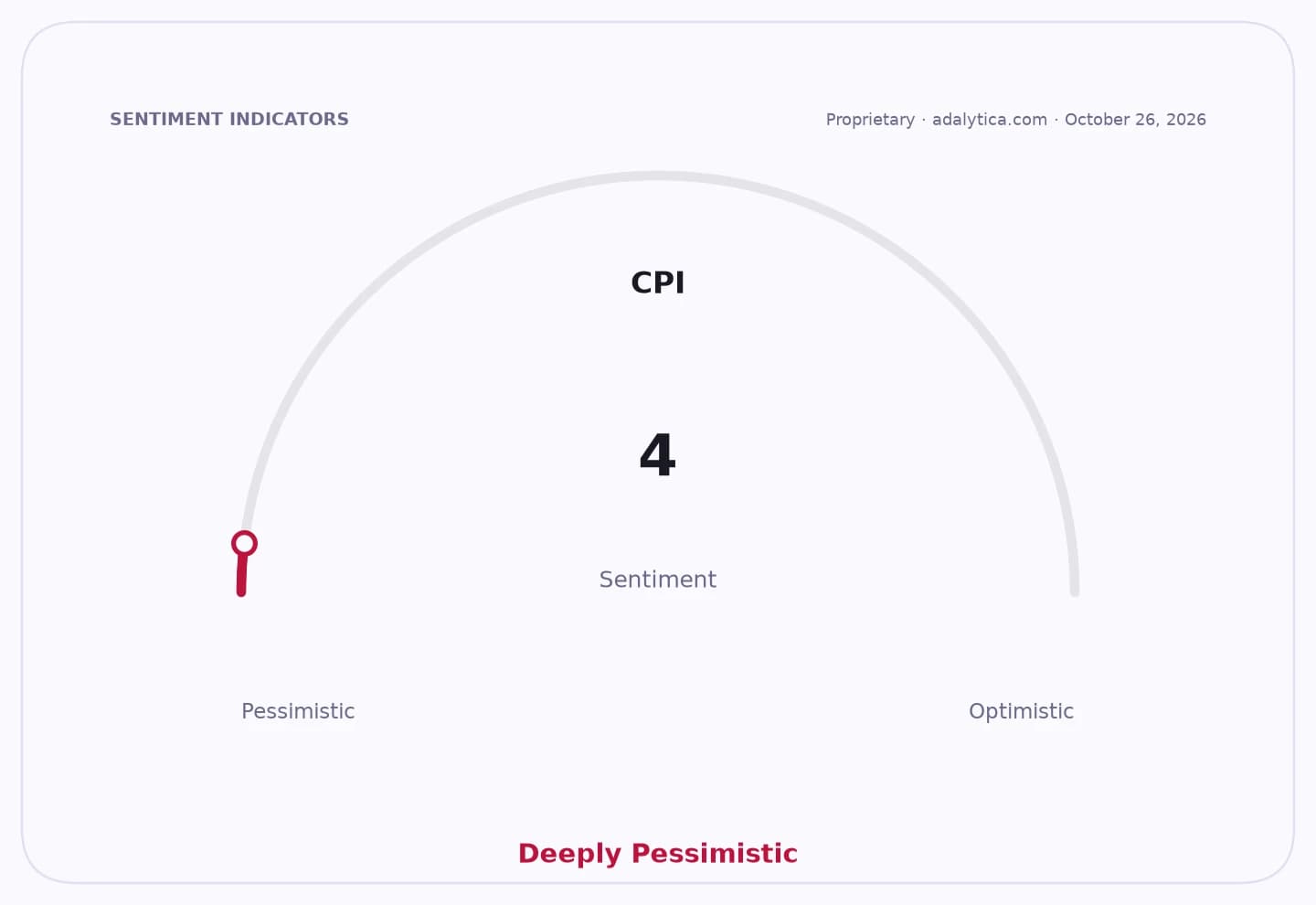
Sentiment IndicatorsⓘProprietary · adalytica.com · October 26, 2026
This is a snapshot — live sentiment, awareness and momentum for 130+ markets update continuously in the dashboard.Open AlphaPulse
The trigger was a hotter-than-expected UK inflation print, which strengthened the case for a November rate hike by the Bank of England and helped keep the mood defensive across European assets. At the same time, crude prices moved back toward a five-month high, reinforcing the inflation narrative and reminding investors that energy is once again a macro variable, not just a sector trade.
That matters for Spain because the IBEX is heavily weighted toward banks, utilities, telecoms and consumer names that are sensitive to financing conditions and bond yields. Banco Santander, BBVA, Caixabank, Sabadell and Bankinter all traded lower in early dealing, while Telefónica, Inditex and Cellnex also fell. Repsol was the exception, rising 1.76% as higher oil prices supported the stock. In other words, this is a market still wrestling with the same old trade-off: inflation helps energy, but it tightens the screws on everything that relies on lower rates and stable risk appetite.
CPI vs ^IBEXadalytica.com
Explore this data interactively — full history, time series and cross-market comparisons.Open AlphaPulse
Earnings are the second half of the story, and they are becoming more important because investors need proof that corporate profit growth can outrun macro noise. Iberdrola delivered that proof on Wednesday, lifting its 2026 profit target for the second time and saying it expects growth above its original plan thanks to returns from grid investment. The stock rose 0.38%, a reminder that capital-heavy utilities with regulated or contracted cash flows can still command a premium when the market is worried about inflation and financing costs.
Outside Spain, the earnings backdrop is helping to steady sentiment toward technology after SpaceX reported a 161% jump in third-quarter revenue and Super Micro Computer forecast quarterly revenue and margin above Wall Street expectations. That has some spillover for global risk appetite, especially around AI infrastructure, but it is not enough to override the immediate inflation shock. The market is still asking whether growth stocks can justify capex-heavy valuations if rates stay elevated longer than expected.
The positioning tells the same story. The IBEX remains above its 200-day moving average, but its 50-day average is slipping toward the index, while the RSI has eased back into neutral territory, a sign momentum has cooled rather than broken. For investors, that is the setup to watch: a market that has not turned bearish, but is vulnerable to any further surprise in inflation or bond yields.
The opportunity, in my view, is not to chase the index blindly but to separate the companies with pricing power and infrastructure-linked earnings from the names most exposed to funding costs and weaker consumer demand. Iberdrola is the cleaner expression of that thesis; Repsol offers a hedge if energy stays firm; the banks and rate-sensitive domestic cyclicals deserve more caution until inflation data and central-bank guidance stop working against them. If inflation remains sticky, the next move in the IBEX will be driven less by index-level optimism than by winners that can finance growth and protect margins in a higher-for-longer world.
| Entity | Gains | Losses |
|---|---|---|
| Iberdrola | ▲Grid investment returns | ▼Rate-cut hopes |
| Repsol | ▲Higher oil prices | ▼Inflation-sensitive demand |
| Spanish banks | ▲Wider margins if rates stay high | ▼Valuation if yields rise |
| IBEX 35 laggards | ▲— | ▼Macro-sensitive sectors |