Iceland’s government has struck a last-minute deal with employers, unions and municipalities to keep collective agreements in place through 2027 and cap increases in public fees and charges at 2.5%, a move Prime Minister Kristrún Frostadóttir says could help turn the tide on inflation.
Iceland caps fees, extends wage pact through 2027
The agreement matters because inflation has been a central constraint on Iceland’s economy and policy mix, forcing the central bank to keep interest rates at 8% even as price pressures remain elevated. By preventing a breakdown in collective bargaining and limiting fee hikes across much of the public sector, the government is trying to avoid adding fresh fuel to prices at a time when households and businesses are already under strain.
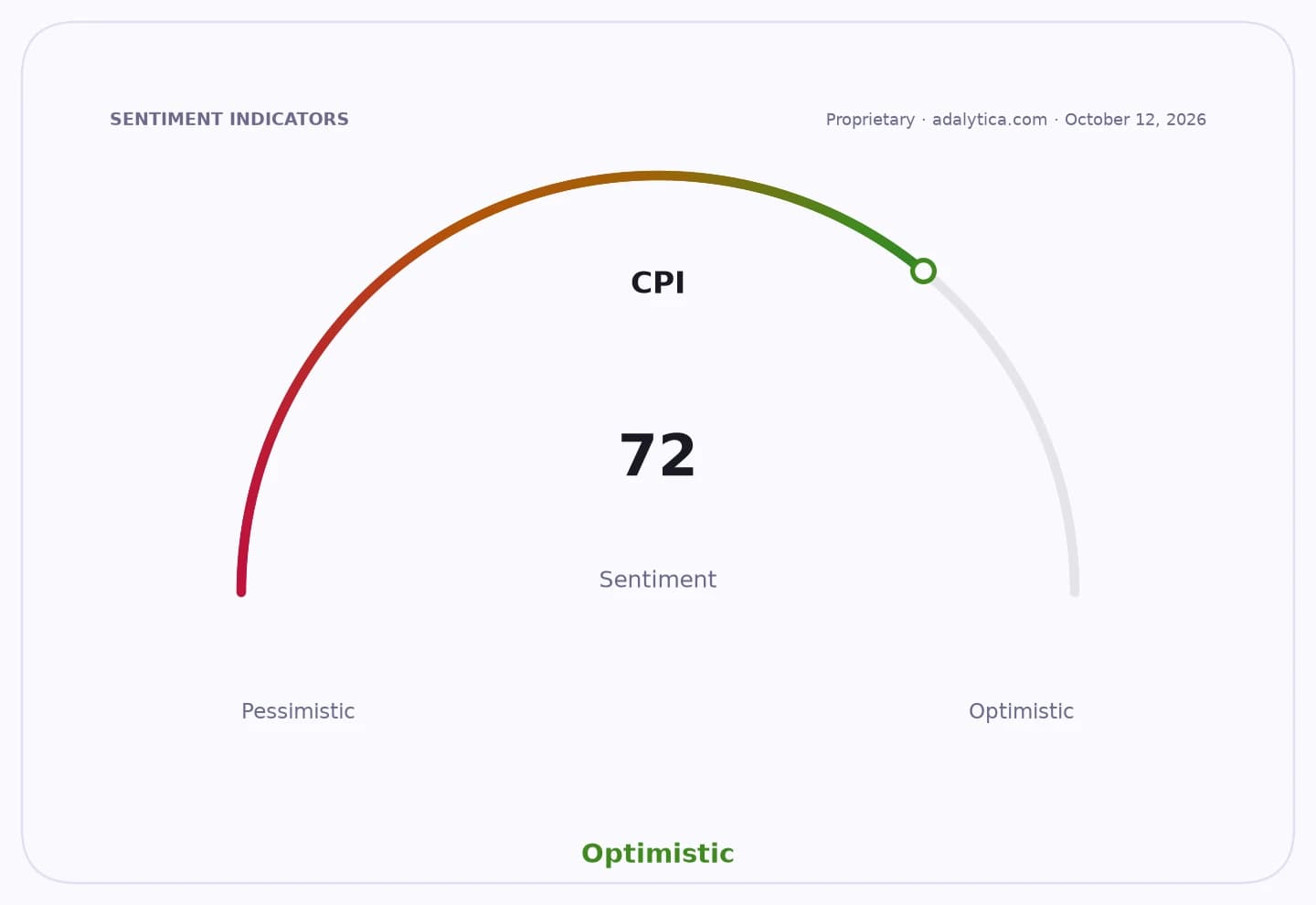
Sentiment IndicatorsⓘProprietary · adalytica.com · October 12, 2026
This is a snapshot — live sentiment, awareness and momentum for 130+ markets update continuously in the dashboard.Open AlphaPulse
Frostadóttir said the measures were aligned with the government’s budget goals, legislative agenda and policy statement, while also avoiding any push higher in inflation. She said the pact would secure industrial peace through the end of 2027 and cover the next round of wage negotiations, reducing the risk of another inflationary wage-price cycle.
The cap will apply to central government charges, with some exceptions including the kilometre-based road charge, as well as municipal fees and charges from municipally owned companies. The Confederation of Icelandic Enterprise said it would encourage member companies to refrain from lifting prices as much as possible, suggesting the deal is meant to restrain inflation across both the public and private sectors.
For investors, the key question is whether the package gives the central bank more room to pause or eventually ease policy without losing credibility. The Icelandic krona traded around 121.95 per dollar on the latest data, with short-term technical indicators showing the currency near its 50-day moving average and RSI readings at neutral-to-firm levels, but the broader backdrop remains one of sticky inflation and high rates.
The deal was reached just before a deadline that would have allowed the agreements to be terminated because their underlying assumptions had failed. Markets will now be watching whether the fee cap, wage restraint and budget discipline are enough to slow inflation convincingly in the months ahead, and whether that improves the odds of rate relief later in 2027.
| Entity | Gains | Losses |
|---|---|---|
| Iceland government | ▲Inflation credibility | ▼Fiscal flexibility |
| Workers and employers | ▲Industrial peace | ▼Larger pay/price hikes |
| Households and consumers | ▲Slower fee increases | ▼Potentially weaker nominal income gains |
| Central bank | ▲Less inflation pressure | ▼Fewer reasons to cut quickly |