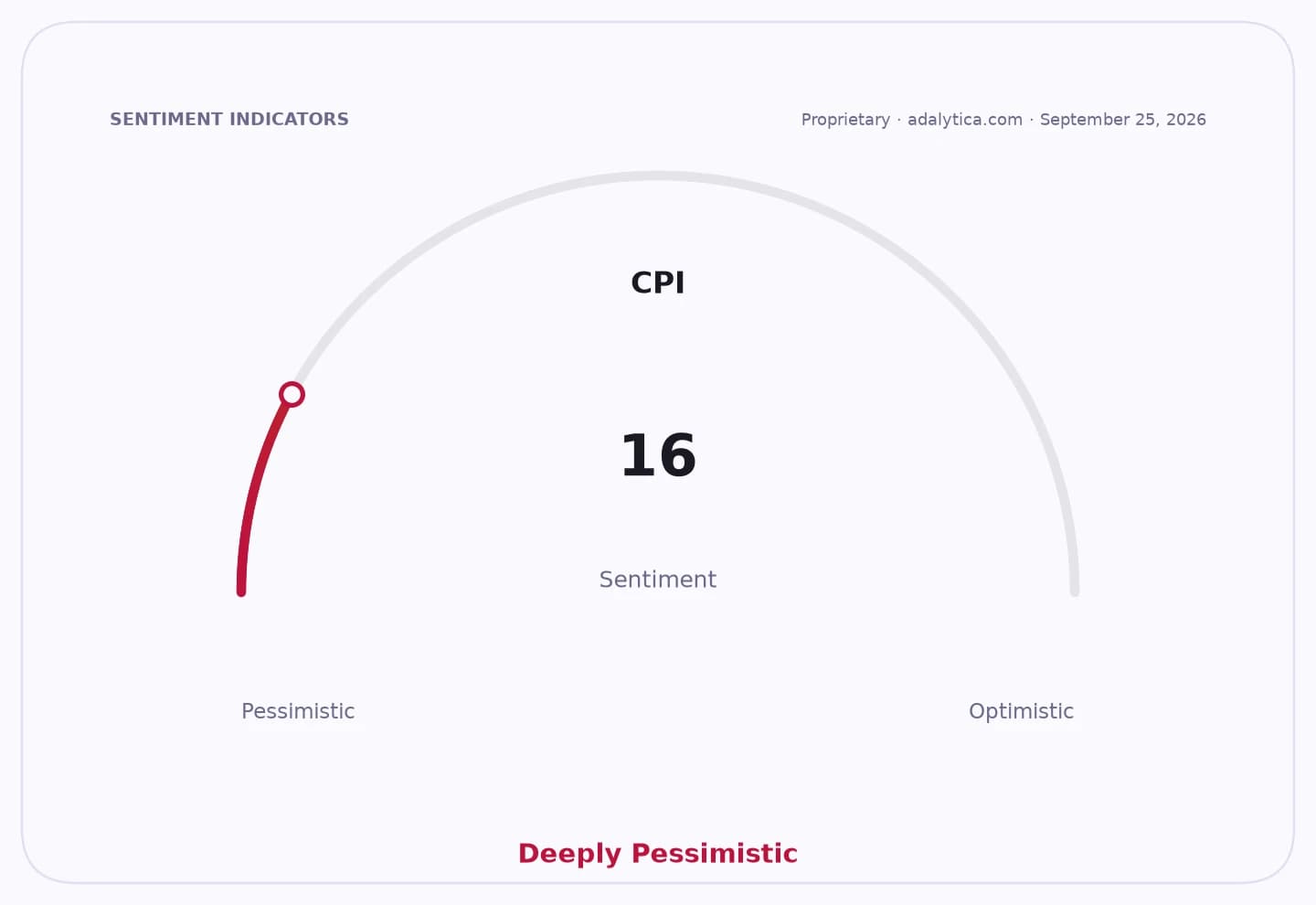
Türkiye’s producer prices are set to rise faster than consumer inflation in August, underscoring how cost pressures remain embedded in the economy even as policymakers try to slow the price spiral.
Türkiye Producer Prices Seen Rising Faster Than CPI
The gap matters because factory-gate inflation tends to feed through to consumer prices with a lag, complicating the central bank’s disinflation path and keeping pressure on real household incomes, corporate margins and bond valuations. Forecasts in the data point to producer prices rising 2.01% in August from a year earlier, versus consumer prices at 0.35% on the same basis, leaving the output side of the economy running hotter than demand.
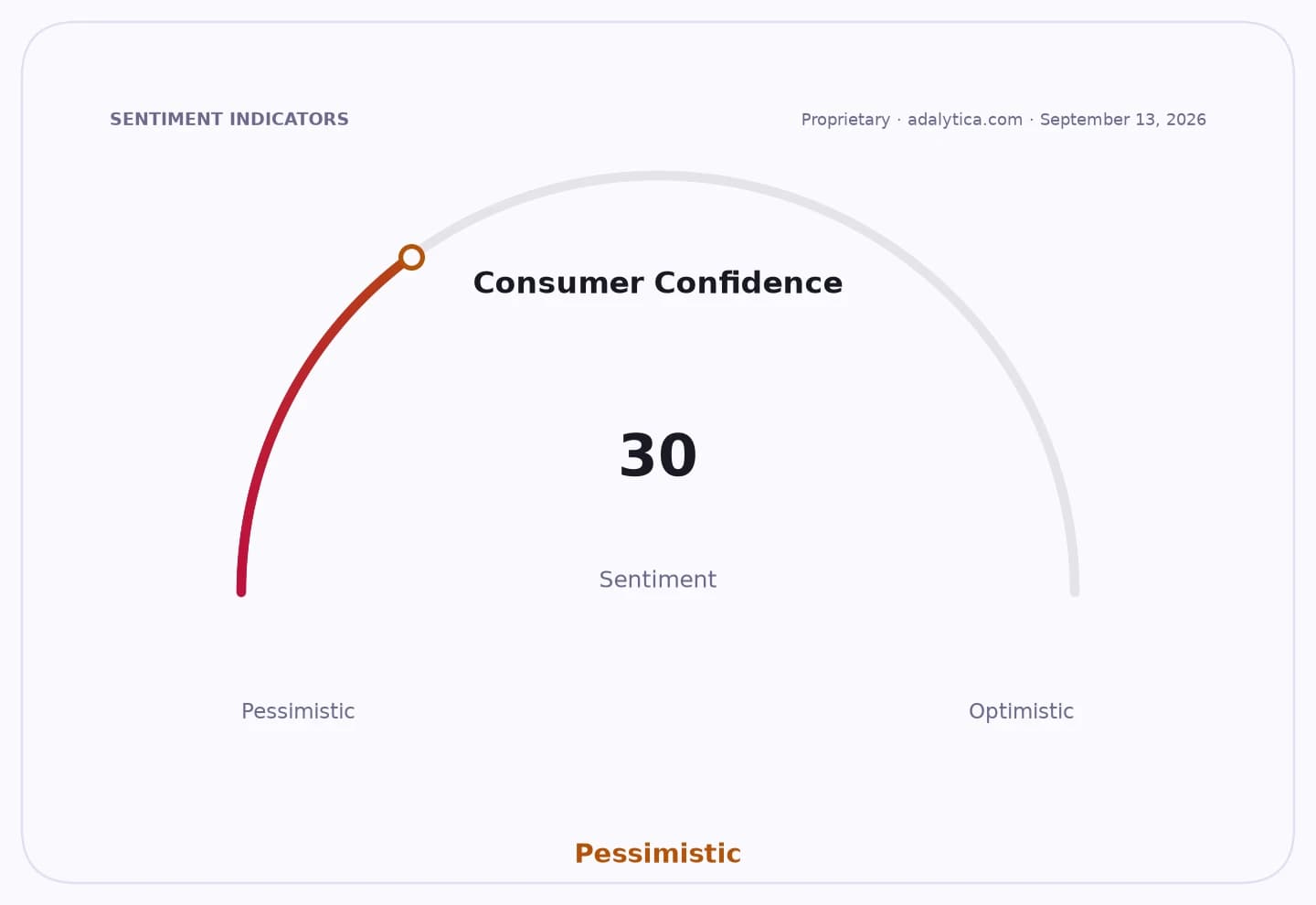
Sentiment IndicatorsⓘProprietary · adalytica.com · September 10, 2026
This is a snapshot — live sentiment, awareness and momentum for 130+ markets update continuously in the dashboard.Open AlphaPulse
That divergence is economically important in Türkiye, where inflation has already forced the government to sharply lift its year-end forecast to 28.4% from 16%, citing the cost shock from the Middle East war. Vice President Yilmaz has said the conflict added about 7 percentage points to inflation, a reminder that imported energy, logistics and commodity costs are still a major transmission channel. Even if consumer demand is weak, firms facing higher input bills often pass through costs later, keeping services and goods inflation sticky.
For investors, the message is that the fight against inflation is not over and the path to lower rates may be uneven. Higher producer inflation reduces confidence that price stability will improve quickly, which can keep pressure on Turkish lira assets and make local-currency bonds vulnerable if real yields fail to compensate for inflation risk. The lira itself has been grinding higher in nominal terms, with TRY=X trading around 48.49 in recent sessions, but the technical picture shows it stretched: the currency is above both its 50-day and 200-day moving averages and has an RSI above 80, a level that typically suggests momentum is overbought.
The latest inflation setup also leaves policymakers with a narrower set of options. If producer costs continue to outrun consumer prices, authorities will have to decide whether to tolerate slower growth, lean harder on administrative measures, or keep rates restrictive for longer. The government is due to unveil its Medium Term Program for 2027-2029, which is expected to focus on inflation, growth and employment, but its credibility will depend on whether it can dampen price pressures without choking activity.
For now, the story is less about a single monthly print than about the persistence of an inflation pipeline that still runs from producers to consumers. That argues for caution on Turkish domestic demand plays, support for exporters with hard-currency revenues, and continued scrutiny of any policy signal that suggests the inflation peak may be further away than officials hope.
| Entity | Gains | Losses |
|---|---|---|
| Exporters | ▲Hard-currency receipts | ▼None |
| Domestic consumers | ▲None | ▼Real purchasing power |
| Turkish policymakers | ▲Reform urgency | ▼Inflation credibility |
| Local-currency bondholders | ▲Higher real-yield potential | ▼Price risk |