IFS just delivered the kind of update software investors like to see: real demand, recurring revenue and a product cycle that is moving from experiment to deployment. Annual recurring revenue rose 24% to more than €1.3 billion in the first nine months of 2026, while new industrial AI bookings were already more than three times the company’s full-year 2025 total with a quarter still left on the calendar.
IFS reports ARR growth and industrial AI bookings
That matters because the AI boom is increasingly being judged on whether it can produce durable cash flows, not just headlines. In IFS’s case, the story is especially attractive: 85% of revenue is recurring, which gives the business the kind of visibility that long-term investors prize. When a vendor can show both rapid AI adoption and a revenue base anchored in subscriptions, it suggests customers are not merely testing software — they are embedding it into operations.
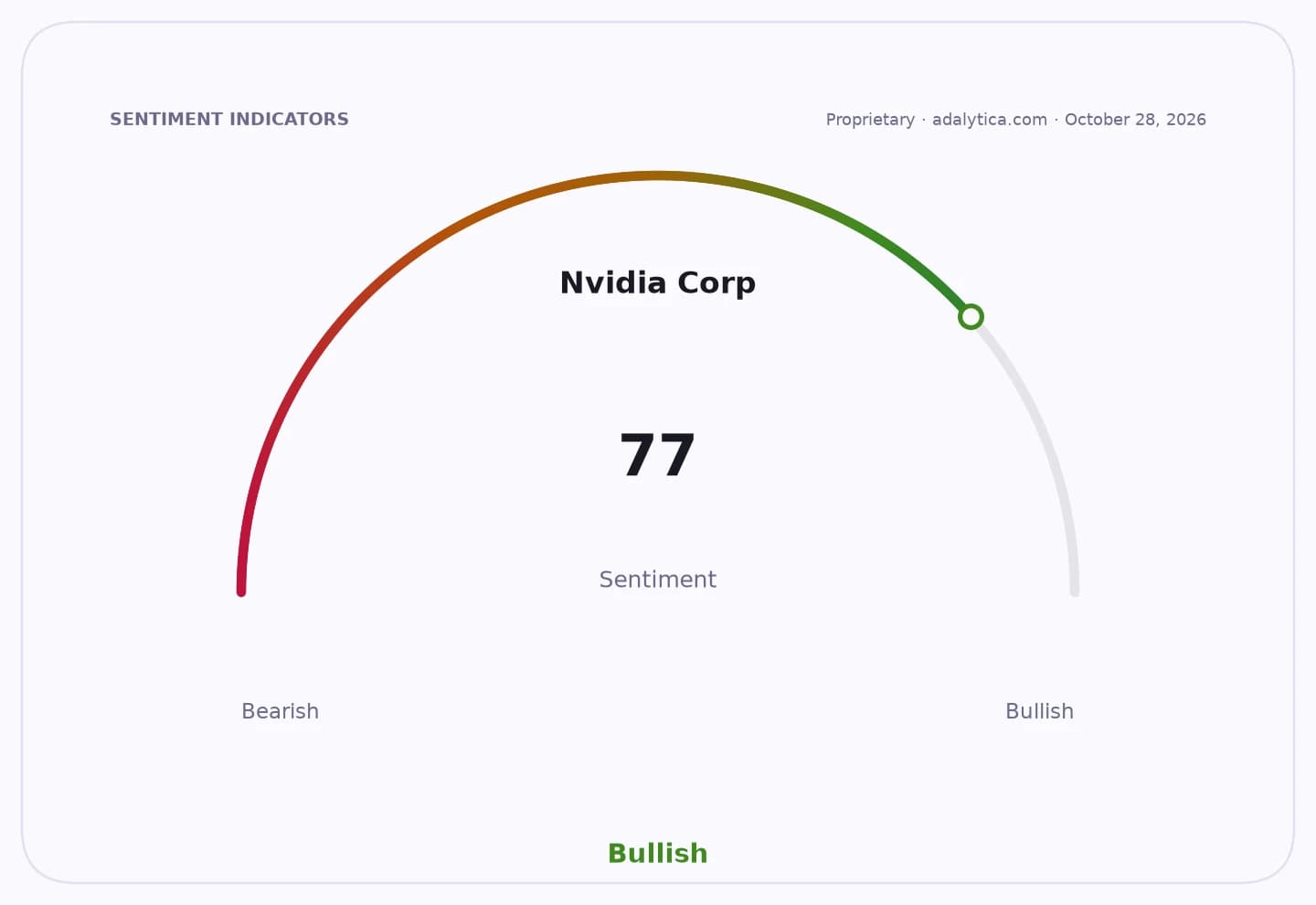
Sentiment Indicators
The shift is also a reminder that industrial AI may prove easier to monetize than consumer-facing AI hype. IFS sells into manufacturing, asset maintenance, field service, aviation maintenance and supply chain management, where software that saves downtime, improves scheduling and manages complex workflows has an obvious return on investment. That makes the product easier to justify in boardrooms than more speculative AI tools, and it helps explain why customers such as Tesco, LATAM Airlines, Yeo Valley, Mitsubishi Electric and Eight Group signed on in the quarter.
The company says its new IFS Intelligence platform, launched in October, brings “digital workers” closer to the point of work, allowing employees to ask questions, act and delegate workflows within a business’s rules and permissions. More than 100 customers signed up to pilot the system in the third quarter ahead of launch. If that translates into broad adoption, it could deepen switching costs and make IFS harder to dislodge in the years ahead — a classic software moat investors should pay attention to.
There is a broader market lesson here too. Enterprises have spent the past two years talking about AI pilots; now they want production-grade systems that can operate safely in live environments. IDC’s Eric Newmark said buyers want AI that works on real operational data while staying within company controls, and that vendors with deep industry specialization are best positioned. That is good news for focused software firms like IFS and a warning sign for generalists trying to sell generic AI layers into highly regulated operations.
For investors, the key question is not whether industrial AI is real — it clearly is — but how quickly the revenue can compound from here. IFS’s ARR growth shows the business is already scaling, and the surge in bookings suggests this is still early in the adoption curve. If the company keeps converting pilots into long-term contracts, the combination of recurring revenue, industry specialization and AI-led expansion could make it one of the more resilient growth stories in enterprise software.
The stock market often rewards the companies that move first from buzz to billing. IFS appears to be doing exactly that, and long-term investors should keep it on the watchlist.
| Entity | Gains | Losses |
|---|---|---|
| IFS | ▲Faster ARR growth | ▼Short-term skeptics |
| Enterprise customers | ▲Operational efficiency | ▼Pilot-phase hesitation |
| Industrial AI peers | ▲Category validation | ▼Generic AI vendors |
| Investors | ▲More visible recurring revenue | ▼Speculative AI hype trade |