GlobalData is trying to convert its vast research library into a more automated, higher-value business by embedding agentic artificial intelligence across its products, a move that could improve margins if customers adopt the tools and trust the outputs.
GlobalData embeds agentic AI in research products

The pitch is straightforward: use nearly a decade of proprietary AI development, 250-plus databases and more than 100,000 analyst reports to deliver faster research, predictive models and workflow automation. That matters because information services are under constant pressure to justify subscription fees, and AI is increasingly becoming the differentiator between commoditized data and premium decision-support products.
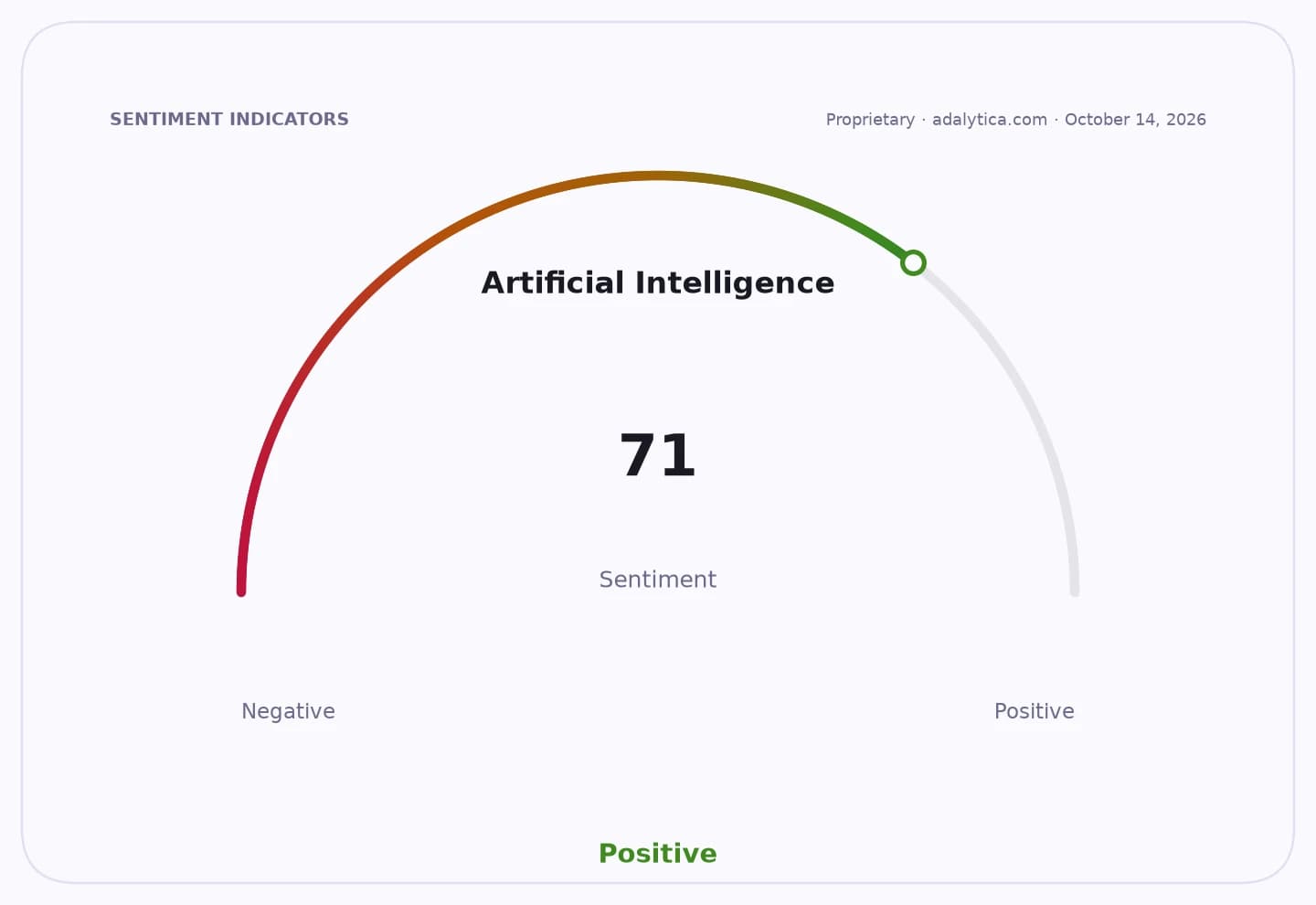
Sentiment Indicators

The company says its AI models are already designed to flag commercially relevant outcomes, such as the likelihood a private company reaches unicorn status or whether a pipeline drug wins approval. More importantly for investors, it is positioning “Ava” as an AI research analyst that can think, plan and execute research workflows, while templates provide analyst-built outputs with charts and tables. If that works at scale, GlobalData could deepen customer stickiness, shorten research time and lift the return on its content investments.
The strategy also reflects a broader industry shift: enterprise AI is moving from generic chat interfaces toward embedded tools that sit inside subscription products. That is where monetization is likeliest to be most durable. Consumers may use free public models for simple queries, but corporate users pay for trusted data, auditability and domain expertise. GlobalData is betting that transparency and reliability, rather than novelty, will be the commercial edge.

For investors, the key question is whether AI will expand the addressable market or merely repackage existing content. The bullish case is that agentic workflows can raise pricing power, lower servicing costs and help the company defend itself against larger platform vendors. The bearish case is that customers may still see AI features as table stakes, pressuring pricing before the economics of the new products fully show up in revenue.
That tension sits at the center of the valuation story for information providers using AI: the winners will be those that can prove their models save time, improve decisions and are grounded in proprietary data that cannot be easily copied.
| Entity | Gains | Losses |
|---|---|---|
| GlobalData | ▲Higher-margin AI subscriptions | ▼Legacy content commoditization |
| Enterprise customers | ▲Faster research workflows | ▼Dependence on vendor models |
| Public AI platforms | ▲Broader AI adoption | ▼Less need for generic tools |
| Investors | ▲Potential pricing power | ▼Execution and adoption risk |