The global economy is proving more resilient than many feared, but IMF Managing Director Kristalina Georgieva is warning investors not to mistake that strength for safety as inflation stays sticky, sovereign debt costs rise and the AI boom becomes a growing financial risk.
IMF warns on inflation, debt and AI leverage

That matters because the world is now stuck in a difficult mix: growth is holding near 3%, yet central banks are not done fighting inflation, governments are struggling to rein in deficits and some of the biggest bets in technology are being financed with heavy borrowing. For investors, that combination can be powerful when it works — and painful when it doesn’t.
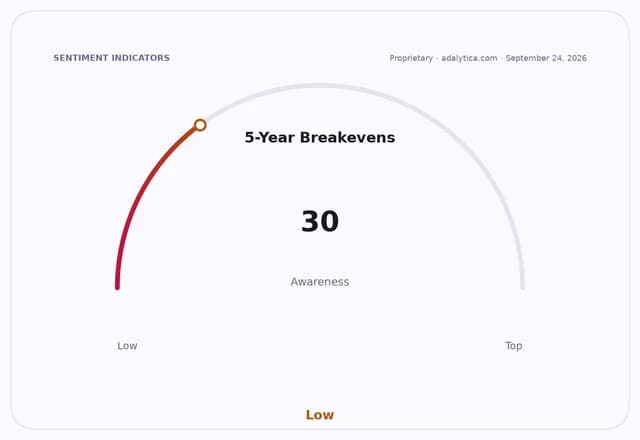
Sentiment IndicatorsⓘProprietary · adalytica.com · September 24, 2026
This is a snapshot — live sentiment, awareness and momentum for 130+ markets update continuously in the dashboard.Open AlphaPulse
Georgieva said in New York that inflation is not expected to come under control quickly, meaning many central banks may need to keep policy tighter for longer. Higher-for-longer rates are exactly the kind of backdrop that squeezes borrowers, raises refinancing costs and makes it harder for governments to service debt. At the same time, she said governments are aware they need to control spending and budget deficits, but not enough action is being taken.
The IMF chief also drew attention to the risk that AI spending may be overheating in parts of the market. Her concern is not just the size of the investment, but the way some of it is being financed — through more borrowing and circular funding between linked companies. If AI fails to deliver the profits investors are now pricing in, the disappointment could ripple beyond tech shares and into credit markets, where leverage always matters more than the story.
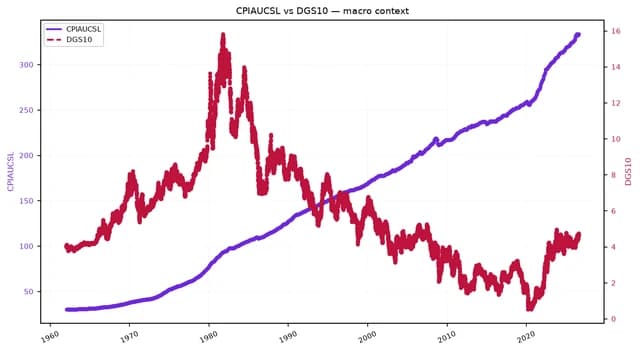
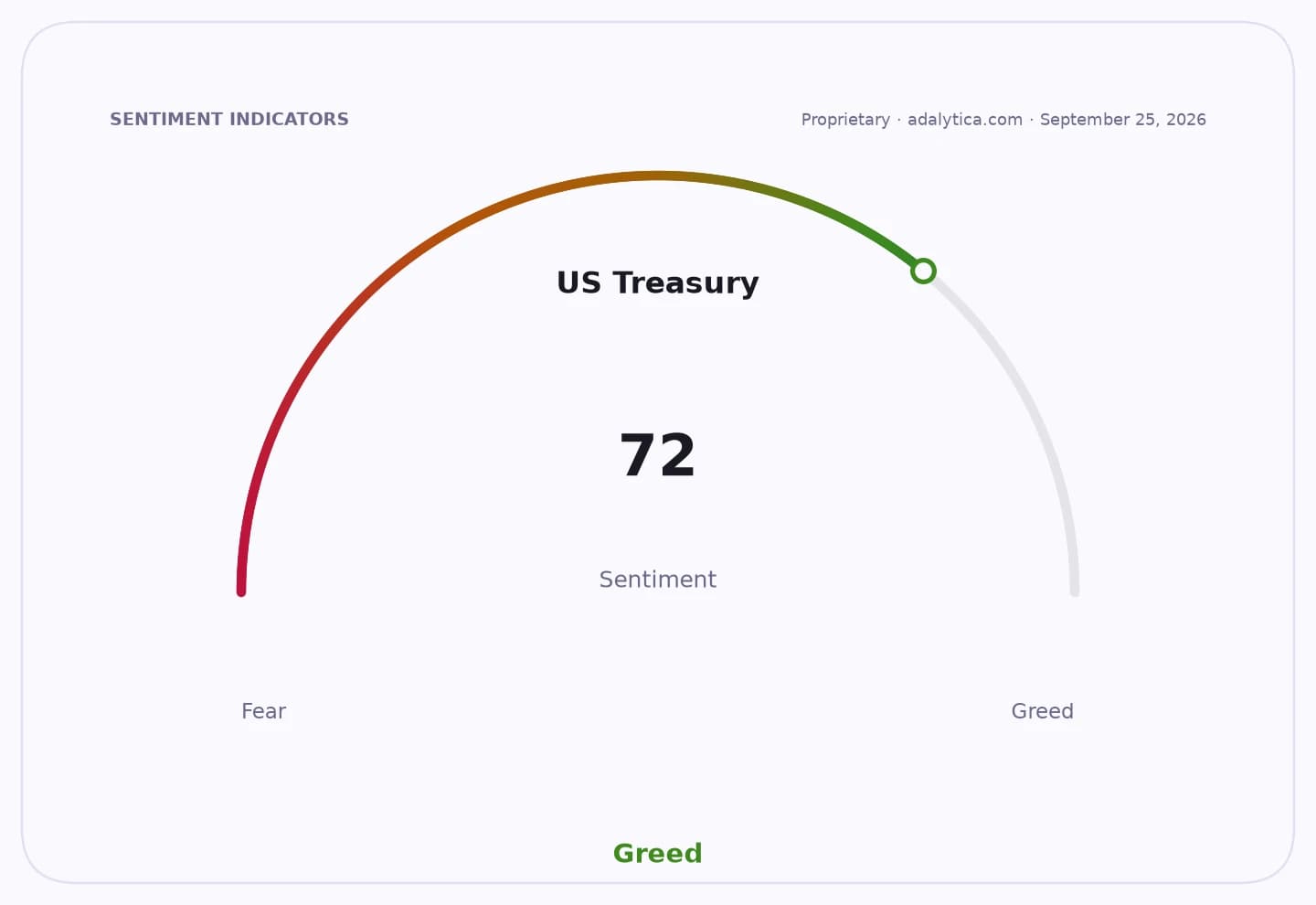
That warning lands at a sensitive moment for markets. The 10-year U.S. Treasury yield has been hovering around 5%, while high-yield credit spreads remain relatively contained at about 2.7 percentage points, suggesting investors are still comfortable taking risk even as borrowing costs stay elevated. Meanwhile, exchange-traded funds tied to long-duration Treasuries such as TLT have struggled, with the fund recently around 80.46 and still below both its 50-day and 200-day moving averages. Gold, by contrast, has held near 392.88, reflecting continued demand for a hedge against policy and growth uncertainty.
Inflation expectations are also flashing caution. Adalytica’s indicators on confidence in the Fed’s 2% target, five-year breakevens and long-term inflation expectations all sit in “Extreme Fear,” underscoring how fragile confidence remains even after the sharp disinflationary surge of the past two years. That is exactly the kind of environment where central banks cannot afford to relax too soon.
For AI investors, the message is clear: the winners are still likely to be the companies with real cash flow, pricing power and the ability to fund capital spending without overreaching. That still favors firms such as Nvidia, Microsoft and Alphabet, but it also raises the bar. Nvidia’s shares have been volatile even after a huge run, while Microsoft and Alphabet are committed to heavy capital spending for cloud and AI infrastructure. Those investments can compound for years, but only if demand justifies the buildout.
The broader story is not that the global economy is weakening sharply. It is that the post-pandemic world has become structurally less forgiving. Debt is more expensive, policy mistakes carry more consequences and the AI cycle, however promising, is arriving alongside very old-fashioned risks: inflation, leverage and too much optimism.
For long-term investors, that argues for selectivity, patience and diversification rather than chasing the loudest narrative. The IMF’s warning is not a reason to avoid AI or global markets altogether — it is a reminder that the next phase of returns will likely go to businesses and countries that can grow without depending on cheap money. Worth watching, but worth owning only with discipline.
| Entity | Gains | Losses |
|---|---|---|
| Cash-rich AI leaders | ▲Long-term growth, financing flexibility | ▼Less strained balance sheets |
| Leveraged AI borrowers | ▲Fast expansion if returns arrive | ▼Refinancing risk, margin pressure |
| Central banks | ▲Stronger case to stay cautious | ▼Pressure to ease too soon |
| Bond investors in long-duration debt | ▲Potentially higher yields | ▼Mark-to-market volatility |