Global growth may be stronger than many economists expect, but that is exactly why investors should pay attention: Schroders says the pickup could revive inflation and eventually force central banks back into a tighter stance.
Schroders says stronger growth may revive inflation

That matters because markets have spent much of the past two years trying to price a world of easing rates, resilient demand and cooling prices. Schroders’ view is a reminder that those forces do not always move in a straight line. If growth stays firm while policy turns more accommodative, inflation may prove sticky again, especially in the U.S. and parts of Europe. For long-term investors, that changes the playbook for bonds, stocks and valuations.
The firm expects U.S. GDP to grow above 3% in 2026, powered by consumer spending, stimulus and technology investment. That is a healthy backdrop for risk assets, and it helps explain why broad equity markets have held up well. The S&P 500 has been trading near 773, well above its 200-day moving average, a sign that investors still prefer equities when growth looks durable. But stronger growth also means the Federal Reserve may have less room to keep cutting once inflation stabilizes.
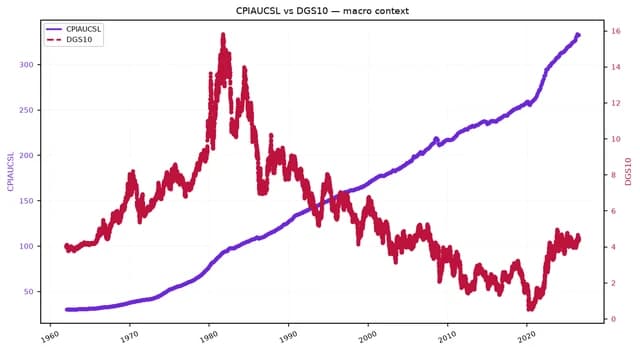
The inflation risk is not abstract. U.S. consumer prices have already remained elevated, and the 10-year Treasury yield sits near 4.8%, reflecting a market that is not fully convinced inflation is headed back to the easy days. The iShares TIPS ETF, which tracks inflation-protected bonds, is hovering close to its 50-day and 200-day moving averages, suggesting investors are still treating inflation hedges as relevant rather than obsolete. That is a clue that markets are preparing for a world where price pressures do not disappear quickly.
Europe looks like a mixed case. Schroders expects industrial activity to recover, especially in Germany, but says sticky services inflation could push the European Central Bank to raise rates again in 2027. If that happens, it would be a warning that even a weak growth region can live with higher-for-longer borrowing costs if prices refuse to cooperate. In the U.K., temporary inflation declines may justify cuts in the spring, but underlying pressures remain, which means the Bank of England could also have to reverse course if growth reaccelerates.
China remains the clearest counterweight. Schroders sees only a limited recovery because the property downturn continues to drag on sustainable growth and keep deflationary pressure alive at home. That weakness matters globally because it can export lower prices through trade, even as stronger demand elsewhere lifts inflation. In other words, the world economy may be split between regions where inflation returns and one where disinflation lingers.
For investors, the lesson is not to chase one simple macro story. If global growth proves more resilient, cyclicals, energy, industrials and quality growth companies with real earnings power can continue to do well. But longer-duration assets, highly leveraged businesses and bonds with limited inflation protection could struggle if central banks have to stay vigilant for longer than expected.
The most attractive approach here is patience and diversification. Investors do not need to predict every rate move to benefit from a stronger economy over a multi-year horizon. They do need to recognize that “good growth” can still be bad for inflation-sensitive assets if it comes with renewed pricing pressure. Schroders is basically saying the world may be more resilient than feared — and that resilience may come with a cost. That makes this a market to watch, not to rush.
| Entity | Gains | Losses |
|---|---|---|
| Risk assets | ▲Stronger growth backdrop | ▼Higher inflation volatility |
| Central banks | ▲Economic resilience | ▼Less room to cut rates |
| Bond investors | ▲Inflation-protected debt demand | ▼Conventional bonds if yields rise |
| China | ▲Export competitiveness | ▼Domestic growth from property weakness |