Global growth may still manage 3.3% in 2026, but the IMF’s message is that the next phase of the expansion will be driven by emerging markets while geopolitics, energy inflation and higher defense outlays increasingly shape where capital goes and where margins get squeezed.
IMF Outlook Favors Emerging Markets and Defense

That matters because a 3.3% world economy is not a recessionary backdrop, yet it is hardly a risk-free one. The IMF’s latest World Economic Outlook points to a modest slowdown to 3.2% in 2027, signaling a recovery that remains intact but fragile. For investors, that kind of growth profile usually rewards selective exposure to countries and sectors with real earnings momentum, while punishing businesses that depend on cheap energy, calm trade relations and easy fiscal conditions.
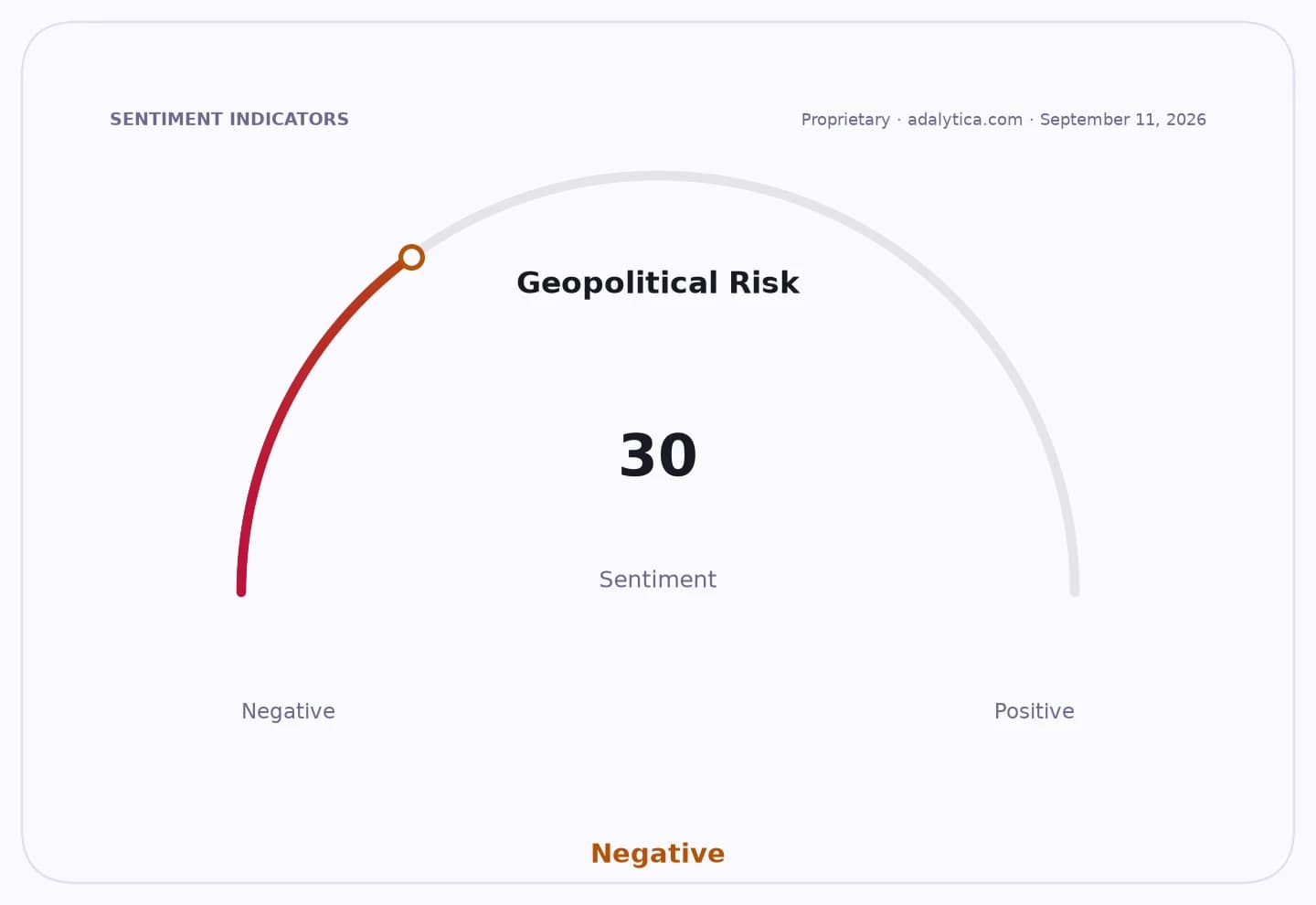
Sentiment IndicatorsⓘProprietary · adalytica.com · September 6, 2026
This is a snapshot — live sentiment, awareness and momentum for 130+ markets update continuously in the dashboard.Open AlphaPulse

The IMF said the engine of global expansion remains the emerging world, with India, China and Nigeria all expanding faster than the world average. Sub-Saharan Africa is projected to grow about 4.6%, reinforcing a theme markets have not fully priced: the growth center of gravity is shifting toward economies with younger populations, lower penetration rates and heavier infrastructure needs. That is a powerful setup for long-duration investment themes tied to power, transport, digital networks and industrialization.
But the same report also highlighted the costs of a more militarized and uncertain world. Persistent inflation, especially in energy, and rising defense spending can widen fiscal deficits and keep borrowing costs elevated. That is a problem for rate-sensitive sectors and highly leveraged balance sheets, but it is also a tailwind for defense contractors, energy producers, cybersecurity firms and infrastructure names that sit on the supply side of national resilience.
The market is already behaving as if it understands part of that story. The S&P 500 ETF, SPY, remains above its 200-day moving average, but recent swings in its 50-day trend and weak RSI readings show investors are still nervous about the durability of the rally. By contrast, the emerging-markets ETF EEM has regained momentum and is trading above both its 50-day and 200-day moving averages, while the developed-markets ETF VEA is also holding above long-term support. In plain terms, investors are slowly rotating toward the places where the IMF sees the strongest growth.
Adalytica’s Global Stability sentiment also points to a market that is far from complacent on geopolitics. The gauge shows elevated awareness around global stability risks even as broader risk appetite remains mixed, underscoring the gap between headline growth and the uncertainty embedded in asset prices. That is exactly where alpha tends to be found: not in chasing the index, but in owning the toll roads of the new macro regime.
My thesis is that the IMF’s forecast is less a comfort blanket than a map. The world is still growing, but the winners are increasingly concentrated in emerging-market consumption, grid buildout, energy security and defense-related spending. If global growth holds near 3.3% while geopolitical friction remains elevated, capital should continue migrating toward the companies and countries that sell the essentials of resilience. The best opportunity now is to lean into EM exposure, infrastructure, energy and defense before that rotation becomes consensus.
| Entity | Gains | Losses |
|---|---|---|
| Emerging markets | ▲Faster growth premium | ▼Developed-market cyclicals |
| Defense and security firms | ▲Higher military budgets | ▼Peace-dependent sectors |
| Energy producers | ▲Inflation hedge demand | ▼Energy-intensive consumers |
| SPY / broad U.S. equities | ▲Resilient global growth backdrop | ▼Margin-sensitive, rate-sensitive stocks |