India’s push to host the 2036 Olympics just moved closer to the center of its investment case, with Prime Minister Narendra Modi saying the country is now a credible destination for international tournaments and will not back away from its bid.
India 2036 Olympics Bid Supports Infrastructure Story
That matters because a successful Olympic campaign would be more than a prestige project. It would accelerate spending on airports, hotels, roads, stadiums, transit and digital infrastructure, while pulling forward demand across construction, consumer, leisure and services. For investors, the real story is not the event itself but the capex cycle and long-duration cash flows that typically follow when a country tries to prove it can stage a world-class tournament.
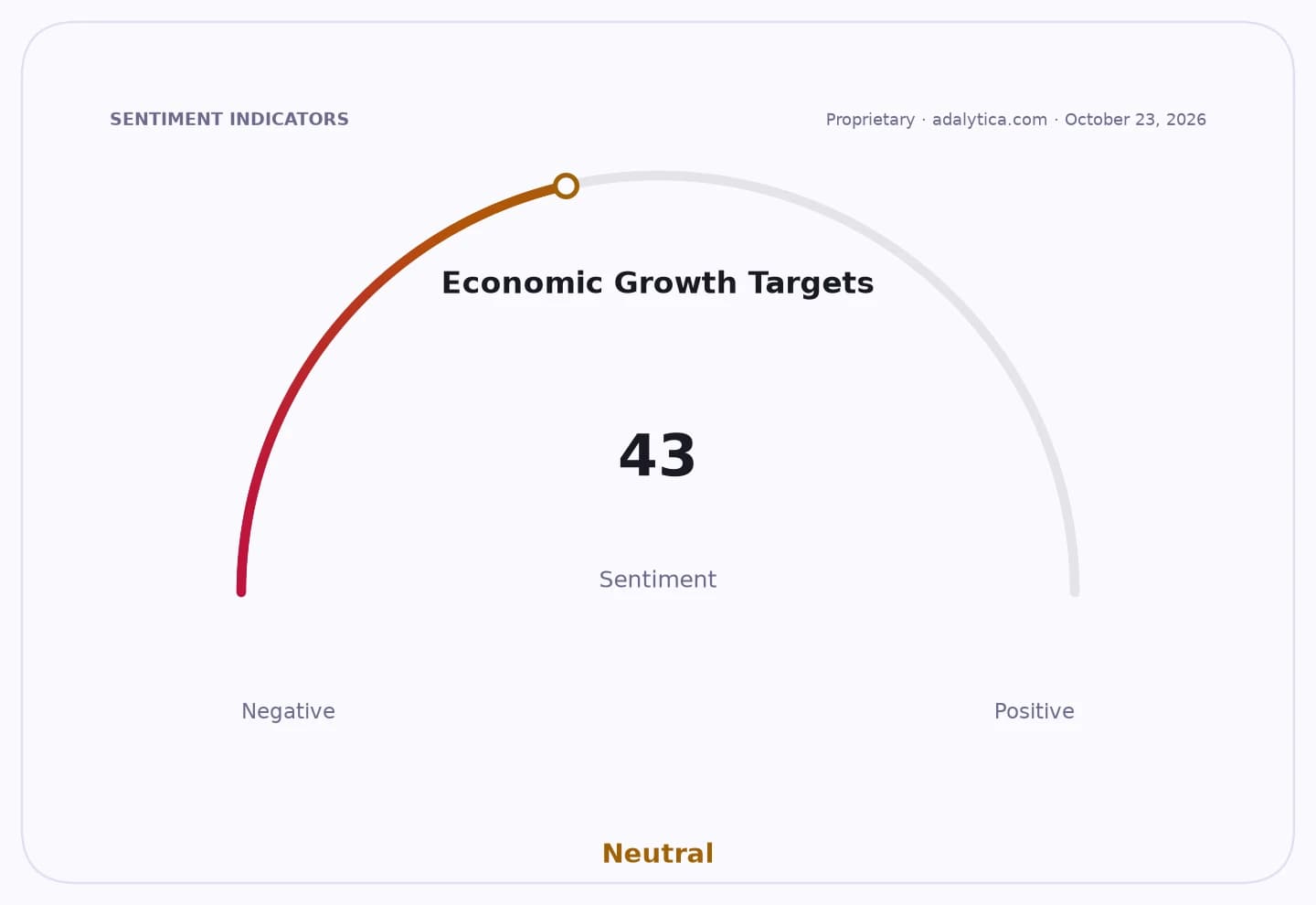
Sentiment IndicatorsⓘProprietary · adalytica.com · October 18, 2026
This is a snapshot — live sentiment, awareness and momentum for 130+ markets update continuously in the dashboard.Open AlphaPulse
Modi framed India’s sporting progress as evidence the country has matured as a host, pointing to the nation’s 85-medal haul at the Asian Games, including 21 golds, and the rise of younger athletes who are already competing at a high level. He also highlighted the 44-year wait ended by the women’s hockey team’s gold medal, using the moment to argue that India has built a deeper sports ecosystem over the past 12 years.
The market implication is straightforward: the Olympics bid is another signal that India intends to keep scaling its domestic infrastructure engine. A host city would require years of pre-event spending and would likely give further momentum to public and private investment already tied to urban development, transport links and venue construction. That creates a second-order tailwind for engineering, materials, hospitality, aviation and premium consumer companies, even before any formal award decision is made.
There is also a geopolitical layer. India is trying to sell itself not just as a fast-growing economy, but as a stable, aspirational platform for global capital and global events. That matters for how multinational brands, sports federations and tourism operators allocate capital over the next decade. The country’s improving medal count helps the narrative, but the bigger investment thesis is that India wants to use sport as a showcase for scale, logistics and soft power.
For investors, the opportunity is not to chase the headline, but to position early in the enablers: infrastructure names, travel and hospitality, and consumer franchises that benefit when India’s prestige spending rises. If the 2036 bid gains traction, the beneficiaries will not just be in sports. They will be the companies tied to the buildout of a more globally visible India.
| Entity | Gains | Losses |
|---|---|---|
| Indian infrastructure firms | ▲More capex pipeline | ▼Less if bid stalls |
| Hospitality and airlines | ▲Higher event-led demand | ▼Capacity underused if no award |
| Consumer and leisure brands | ▲Stronger premium spending | ▼Slower growth without tourism lift |
| Competing host countries | ▲Limited | ▼Lose India’s bid momentum |