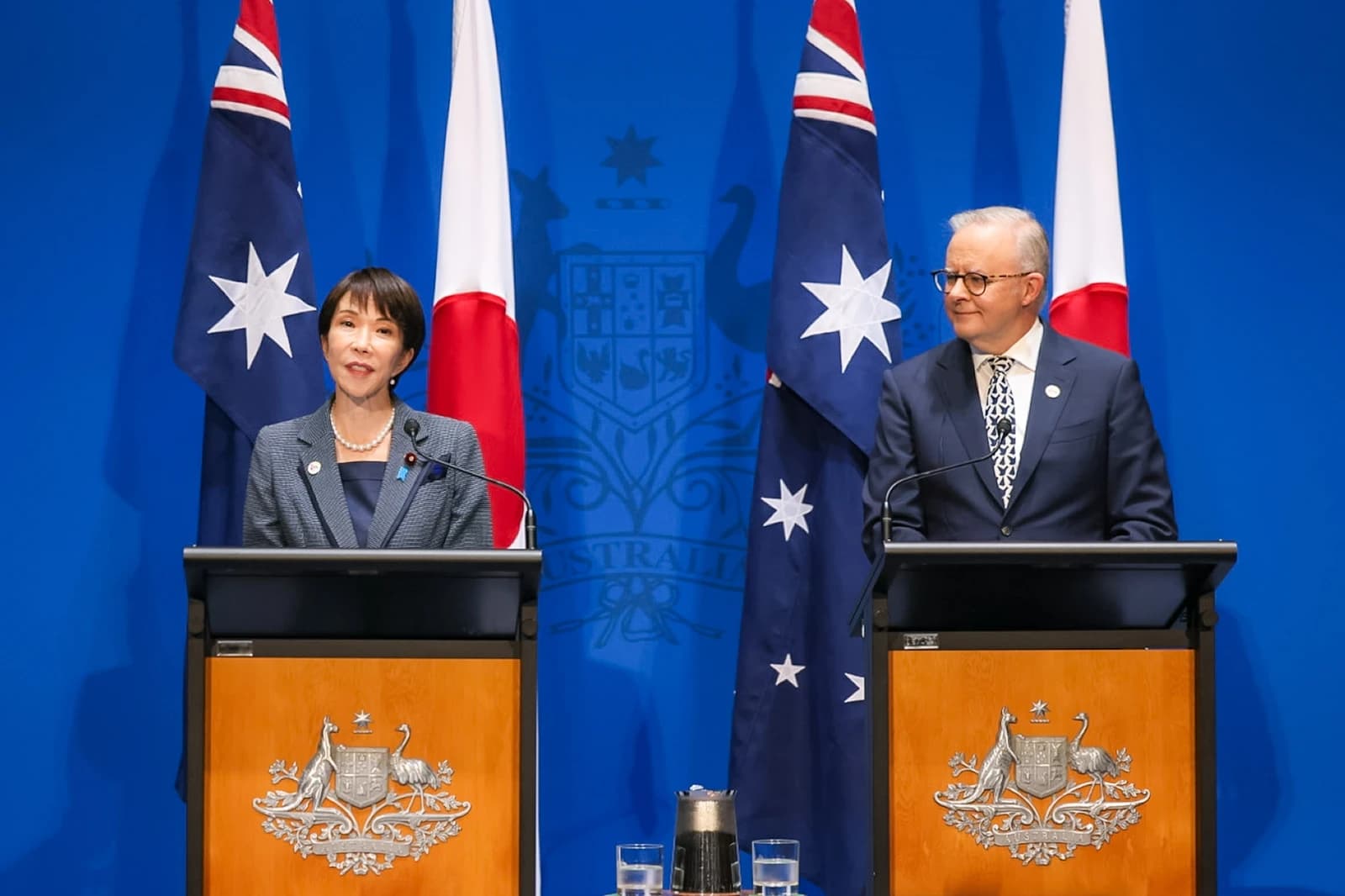
India’s expanding web of security and trade partnerships is becoming an economic story as much as a geopolitical one, with markets increasingly pricing in a more fragmented Asia and a bigger role for India, Japan and Australia in supply chains, defense spending and capital flows.
India-Australia Security Ties and Market Implications

The latest India-Australia agreement may stop short of granting joint access to military bases, but that limitation does not diminish the broader shift: New Delhi is widening strategic cooperation with key Indo-Pacific partners while avoiding formal alliances that would constrain its autonomy. For investors, that matters because it points to a durable realignment in Asia that could reshape procurement, ports, logistics, commodities demand and defense budgets across the region.
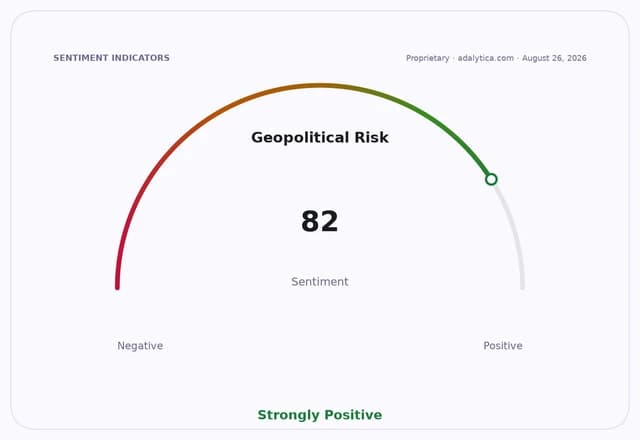
Sentiment IndicatorsⓘProprietary · adalytica.com · August 26, 2026
This is a snapshot — live sentiment, awareness and momentum for 130+ markets update continuously in the dashboard.Open AlphaPulse
India’s simultaneous push with Japan underscores the direction of travel. A maritime security pact signed in Delhi between the two countries’ defense ministers deepens naval coordination and reflects a shared interest in a “free and open Indo-Pacific” at a time when tensions with China continue to influence regional planning. The Australia accord, even in a more limited form, fits the same pattern: closer operational cooperation without the political baggage of treaty-style commitments.
That balance is economically important because it expands India’s strategic optionality. By building ties with Japan, Australia, Europe and Canada at once, India is trying to position itself as a manufacturing and security hub that can attract investment from firms seeking diversification away from China. The effect is likely to show up gradually in infrastructure, energy security, shipbuilding, defense electronics and logistics rather than in a single headline-grabbing deal.

For Australia, the logic is similar. Canberra is reinforcing its Indo-Pacific security architecture while preserving room for trade, especially in resources and critical minerals. That has implications for BHP and the broader Australian market, which has already been buoyed by expectations of sustained demand for metals tied to defense, electrification and infrastructure. EWA, the MSCI Australia ETF, has climbed to about $30.43, above its 50-day and 200-day moving averages, while BHP has surged to $98.69, underscoring how investors are rewarding exposure to strategic commodities and a more geopolitically contested region.
The broader market backdrop is also supportive of the thesis. Adalytica’s Global Stability Sentiment gauge is at 82, in “Greed” territory, suggesting investors are not yet pricing a severe geopolitical shock even as strategic competition intensifies. That leaves room for additional upside in defense and resource names if governments translate rhetoric into spending, but it also means valuations could be vulnerable if regional tensions escalate faster than expected.
India-focused assets have been less straightforward. The India ETF INDA has recovered to $50.23, but it remains below its February highs, reflecting the tension between long-term strategic optimism and near-term concerns around growth, policy execution and external conditions. A more assertive Indian role in the Indo-Pacific could eventually benefit listed infrastructure, defense and industrial firms, but investors will likely want evidence in contract awards, capex and trade data before rerating the market.
The key takeaway is that the absence of joint base access is not the main story. The bigger development is that India and Australia are steadily building a security and economic framework that fits a more multipolar Asia, where alliances may remain loose but supply chains, defense procurement and capital allocation are becoming more tightly linked.
| Entity | Gains | Losses |
|---|---|---|
| India | ▲Strategic autonomy | ▼Alliance constraints |
| Australia | ▲Indo-Pacific influence | ▼Security ambiguity |
| BHP / Australian miners | ▲Mineral demand | ▼Policy uncertainty |
| China | ▲— | ▼Regional leverage |