India’s retail auto sales surged 31.82% in September to 2.54 million vehicles, extending signs that consumer demand is still holding up even as rural weakness continues to weigh on parts of the market.
India Auto Retail Sales Rise 31.8% in September

The jump matters because automobiles are a high-frequency read on household spending, financing appetite and broader consumption momentum in the world’s most populous country. September sales were well above the 1.92 million vehicles sold a year earlier, according to the Federation of Automobile Dealers Association, with two-wheelers and passenger vehicles doing most of the heavy lifting.
For investors, the data points to continued support for automakers, dealers, lenders and parts suppliers tied to India’s domestic cycle. A stronger retail run-rate can help inventory normalization, improve factory utilization and support pricing for mass-market models, while also reinforcing the case for ongoing growth in financing-linked purchases.
The performance also suggests the market is being driven more by urban buyers and newer product launches than by a broad rural recovery. That split matters for listed automakers because it can favor premium, compact and entry-level models in cities even as agrarian incomes remain uneven.
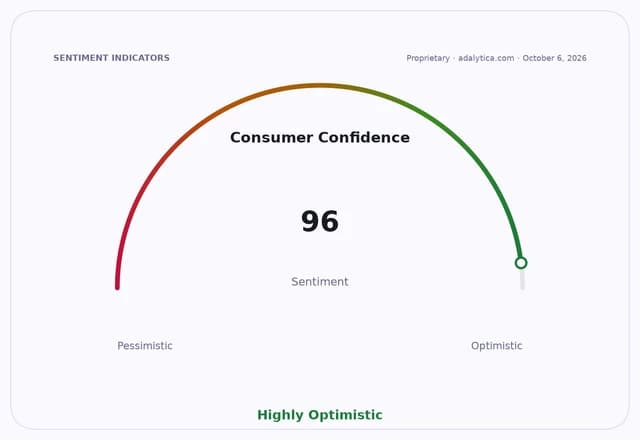
Separate market commentary flagged record September registrations above 2.5 million across the industry, with major names such as Mahindra & Mahindra and Mercedes-Benz posting gains and Maruti Suzuki retaining dominance in domestic sales. Electric-vehicle registrations also continue to rise from a small base, adding another layer of growth to the sector.
The key question now is whether festive-season demand and new launches can sustain the momentum into the December quarter, or whether softness in rural India and tighter affordability will cap the pace of expansion.
| Entity | Gains | Losses |
|---|---|---|
| Indian automakers | ▲Higher sales volumes | ▼Persistent rural weakness |
| Auto dealers | ▲Faster inventory turnover | ▼Margin pressure if demand cools |
| Vehicle lenders | ▲More loan demand | ▼Higher credit risk if affordability slips |
| Rural-focused sellers | ▲Possible future rebound | ▼Near-term demand softness |