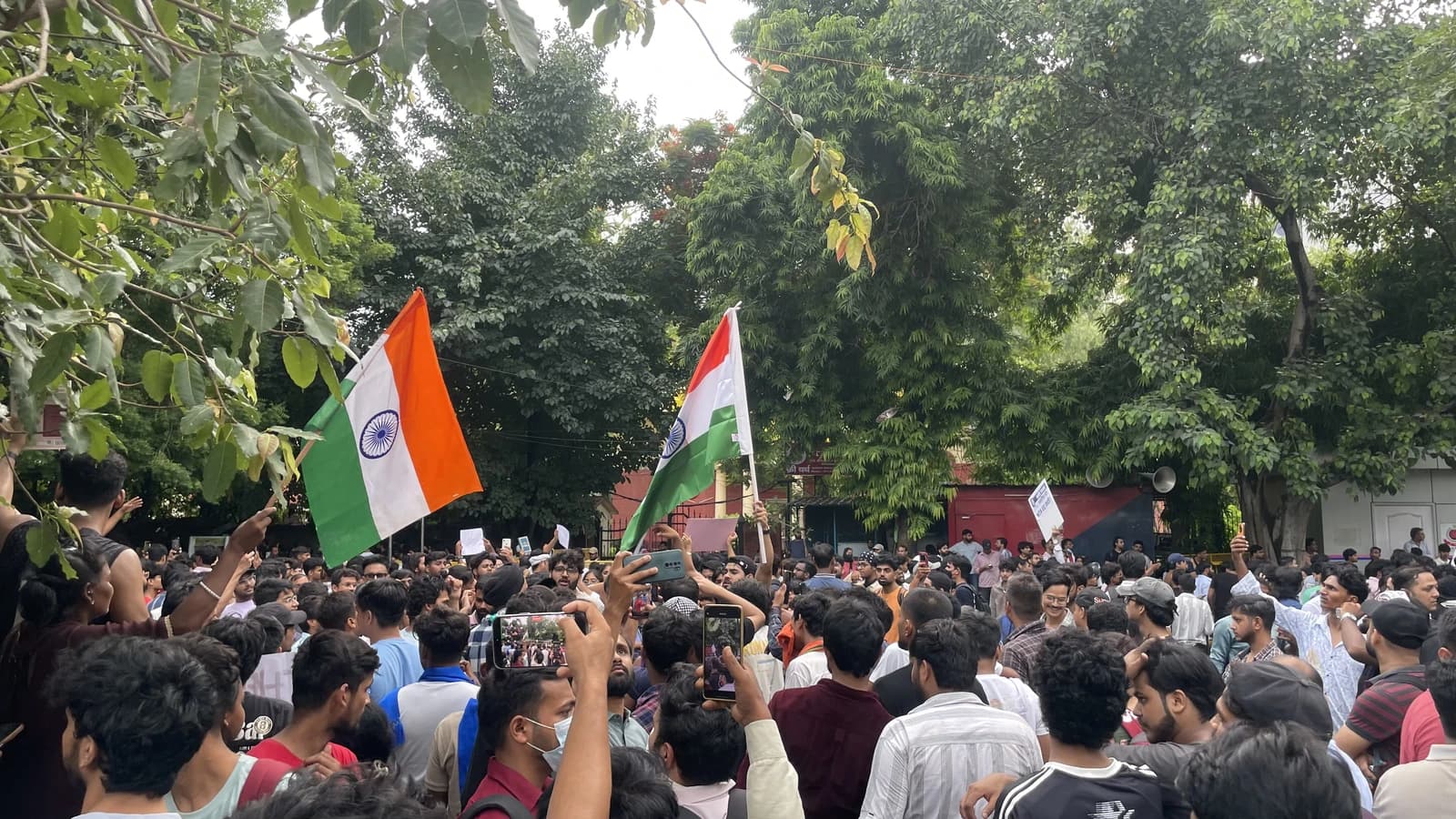
The INDIA bloc is set to take its fight over the Special Intensive Revision of electoral rolls to the Election Commission on Tuesday, but the opposition’s show of unity will be weaker than planned after the Aam Aadmi Party said it will skip the protest.
INDIA Bloc To Protest Electoral Roll Revision
That matters because the row has moved beyond routine political theater and into a broader test of how India’s election machinery is being viewed by opposition parties, courts and voters. When nearly 19 opposition parties coordinate around an issue tied to the integrity of the roll revision, the dispute is no longer just about one protest in New Delhi; it becomes a credibility issue for the electoral process itself.
Sentiment Indicators
The march from Parliament House to the poll body’s headquarters is meant to keep pressure on the Election Commission after weeks of allegations over irregularities in the SIR exercise. Opposition leaders have framed the campaign as a fight to “save democracy,” and they plan a series of demonstrations through Oct. 8, along with meetings and representations to the President. Congress, Trinamool Congress, the National Conference and other INDIA bloc members were part of the September 30 strategy session that approved the protests, even as AAP and DMK stayed away.
AAP’s decision to sit out is politically important even if it does not change the core confrontation. The party said it is fighting the battle in its own way and will not use its banner at Tuesday’s march, underscoring the frictions that continue to run through the opposition alliance. For investors, that kind of coalition strain matters because political coordination, or the lack of it, can shape the durability of policy pressure campaigns, legislative resistance and the tone of governance risk around elections.
The dispute also has a legal dimension. The Supreme Court on Monday issued notices to the Election Commission and the Centre in petitions alleging that several decisions were taken without the approval of the two election commissioners. While the court declined to freeze Chief Election Commissioner Gyanesh Kumar’s powers for now, its willingness to examine the immunity clause protecting the post suggests the issue could linger well beyond a single protest cycle.
That makes the SIR row more than a New Delhi street mobilization. If the controversy keeps widening, it could feed uncertainty around institutional trust at a time when India is trying to sustain investor confidence, policy continuity and a stable reform narrative. Markets generally dislike questions over governance, even when they do not immediately show up in earnings or growth data, because they can affect the premium investors demand on Indian assets.
For long-term investors, the bigger takeaway is not the day’s protest count but the signal that opposition politics and the courts are now converging on election administration. That can create near-term noise for Indian equities and the rupee, but it does not automatically alter the country’s structural growth story. The key is whether the row stays a contained political contest or becomes a more durable challenge to the credibility of the system that underpins the next election cycle.
| Entity | Gains | Losses |
|---|---|---|
| INDIA bloc | ▲Visibility on electoral-roll issue | ▼Internal unity |
| AAP | ▲Distance from joint protest | ▼Opposition coordination leverage |
| Election Commission | ▲Opportunity to defend process | ▼Public trust if doubts persist |
| Indian equities and the rupee | ▲Clarity if dispute is contained | ▼Governance-risk premium if it escalates |